Seed Identification and Feminization
Royal King Seeds
Cultivation team
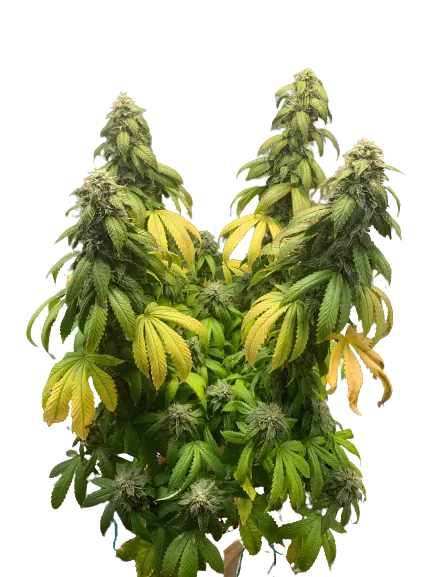
Every grow starts with a seed that either cracks or does not. In Australia, germination timing aligns with the Southern Hemisphere spring — September and October are ideal for outdoor growers — but indoor cultivators can germinate year-round provided the environment stays within the narrow temperature band that triggers enzymatic activity inside the seed shell. This guide covers the practical techniques, the failure points, and the seed-handling knowledge that separates growers who lose a third of their seeds from growers who lose almost none.
Recommended Method: Damp Paper Towel Between Plates
Lay two sheets of paper towel on a dinner plate, dampen them until moist but not dripping (wring until no water runs freely when squeezed), space your seeds 3-4 cm apart on the towel, fold the second sheet over the top, and invert a second plate on top to create a dark, humid micro-chamber. Place this assembly somewhere that maintains 22-26°C — the top of a modem, a set-top box, or a purpose-built seed heat mat.
Check every 12 hours. Remoisten the towel if it starts drying — seeds must stay uniformly moist throughout the process. When the taproot emerges and reaches 1-2 cm in length, transplant into your chosen medium with the root tip pointing downward, approximately 1 cm below the surface.
Why This Method Outperforms Alternatives
The paper towel approach gives you visibility that direct-to-medium planting does not. You can confirm crack, monitor taproot growth, and intervene if something stalls — all without disturbing the growing medium. Direct-to-soil germination works but forces you to wait blindly for up to two weeks without knowing whether the seed is progressing or dead. Water-glass soaking triggers the initial crack effectively but poses drowning risk if seeds remain submerged beyond 18-24 hours.
Common Germination Failures and Their Actual Causes
Seed age and storage history: A seed that has spent an Australian summer in a hot shed — where temperatures inside containers can exceed 40°C — loses viability rapidly. Storage degrades enzymatic potential. Fresh seeds from temperature-controlled stock germinate at 90%+ rates. Seeds of unknown age from uncertain conditions may drop to 30-40%. Store ungerminated seeds in a sealed container in the refrigerator (4-8°C), not in a drawer, not on a windowsill, not in the garage.
Waterlogged towels: A paper towel dripping wet smothers the seed by preventing oxygen exchange across the shell. The seed needs moisture to activate germination enzymes, but it also needs to breathe. If water pools when you tilt the plate, the towel is too wet.
Cold environments: Below 18°C, the enzymatic reactions that split the seed coat slow to a crawl. Below 14°C, they effectively stop. This catches growers in southern Australia during September — you feel warm enough in a jumper, but the spare room where you placed the germination plate drops to 14°C overnight. A $15 AUD seedling heat mat solves this permanently.
Rough handling of the taproot: The emerging root tip is the most fragile structure the plant will ever produce. Grabbing the seed by the root, dropping it onto a hard surface, or pressing it into dry, compacted medium can snap or bruise the root tip, killing the seedling before its first leaf opens. Handle germinated seeds by the shell only, using clean tweezers or your fingertips, and plant into pre-moistened medium with a small depression already formed.
From Towel to Medium: The Vulnerable Transition
Pre-moisten whatever medium you are transplanting into — dry substrate draws moisture away from the fragile root, desiccating it within hours. Create a pencil-width hole approximately 1 cm deep. Lower the seed in, root pointing downward (it self-corrects if slightly off-angle). Cover with loose medium without packing it down. Water gently around the planted seed, not directly on top of it.
Light introduction begins once cotyledon leaves (the first pair of rounded seed leaves) emerge and spread open — typically two to four days after planting. Start with low intensity: 200-300 PPFD, or a fluorescent tube at 30+ cm distance. Seedlings that stretch tall and thin are reaching for more light — lower the fixture gradually to encourage compact, sturdy growth. Photon delivery — spectrum, intensity, and duration — is the engine behind every gram you harvest. Our lighting and photoperiod guide compares LED and HPS performance data relevant to Australian grow rooms.
Seed Selection and Viability Indicators
Mature, viable seeds are dark in colour (brown, grey, or tiger-striped), firm when gently pressed between thumb and forefinger, and have an intact, smooth outer shell. Pale green, soft, or cracked seeds are immature or damaged and germinate poorly. When purchasing, prioritise freshness and storage conditions over strain novelty — a perfectly stored common variety outgrows a poorly stored exotic every time. Our seeds ship in sealed, light-proof packaging and are stored under climate-controlled conditions to maximise viability upon arrival.
Frequently Asked Questions
- How many days until a seed should crack?
- Most viable seeds crack within 24-72 hours under proper conditions (22-26°C, consistent moisture). Older seeds may take five to seven days. If nothing happens after a full week at correct temperature and moisture, the seed is most likely non-viable.
- Is it necessary to soak seeds in water before the paper towel?
- Optional. Soaking for 12-18 hours in room-temperature water can soften the shell of older seeds and speed the initial crack. Do not soak beyond 24 hours — prolonged submersion prevents oxygen exchange and drowns the embryo.
- Can I germinate in winter in Australia?
- Yes, for indoor grows. Use a seedling heat mat to maintain 24-25°C regardless of room temperature. In Canberra, Melbourne, Hobart, and highland areas where unheated rooms regularly drop below 15°C in July and August, a heat mat is not optional — it is essential for reliable germination.
- What if the taproot grows into the paper towel?
- Gently moisten the paper and carefully peel it away. If the root has grown through the fibres, cut the paper around the root rather than pulling it — tearing the root tip is worse than transplanting with a small piece of towel attached, which will decompose harmlessly in the medium.
Related Articles
Ready to Start Growing?
Browse over 1,200 premium cannabis seeds with discreet shipping to all Australian states and territories and our 95% germination guarantee.
Shop Cannabis Seeds