Cannabis Seedling Stage in Australian Climates: Weeks 1–3 Light, Water & Common Problems
Royal King Seeds
Cultivation team
Your biggest enemy in weeks 1–3 isn't heat, pests, or the wrong strain — it's overwatering. More Australian cannabis seedlings die in their first three weeks from soggy roots than from anything else, and the worst part is it looks identical to underwatering until the damage is already done.
The fix is brutally simple: 10–15 mL per day around the base, let the medium dry slightly between waterings, and give your seedlings 18–20 hours of light at roughly 100–200 PPFD. This guide walks through every variable — light schedules, watering volumes, temperature ranges, and the five most common seedling failures Aussie growers run into — so you don't lose another pop of seeds in the first three weeks.
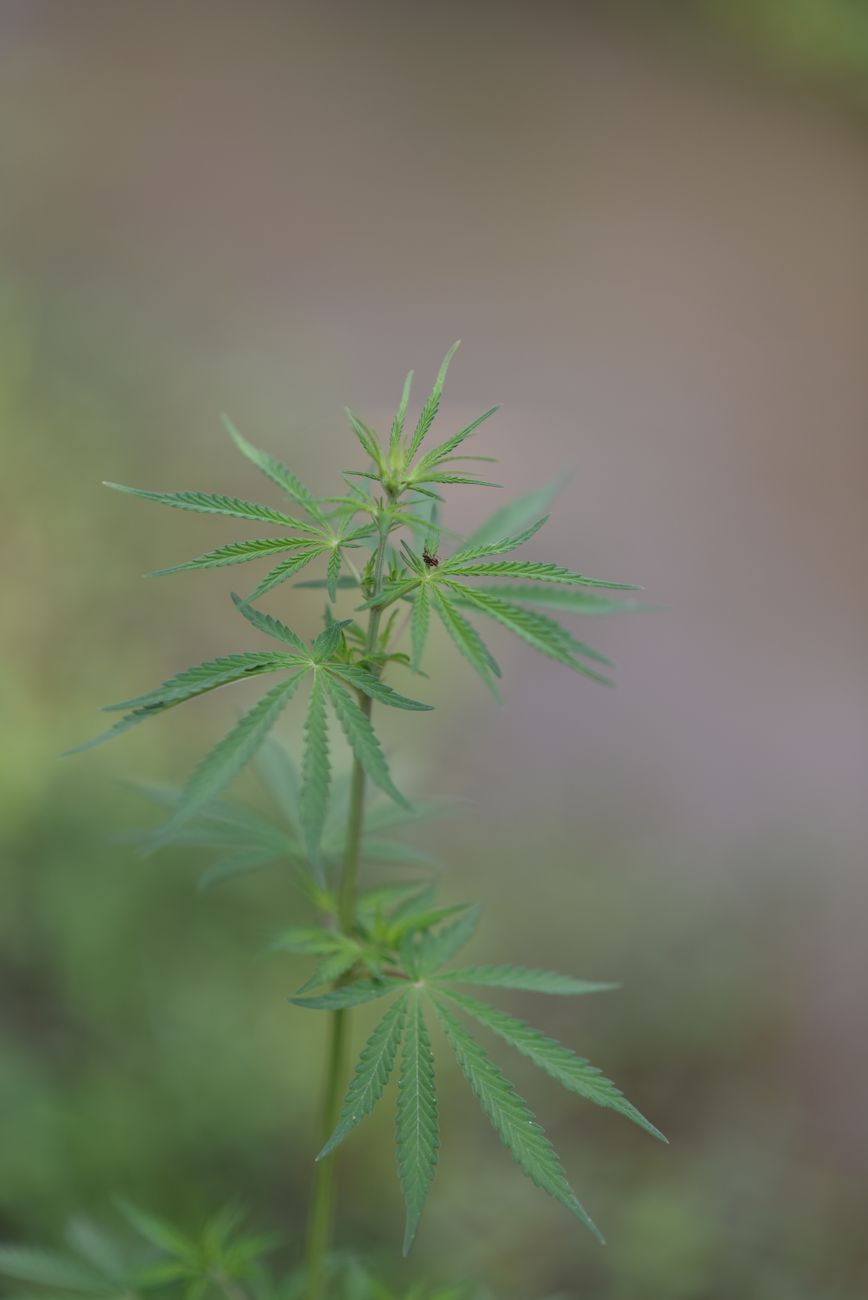
Cannabis seedlings need 18–20 hours of light at low intensity (100–200 PPFD), temperatures of 25–30°C with 60–70% relative humidity, and minimal watering — roughly 10–15 mL per day in a small root zone. The seedling stage runs from cotyledon emergence to the appearance of the third or fourth true node, typically days 1–21. In Australian outdoor conditions (planted Oct–Dec), seedlings face high UV, erratic spring heat, and fungal gnats in moist soil — all of which are manageable with the right setup from day one.
- What is the cannabis seedling stage?
- Light requirements: weeks 1–3
- How to water seedlings correctly
- Temperature and humidity in Aussie climates
- Outdoor seedling care in Australian spring
- State-by-state seedling guide
- Common seedling problems (and fixes)
- What happens if you choose wrong
- Royal King Seeds Seedling Success Score
- The 3-Day Dry-Down Rule
- Common mistakes to avoid
- FAQ: 25 seedling questions answered
- Sources
- ✓ First-time growers tackling weeks 1–3 for the first time
- ✓ Aussie outdoor growers starting seeds in October–November
- ✓ Indoor growers under LED or CFL with seedlings struggling
- ✓ Anyone who's lost seedlings to damping-off or overwatering
- ✓ Growers in high-humidity states (QLD, NT, coastal NSW)
- ✓ Growers in hot, dry climates (SA, WA inland, NT) needing heat strategies
- ✗ Growers already in the vegetative or flowering stage
- ✗ Cloning / cutting propagation guides
- ✗ Hydroponic-only systems (soil focus throughout)
- ✗ Experienced growers looking for advanced training techniques
What Is the Cannabis Seedling Stage?
The seedling stage is the period from cotyledon emergence (the first two rounded "seed leaves") through to the development of the third or fourth true node — typically days 1–21 after the seed sprouts above soil.
During this window, the plant's root system is tiny and fragile, its leaves are producing the first real photosynthesis, and the entire structure is highly vulnerable to environmental swings. The seedling cannot yet metabolise the nutrients, light intensity, or water volumes it will handle comfortably in vegetative growth.
In Australia, where spring temperatures can spike rapidly from mid-October onward and UV index regularly hits 10–12 in coastal cities, seedlings face more environmental pressure than in many Northern Hemisphere grow zones. That's why Aussie-specific timing and management matter from day one. Where cultivation is legally permitted, understanding each sub-stage of weeks 1–3 is the foundation of a strong, high-yielding grow with feminised cannabis seeds Australia-wide.
Treat weeks 1–3 as a protected incubation window. The seedling's job is root establishment, not growth. Your job is to keep every variable — light, water, temperature, humidity — inside a narrow comfort zone and resist the urge to overfeed, overwater, or overstimulate. Get that right and the rest of the grow is exponentially easier.
What Light Do Cannabis Seedlings Need in Weeks 1–3?
Cannabis seedlings need 18–20 hours of light per day indoors, at a low-to-moderate intensity of 100–200 PPFD (photosynthetic photon flux density). Higher intensities cause bleaching, light stress, and stunted early growth.
This is where many new Aussie growers go wrong: they hang a powerful LED at the same height they'll use for veg, and the seedling curls, fades, or grows with abnormally short internodes. A 200W LED running at full power 30 cm above a seedling is far too intense — dial it back to 40–50% power or raise the fixture to 60–80 cm until the third node appears.
For outdoor seedlings started in October–November in Australia's high-UV summer build-up, direct full sun should be introduced gradually. Start with 2–3 hours of filtered morning sun, adding 1–2 hours per day across the first two weeks before transitioning to full outdoor exposure.
Step 1: Set an 18/6 light schedule from day one
Run lights 18 hours on, 6 hours off for both autoflower seeds Aussie growers rely on and photoperiod varieties. Autoflowers will stay on 18/6 through the whole grow; photoperiod plants will later shift to 12/12 to trigger flower.
Step 2: Set correct light distance by fixture type
CFLs (23–40W): 5–10 cm. T5 fluorescent panels: 10–20 cm. Low-power LEDs (100–200W): 40–60 cm at 40–50% power. High-power LEDs (400W+): 70–90 cm at 25–35% power. Always cross-check with a PPFD meter if available — target the 100–200 range.
Step 3: Acclimate outdoor seedlings over 10–14 days
In QLD, NSW, and WA, October UV intensity is already extreme. Place seedlings in bright shade (under a 30–40% shade cloth) for the first 7 days, then move to dappled sunlight for days 7–14, before introducing direct sun. Skipping this step causes sunscald and sets growth back by 5–7 days.
For indoor Aussie growers, 18/6 at 100–200 PPFD is the non-negotiable seedling light target. For outdoor growers in high-UV Australian spring conditions, a 10–14 day acclimation period under shade cloth is the difference between vigorous seedlings and bleached, stressed transplants. Don't rush the sun.
How Do You Water Cannabis Seedlings Correctly?
Water seedlings with 10–15 mL per application in a tight circle around the base of the stem — not across the whole pot surface. This encourages roots to chase moisture downward and outward, building a strong root structure rather than staying shallow.
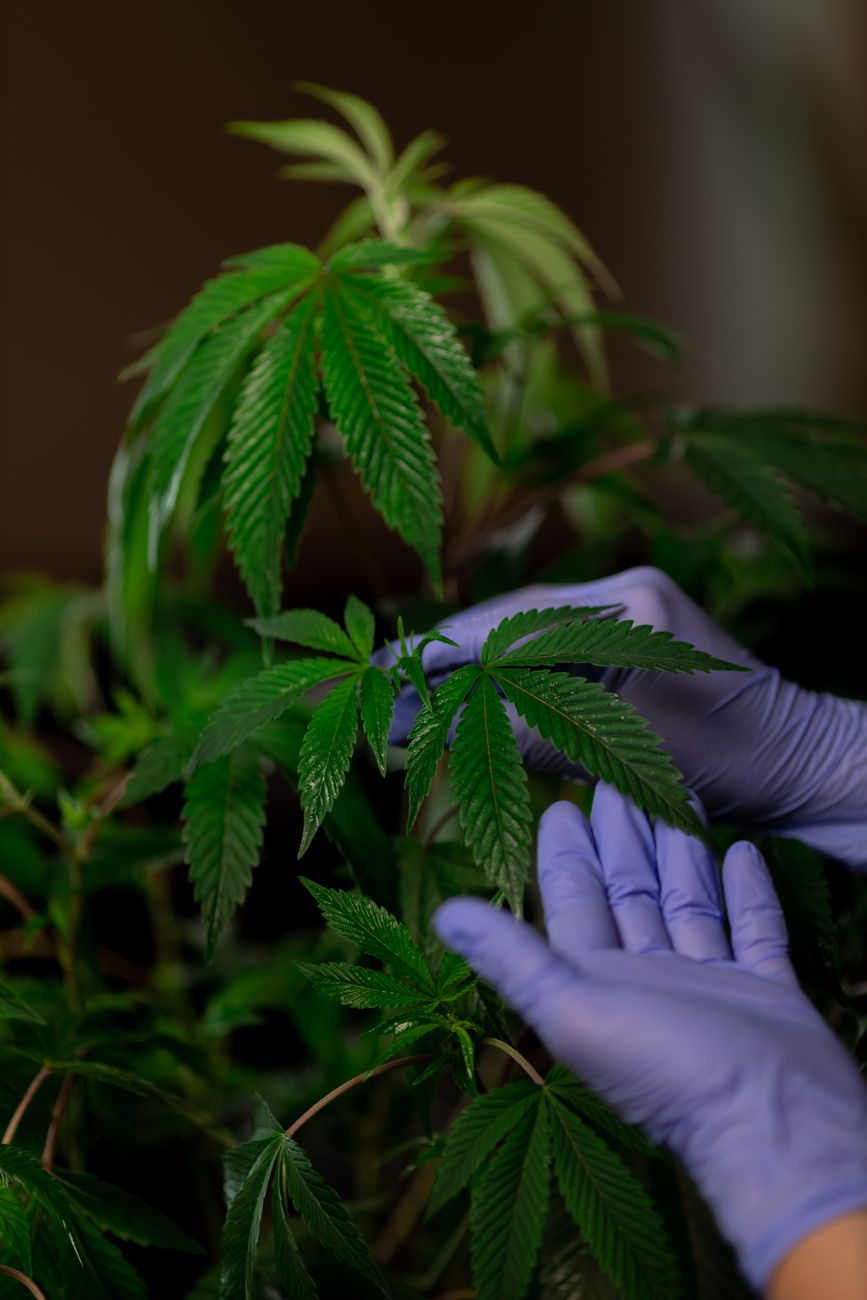
In week 1, water every 2–3 days and check moisture by lifting the pot. A dry pot will feel noticeably lighter. In week 2, increase to every 1–2 days as the root zone expands. By week 3, seedlings can receive slightly more volume — 20–30 mL per watering — as the root system approaches the edge of a small starter pot (0.5–1 L).
Step 1: Use the finger test before every watering
Push your index finger 2 cm into the medium. If it feels moist, wait. If it's dry to that depth, water now. This prevents the most common mistake (overwatering) and conditions growers to observe the medium rather than follow a rigid schedule.
Step 2: pH your water to 6.0–6.5 (soil) or 5.8–6.2 (coco)
Australian tap water pH varies significantly by city — Melbourne averages 7.2–7.8, Brisbane can be 6.5–7.0, and Perth's water supply sits around 7.0–7.5. Always pH-down to the correct range or seedlings will show nutrient lockout symptoms even with zero added nutrients.
Step 3: Hold off on nutrients for the first 10–14 days
A quality seedling mix — coco coir blended 60/40 with perlite, or a premium seedling soil — contains enough nutrition for the first two weeks. Adding nutrients in week 1 causes nutrient burn in underdeveloped seedlings and can be fatal. For indica seeds and sativa seeds alike, patience here pays off in week 4+.
If you water correctly — small volumes, pH-adjusted, medium allowed to partially dry between applications — you eliminate the single most common cause of Aussie seedling death. The discipline here compounds: healthy seedlings at day 21 consistently outperform stressed ones through veg and into flower.
What Temperature and Humidity Do Seedlings Need in Australian Climates?
Cannabis seedlings thrive between 25–30°C during the day and no lower than 18°C at night. Relative humidity (RH) should sit at 60–70% — high enough to support leaf transpiration and photosynthesis through the cotyledons, but not so high it invites damping-off fungi.
Australia's diverse climate zones create very different seedling challenges. A subtropical QLD grower in Brisbane during October already faces 28–32°C days and 65–80% humidity — close to ideal or slightly high on humidity. A Melbourne grower in the same month might see 15–28°C swings within a single day, while a Perth grower battles low RH (30–45%) and gusty Fremantle Doctor winds that desiccate seedlings rapidly.
Understanding your local climate baseline and correcting for its specific deviations — not just following generic advice — is what separates consistent Aussie growers from those who lose half their seedling runs.
Step 1: Use a humidity dome for the first 7–10 days
A propagation dome or clear plastic cloche placed over seedlings maintains micro-climate RH at 65–75% regardless of ambient room conditions. Remove it for 15–30 minutes twice daily to prevent CO₂ depletion and introduce fresh air. Remove fully at day 10–12 or when seedlings touch the dome ceiling.
Step 2: Manage temperature spikes in October–November
In Sydney, Perth, Brisbane, and Adelaide, October–November can produce 35–40°C days. Outdoor seedlings cannot survive direct exposure to those temperatures without shelter. Move pots to morning-sun-only positions, use 40% shade cloth, and water twice daily during extreme heat events. Indoor growers should add a desk fan on low and keep the room below 30°C with air conditioning or evaporative cooling where temperatures allow.
The 25–30°C / 60–70% RH window is tight but achievable across all Australian climates with the right tools. A propagation dome solves humidity; a basic thermostat-controlled fan or air conditioner solves heat. Don't skip either in the first two weeks.
How Should Outdoor Seedlings Be Managed in the Australian Spring Growing Window?
The Aussie outdoor growing season starts with seedlings in September–November, with October being the sweet spot for most states. Outdoor seedlings face a unique combination of intensifying UV, unpredictable temperature swings, and spring pests (fungus gnats, aphids, slaters) that are rarely a factor for indoor growers.
Looking at patterns across public grower journals and the questions that come through our support channel most frequently in spring, two issues dominate: sunscald from premature full-sun exposure, and damping-off caused by spring rains landing on warm, moist soil. Both are entirely preventable.
The Australian spring outdoor seedling window looks like this:
Caution — cool nights still below 15°C in VIC/TAS/SA
Ideal — warm days, long daylight, manageable UV
Ideal — peak planting window for QLD, NSW, WA, SA
Caution — heat stress risk climbing; only autos
High risk — 35–42°C days; seedlings need intense protection
Too late for seedling start in southern AU
October is Australia's golden seedling month for outdoor photoperiod plants. Start too early and cold nights stunt development; start too late in summer and heat stress competes with every other variable. If you're starting after November 15, switch to autoflowering seeds which complete faster and tolerate more environmental pressure across a compressed timeline.
What Are the Best Seedling Practices by Australian State?
Every Australian climate zone demands a different seedling approach. Here's what growers in each region should prioritise during weeks 1–3, in jurisdictions where cultivation is permitted.
Queensland (QLD) — Subtropical
Brisbane and coastal QLD in October already sits at 27–31°C days and 65–80% RH. Seedlings don't need a humidity dome here — ambient RH is often sufficient. The main risks are fungal gnats in moist soil and damping-off after spring rain. Use a well-draining mix, avoid overhead watering, and apply a light layer of perlite as a top-dressing to keep the surface dry. Shade cloth (30–40%) is recommended from day 7 when moving outdoors.
New South Wales (NSW) — Temperate to Subtropical
Sydney and coastal NSW offer near-ideal conditions in October: 22–27°C days, 55–70% RH. Inland NSW (Orange, Dubbo, Tamworth) runs drier and hotter. Coastal growers can move seedlings outdoors by day 10 with minimal acclimation; inland growers should run seedlings under shade cloth for the full first two weeks due to UV intensity and afternoon heat spikes above 35°C in the western slopes.
Victoria (VIC) — Temperate
Melbourne's spring is famously four-seasons-in-one. October nights can drop to 9–12°C — too cold for seedlings without protection. Keep seedlings indoors or in a heated propagation setup until overnight lows consistently exceed 15°C (typically mid-to-late October). A propagation dome with a seedling heat mat set to 25°C solves this reliably.
Western Australia (WA) — Mediterranean
Perth's October averages 23–27°C but RH frequently drops to 30–40%, particularly with easterly winds. This desiccates seedlings rapidly. Mist the area around seedlings (not the seedlings themselves) twice daily to raise local RH, keep propagation domes on for the full 10 days, and position outdoor seedlings against a north-facing wall for wind protection during the first two weeks.
South Australia (SA) — Mediterranean/Semi-Arid
Adelaide October conditions are similar to Perth but with slightly higher humidity. Inland SA (Riverland, mid-north) can see 35°C days in late October. Growers in these zones should germinate and run their full seedling stage indoors before transplanting in mid-November when conditions stabilise.
Tasmania (TAS) — Cool-Temperate
Hobart October averages 16–18°C and nights can fall below 10°C. Cannabis seedlings will survive but grow slowly. TAS growers should start seeds indoors in September under LED, maintain a heat mat at 25°C for the root zone, and not move seedlings outdoors before November 1. Autoflower seeds are strongly preferred in TAS for their compressed timeline and cold tolerance.
Northern Territory (NT) — Tropical
Darwin's April–October dry season is the only viable growing window. In October, Darwin averages 33–35°C with low-to-moderate humidity before the wet arrives in November. Seedlings should be started indoors in the dry season (May–August), kept under air conditioning to hold temps at 28–30°C, and moved outside only in the cooler morning hours during the first two weeks.
VIC and TAS growers need heat-mat support and indoor starts through October. QLD and WA growers need to focus on airflow and anti-fungal soil management. NSW and SA sit in the middle — the most forgiving spring window in Australia. Match your setup to your state's actual conditions, not generic global advice.
What Are the Most Common Cannabis Seedling Problems in Australian Climates?
Looking at patterns across public grower forums and the support questions that come through most frequently each October–November, seedling problems cluster around five repeating failure modes. Here's how to identify and fix each one.
Problem 1: Damping-off (stem collapse at soil line)
What it looks like: The stem narrows and darkens at soil level, the seedling wilts and falls over, usually within days 5–12. It's caused by Pythium, Fusarium, or Botrytis fungi in warm, wet conditions.
How to fix it: Remove affected seedlings immediately. Treat remaining seedlings with a hydrogen peroxide solution (3 mL of 3% H₂O₂ per litre of water) as a soil drench. Prevent it by letting the surface dry between waterings, using a perlite top-dressing, and ensuring airflow at canopy level.
Problem 2: Overwatering (drooping, swollen-looking leaves)
What it looks like: Leaves droop downward (not upward as with underwatering), feel slightly puffy or swollen, and the medium stays wet for more than 3–4 days. The root zone becomes anaerobic and roots begin to rot.
How to fix it: Stop watering entirely until the pot feels light. Introduce airflow (a small fan on low) to speed surface drying. In future, water in 10–15 mL increments and only when the top 2 cm of medium is dry.
Problem 3: Light burn / bleaching (yellowing of new growth at the tip)
What it looks like: The newest leaves — particularly at the growing tip — turn pale yellow or white while lower, older leaves stay green. The yellowing doesn't start at the edges (which would indicate nutrient deficiency) but at the centre tip.
How to fix it: Raise the light immediately by 10–15 cm or reduce intensity to 40%. Outdoor seedlings should be moved under shade cloth. Recovery takes 4–7 days once light stress is removed.
Problem 4: Nutrient burn (brown tips on cotyledons or first true leaves)
What it looks like: Crispy brown or rust-coloured tips on the edges of leaves, typically appearing after a nutrient application in the first two weeks. The damage starts at the tips and progresses inward if the problem continues.
How to fix it: Flush with plain pH-adjusted water (500 mL through the pot) and hold off all nutrients until week 3–4. Use only a quarter-strength nutrient solution on the first feed, regardless of the brand's recommended seedling dose.
Problem 5: Etiolation / legginess (tall, spindly stem with wide internodes)
What it looks like: The seedling grows unusually tall — 10–15 cm in the first week — with a thin, weak stem. Leaves are widely spaced on the stem. This is the plant reaching for light it isn't finding.
How to fix it: Move the light closer (for indoor) or to a brighter position (for outdoor acclimation). Bury the stretched stem up to the first true leaves when transplanting — cannabis stems root along their length, so a buried stretched stem becomes extra root zone.
Four of the five most common Aussie seedling problems are caused by the grower doing too much — too much water, too many nutrients, too intense light, too little airflow control. Week 1–3 is not an intervention phase; it's a monitoring phase. Watch, adjust minimally, and resist the urge to add or increase anything.
What Happens If You Choose the Wrong Approach in Weeks 1–3?
Two growers, same high THC seeds Australia-wide, same October start date. Completely different outcomes based on one decision in week one.
- Setup: 18/6 LED at 150 PPFD, heat mat at 25°C
- Watering: 12 mL every 2 days, pH 6.2
- Humidity: Dome on for 10 days, 65% RH
- Day 21 status: 4 nodes, 8 cm tall, strong lateral growth
- Risk level: Low
- Outcome: Transplant-ready at day 21, veg begins immediately with no setback
- Setup: 400W LED at full power 40 cm away
- Watering: 50 mL daily, no pH adjustment
- Humidity: No dome, ambient 45% RH
- Day 21 status: 2 nodes, drooping, yellowing at tips, light bleach visible
- Risk level: High
- Outcome: 7–14 day recovery delay; root zone partially anaerobic; veg growth significantly compromised
Bottom line: The decision to manage light, water, and humidity correctly in week 1 determines whether a seedling is transplant-ready at day 21 or still recovering at day 35 — a two-week advantage that compounds across the entire grow cycle.
Royal King Seeds Australian Seedling Success Score
Based on four critical variables for Australian conditions, we scored the top seedling setup strategies for Aussie growers. Each setup was assessed across heat resilience, moisture management, light calibration, and ease of execution.
Methodology: Heat resilience 30% + moisture management 30% + light calibration 25% + ease of execution 15% = Seedling Success Score (out of 100).
| Setup Strategy | Heat Resilience | Moisture Mgmt | Light Calibration | Ease | Score /100 |
|---|---|---|---|---|---|
| Indoor LED + dome + heat mat | High | High | High | Medium | 91 |
| Indoor CFL + dome (budget setup) | Medium | High | Medium | High | 78 |
| Outdoor shade cloth + acclimation (Oct start) | Medium | Medium | Medium | High | 73 |
| Outdoor direct sun from day 1 (no acclimation) | Low | Low | Low | High | 38 |
| Windowsill only (indirect light, no dome) | Medium | Low | Low | High | 31 |
Why Indoor LED + dome + heat mat scored #1 (91/100):
- Full environmental control eliminates all external climate variables
- Heat mat maintains root-zone temp at 25°C regardless of ambient conditions
- LED intensity is precisely adjustable — the only setup where PPFD can be dialled to 100–200 easily
Why Outdoor direct sun from day 1 scored lowest (38/100):
- Australian UV index in October (8–11 in most cities) causes irreversible bleaching in days 1–7
- No moisture control — spring showers and afternoon heat create rapid wet/dry cycling
- Zero light intensity adjustment — seedlings receive full, unfiltered solar load at the most vulnerable stage
The 3-Day Dry-Down Rule (Proprietary Framework)
A cannabis seedling in a 0.5–1 L pot should reach a "lift-light" dry state within 2–3 days of watering. If the pot still feels heavy after 3 days, the medium is retaining too much water and root rot risk is elevated.
Formula: Water volume (mL) ÷ pot size (L) × drainage factor = dry-down days target. For a 0.5 L pot: 15 mL ÷ 0.5 L × 1.0 (good drainage) = 1.5–2 day dry-down. For a 1 L pot: 20 mL ÷ 1.0 L × 0.8 (denser mix) = 2–2.5 days.
Worked example: A Brisbane grower (28°C, 70% RH) waters a 1 L pot with 15 mL on Monday. The pot should feel light by Wednesday–Thursday. If it's still heavy on Friday, the mix is too dense (add 20% more perlite) or watering volume is too high (drop to 10 mL). In Melbourne (20°C, 55% RH), the same pot dries faster — 1.5–2 days — because lower humidity accelerates evapotranspiration.
Royal King Seeds Seedling Risk Rating by Australian Climate Zone
| Climate Zone / State | Heat Stress Risk | Overwatering Risk | Damping-Off Risk | UV Bleach Risk |
|---|---|---|---|---|
| QLD (subtropical coastal) | Medium | High | High | Medium |
| NSW (temperate coastal) | Low | Medium | Medium | Medium |
| VIC (temperate, Melbourne) | Low | Medium | Low | Low |
| WA (Mediterranean, Perth) | Medium | Low | Low | High |
| SA (Mediterranean/semi-arid) | High | Low | Low | High |
| TAS (cool-temperate) | Very Low | High | Medium | Very Low |
| NT (tropical, dry season) | Very High | Low | Low | Very High |
Which Seedling Setup Should You Use?
Use this decision guide to pick the right approach for your situation before you pop your seeds.
- Growing in VIC or TAS in September–October → Indoor LED + heat mat. Cold nights disqualify outdoor starts until November.
- Growing in QLD (subtropical, Oct–Nov) → Outdoor with shade cloth + perlite top-dressing. Ambient humidity is ideal; focus on damping-off prevention.
- Growing in WA with low humidity → Propagation dome for full 12 days. Mist the walls of the dome (not the seedling) to maintain RH above 60%.
- Budget grower with no LED → CFL (6500K) at 5–8 cm + dome. Not as precise, but effective for weeks 1–3.
- NT or inland SA (extreme heat) → Full indoor run under air conditioning. Do not attempt outdoor seedlings in December–February in these zones.
- Starting after November 15 in southern AU → Switch to autoflowering seeds. Photoperiod seedlings started this late risk heat stress in their veg window.
- Total beginner → Indoor LED + 0.5 L starter pots + seed-raising mix (60% coco, 40% perlite). Maximum control, minimum variables.
Common Seedling Mistakes Australian Growers Make
Looking at the patterns in public grower forums and the questions that cluster every spring, these are the mistakes that appear most consistently. Every one of them is preventable.
Mistake 1: Using full-strength nutrients in week 1
Seedling mixes are pre-loaded with enough nutrition for 14 days minimum. Adding fertiliser in the first week — even at quarter strength — burns the cotyledons and first true leaves. Recognise it by brown or rust-coloured leaf tips appearing within 48 hours of feeding. Fix: flush with plain water and hold nutrients for 10–14 more days. This is one of the most common questions our team sees in early November each season.
Mistake 2: Transplanting too early
Many growers transplant from a starter cup to a final pot at day 10–12, before the root system has developed enough to grip the medium. This shocks the seedling and sets growth back 5–7 days. Wait until you can see roots emerging from drainage holes or the plant shows signs of being root-bound (rapid dry-down, slight drooping despite adequate water). For most setups, that's day 18–25.
Mistake 3: Running lights 24/0 to "speed things up"
Cannabis — even autoflowers — benefits from a dark period for enzymatic recovery and root development. Running 24 hours of light in week 1 creates borderline light stress and can cause minor bleaching. The 18/6 schedule is based on decades of cultivation data for a reason. Stick to it.
Mistake 4: Ignoring pH of water and runoff
Australian tap water is frequently too alkaline (pH 7.2–7.8 in Melbourne, 7.0–7.5 in Perth) for seedling uptake of micronutrients. A yellowing or mottling in the first true leaves after day 10 is almost always a pH lockout, not a nutrient deficiency. Invest in a digital pH pen and adjust every watering to 6.0–6.5 for soil. A basic pH pen costs AU$20–$40 and pays for itself on the first seedling run.
Mistake 5: Using a pot that's too large
Starting seeds in a 5 L or 10 L pot means the root system can't absorb moisture fast enough, the medium stays wet for far too long, and damping-off risk spikes dramatically. Always start in a 0.5–1 L pot or solo cup. A small pot creates the perfect wet/dry cycle for seedling root development and makes transplanting into a larger pot a genuine growth trigger.
Mistake 6: Misting the seedling directly
Misting leaves in weeks 1–2 with humidity already above 60% creates standing water droplets that act as magnifying glasses under high-intensity light (causing leaf burn) and create fungal entry points. If you need to raise humidity, mist the inside walls of the propagation dome or place a small bowl of water near the seedling. Never spray directly onto seedling leaves.
Mistake 7: Germinating in the final growing medium
Standard potting mixes are too dense and often too nutrient-rich for germination. Seedlings cracking through heavy soil lose their taproot tip regularly — a critical early injury that stunts the entire grow. Always germinate in a paper towel or in a purpose-made seedling plug (Jiffy peat pellets, Rapid Rooters, or coco coir cubes) before placing into seedling mix.
The most damaging mistakes aren't the ones growers don't know about — they're the ones that feel like they're helping. Nutrients in week 1, 24/0 light, large pots — all of them feel like acceleration. All of them cause delays. Weeks 1–3 reward restraint, not intervention.
Starting a new grow? Get your seeds from Australia's most trusted seedbank.
Shop All Cannabis Seeds — Royal King Seeds AUFAQ: Cannabis Seedling Stage in Australia — 25 Questions Answered
How many hours of light do cannabis seedlings need in Australia?
How much water do cannabis seedlings need per day?
What temperature is best for cannabis seedlings in Australia?
When should I start cannabis seedlings outdoors in Australia?
Why are my cannabis seedling leaves drooping?
What humidity do cannabis seedlings need?
Should I use nutrients in week 1 of the seedling stage?
Can I start cannabis seeds in a large pot?
What causes cannabis seedlings to stretch and become leggy?
What is damping-off and how do I prevent it in Australia?
Can I start cannabis in October in Melbourne?
How long is the cannabis seedling stage?
Should I run lights 24 hours for cannabis seedlings?
What pH should I water cannabis seedlings at?
Why are my cannabis seedling tips turning brown?
Should I transplant seedlings before or after week 3?
Can cannabis seedlings survive 35°C in QLD?
Why did my autoflower seedling stall at week 2?
Should I use a seedling heat mat in summer?
My seedling is very pale green / yellow — what's wrong?
When should I start cannabis seeds in Tasmania?
What is the best starter medium for cannabis seedlings in Australia?
Can autoflowers and photoperiod seedlings be treated the same in weeks 1–3?
How do I stop fungus gnats attacking my seedlings?
How do I know when my cannabis seedling is ready for the vegetative stage?
Browse our full seed range — feminised, autoflowering, high THC, CBD and more — shipped via Australia Post.
Shop Royal King Seeds Australia →Sources
- Bureau of Meteorology — Australian Climate Data Online
- ABARES — Australian Bureau of Agricultural and Resource Economics and Sciences
- Therapeutic Goods Administration (TGA) — Medicinal Cannabis
- Australian Department of Health and Aged Care
- PubMed — Cannabis Plant Growth and Physiology Research
- Frontiers in Plant Science — Cannabis Cultivation Studies
- CSIRO — Australian Agricultural and Plant Research
Related Articles
Ready to Start Growing?
Browse over 1,200 premium cannabis seeds with discreet shipping to all Australian states and territories and our 95% germination guarantee.
Shop Cannabis Seeds