Seedlings and Transplanting Guide
Royal King Seeds
Cultivation team
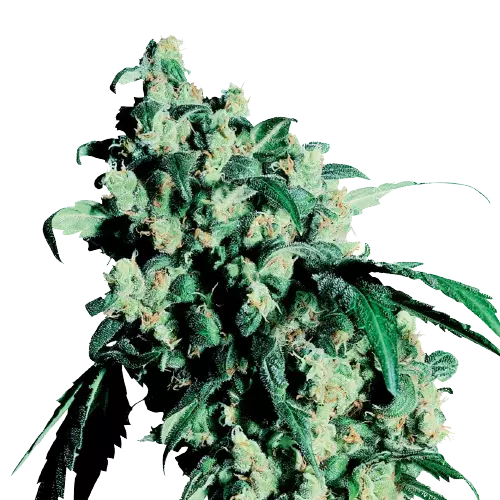
Seedlings Transing Guide sits in the space between "general cultivation knowledge" and "the specific detail you actually need when this comes up during a grow." Generic guides mention it in passing; this piece gives it the focused treatment that Aussie growers dealing with it in real time require.
The First Fortnight Sets the Trajectory
A seedling's first ten to fourteen days determine its ceiling for the rest of the grow. Strong early root development in appropriate medium, under gentle light, at a stable 23-25°C creates a plant with the structural foundation to handle the stresses of topping, training, and the metabolic demands of flower production. A seedling that stretches toward distant light, drowns in waterlogged medium, or gets hit with full-strength nutrients during its first week carries that damage forward — permanently reduced vigour, weaker stems, smaller root mass, and lower ultimate yield.
Lighting for seedlings should sit around 200-300 PPFD — roughly 40-50% of what you provide during flowering. A 200W LED that works at 45 cm for vegetative plants will bleach seedling tissue at the same distance. Start at 60-75 cm and reduce height by 5 cm every three to four days as the seedling produces its first pairs of true leaves. Stretched, lanky seedlings with thread-thin stems need more light intensity. Compact seedlings with thick, sturdy stems are receiving the right amount.
Getting Transplant Timing Right
Move the seedling when roots reach the edges and bottom of the starter pot but before they begin circling. In a typical 300 mL container, this happens ten to fourteen days after sprouting. Pop the root ball out and assess: if it holds its shape, the roots have colonised the medium adequately and it is time to move up. If it crumbles apart, the roots need more time. If roots are a dense white mat wrapping the container multiple times, you waited too long — the plant is root-bound and will need a few extra days to recover after transplant.
Both the old root ball and the new medium should be moist at transplant time. A dry interface between old and new medium creates a gap that roots hesitate to cross, stalling root expansion into the fresh medium for days. Do not feed for three to five days post-transplant — let the roots establish in their new territory without the additional stress of concentrated nutrient salts. Getting seeds to crack reliably depends more on environmental consistency than on any single technique. Our seed starting and germination guide details each method with Southern Hemisphere timing for Aussie growers.
Pot Sizing: The Step-Up Sequence
Starter pot to 4 litre to 15-20 litre final container is the standard Australian home-grow progression. Each step roughly triples root space. Skipping straight from a starter pot to a 20-litre final pot works but invites overwatering problems — the large volume of uncolonised medium stays wet around the tiny root ball, creating anaerobic conditions that promote root rot.
Exception: autoflower seeds should go directly into their final container from the start. Autoflowers have no time to waste recovering from transplant shock. Every stalled day reduces final yield in a lifecycle that runs only eight to twelve weeks. If planting an auto into a 15-litre pot, water in a small circle around the seedling and expand the watering radius gradually as roots colonise outward.
Troubleshooting Early-Stage Seedling Issues
Damping off (seedling collapses at the soil line): A fungal attack triggered by persistently wet conditions and stagnant air. Prevention is the only reliable approach — ensure adequate airflow, avoid overwatering, and use clean, unused medium. Once a seedling damps off, it is lost.
Helmet head (seed shell stuck on the emerging cotyledons): The seed coat failed to separate during emergence. Most cases resolve naturally within 48 hours as the cotyledons push the shell off. If still stuck after two days, lightly mist the shell to soften it and use fine tweezers to ease it away. Never yank — tearing cotyledons destroys the seedling's initial energy source.
Cotyledon yellowing (week two or three): Normal. Cotyledons are the seed's stored energy reserves. As the plant develops true leaves and becomes photosynthetically self-sufficient, the cotyledons are depleted and yellow. This is a developmental milestone, not a problem.
Frequently Asked Questions
- Should seedlings receive nutrients?
- In pre-amended soil: no supplemental feeding until week three at the earliest — the soil contains everything the seedling needs initially. In coco or hydro: introduce nutrients at 25-30% of full strength once the first pair of true (serrated) leaves is fully open. Seedling roots are tiny and cannot process concentrated feed.
- How much water does a seedling actually need?
- Very little. Water a small ring around the stem, not the entire pot surface. The root zone occupies only a fraction of the container at this stage — wetting the entire volume creates persistently moist conditions in areas where no roots exist, which promotes fungal growth and root problems.
- When is it safe to start topping or bending?
- After the fourth or fifth node is established and the stem has developed a slight woodiness — typically three to four weeks after emergence. Training a very young seedling risks snapping stems that have not developed enough structural rigidity to handle manipulation.
Related Articles
Ready to Start Growing?
Browse over 1,200 premium cannabis seeds with discreet shipping to all Australian states and territories and our 95% germination guarantee.
Shop Cannabis Seeds