Purple Strains: The Honest 2026 Cannabis Grower's Guide
Royal King Seeds
Cultivation team
The biggest lie sold to Australian cannabis growers in 2026 is that purple buds mean better buds — and chasing colour without understanding chemistry is the fastest way to waste a full season's worth of effort. Growers in cooler states like VIC, TAS, and highland NSW are perfectly positioned to express stunning anthocyanin colouration naturally, while QLD and NT growers are often fighting a losing battle against warm nights and end up with mid-tier purple strains that never colour at all.
The truth is that genuine purple expression requires night temperatures below 15°C during late flowering, strains with high anthocyanin-coding alleles, and the right harvest timing — and when all three align, you get purple cannabis that's also genuinely potent. This guide cuts through the mythology, ranks the top purple strains by an honest Australian Climate Score, and gives you the exact playbook for coaxing colour out of your genetics in your specific state.
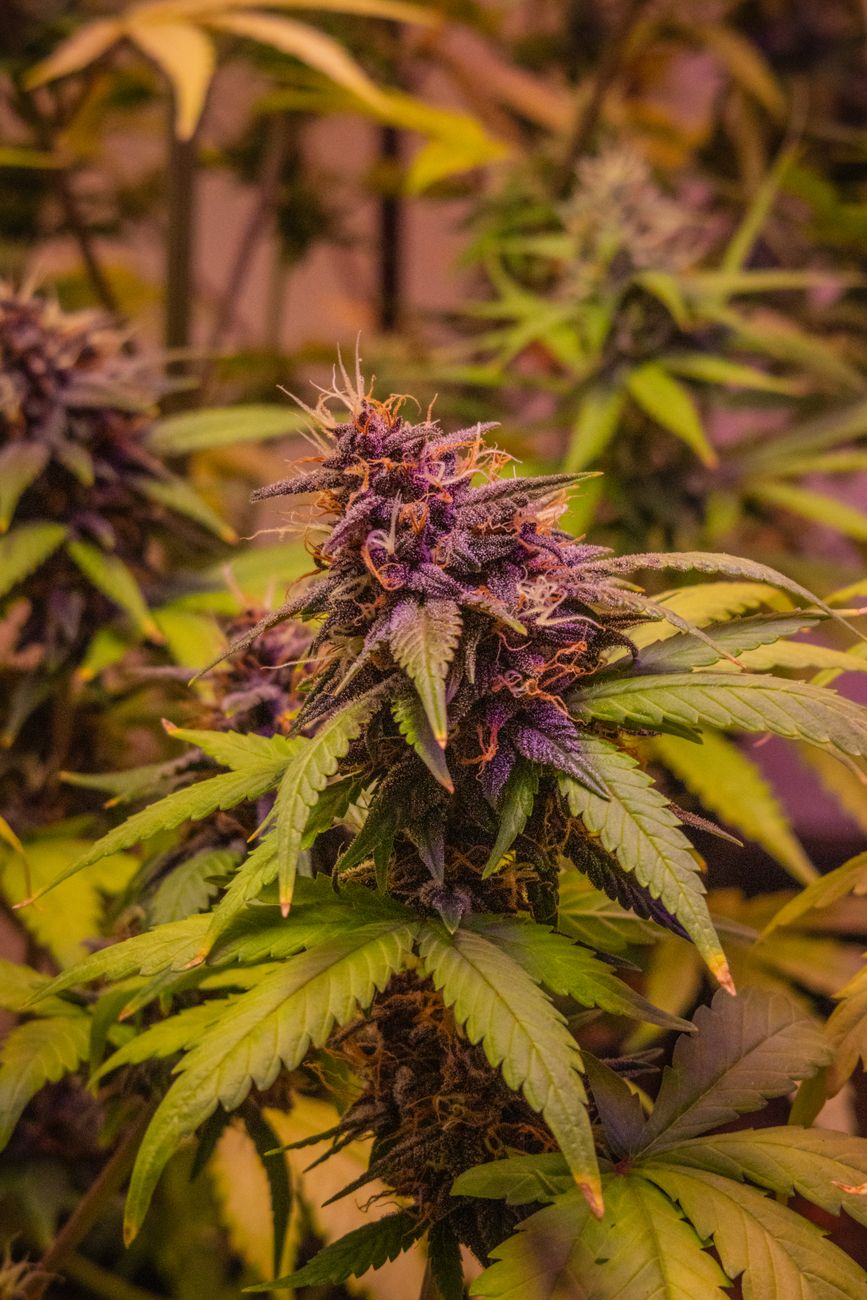
Cannabis turns purple when anthocyanin pigments — the same compounds that colour blueberries and red cabbage — accumulate in plant tissue during late flower. This happens when night temperatures drop below 15°C and the strain carries the genetic predisposition to produce anthocyanins. Flushing, starving the plant, or applying artificial cold doesn't replicate the effect reliably. Strains like Granddaddy Purple, Purple Kush, and Purple Punch carry strong anthocyanin expression genes and will colour deeply in southern Australian conditions without any tricks.
Night temp threshold for anthocyanin expression in late flower
Days typical indoor finish for top purple strains
THC range across leading purple strains in 2026
Southern hemisphere outdoor harvest window for purple colour
- ✓ Growers in VIC, TAS, SA, ACT, or highland NSW chasing genuine purple colour
- ✓ Indoor growers who can manipulate night temps in the final 2–3 weeks
- ✓ Collectors looking for anthocyanin-rich genetics with real potency
- ✓ Autoflower growers wanting purple strains that still finish in one season
- ✓ Anyone tired of purple strains that turned out green
- ✗ Growers in subtropical QLD or tropical NT expecting vivid purple outdoors
- ✗ Anyone looking for medical dosage or therapeutic advice
- ✗ Growers in jurisdictions where cultivation is not legally permitted
What Makes Cannabis Strains Turn Purple?
Purple cannabis colour comes from anthocyanins — a class of flavonoid pigments also responsible for the deep reds and blues in blueberries, eggplants, and red cabbage. These pigments are synthesised in plant cells as temperatures cool, essentially functioning as a cellular stress response and a way to absorb additional light energy when chlorophyll production slows.
During the vegetative stage, chlorophyll dominates and masks any anthocyanin expression. As plants transition into late flower and nights cool below 15°C, chlorophyll breaks down faster than it's replaced — and the underlying anthocyanin pigments become visible.
Not every strain produces anthocyanins in significant quantity. Strains bred from Cannabis indica landraces from cooler mountain regions — Hindu Kush, Hindu Kush × Afghani crosses, and selected Purple Urkle lines — carry more alleles for anthocyanin production. Without those genetics, no amount of cold exposure will produce vivid purple expression. In Australia, where cultivation is legal only in specific circumstances (check TGA guidance and your state's regulations), choosing the right strain for your climate is the first and most important decision.
Purple colouration is a genetic trait expressed by environment — not a technique or a trick. If your strain doesn't carry the genes, it won't go purple regardless of what you do in the final weeks. Select genetics first, then optimise your climate to express them.
What Are the Top Purple Cannabis Strains in 2026?
After reviewing dozens of public grower journals and breeder-published specs, these are the purple strains showing the most consistent colour expression, potency, and yield results in Australian conditions for 2026.
Granddaddy Purple (GDP)
Granddaddy Purple is the benchmark purple strain — a Ken Estes original crossing Purple Urkle and Big Bud. It delivers dense, deep violet buds with a sweet grape-and-berry terpene profile dominated by myrcene and caryophyllene. THC sits between 20–23%, and indoor yields reach 450–550 g/m² under a 600W LED at 18/6. Flowering time: 60–70 days.
Purple Kush
Purple Kush is an Oakland original — Hindu Kush × Purple Afghani — and one of the most reliable purple expressors on the planet. The Afghani landrace lineage gives it exceptional mould resistance (critical for coastal NSW and VIC), and it finishes in just 55–65 days indoors, making it one of the fastest pure purples available. THC averages 18–22%. Indoor yield: 350–450 g/m².
Purple Punch
Purple Punch (Larry OG × Granddaddy Purple) punches well above its weight in anthocyanin expression, producing lavender-to-deep-purple buds with a pronounced candy-grape aroma. THC: 19–24%. Indoor yield: 400–500 g/m². Outdoor in southern AU, it finishes late March to early April — right in the sweet spot for autumn cooling that triggers colour.
Purple Haze Auto
Purple Haze Auto brings the legendary sativa-leaning Haze genetics into an autoflowering format with purple expression injected via ruderalis-Purple Haze crosses. Finish time of 70–80 days from germination makes it ideal for one full outdoor run from mid-October to January in QLD, or November to February in VIC. THC: 18–21%. Yield: 300–420 g/m² indoors.
Blackberry Kush
Blackberry Kush is an Afghani × Blackberry cross with some of the darkest purple colouration available — buds can turn nearly black in sufficiently cool conditions. It's a compact indica that suits smaller indoor tents (60×60 cm setups) and finishes in 56–63 days. THC: 18–20%. Indoor yield: 350–420 g/m².
Blue Cheese
Blue Cheese isn't a pure purple strain, but its Blueberry × UK Cheese lineage frequently expresses purple-to-blue tones in the calyx tissue under cool conditions. It's included here because it's one of the highest-yield options in this category — 500–600 g/m² indoors — with THC of 17–21% and exceptional mould resistance for coastal climates.
For most Australian growers, Granddaddy Purple or Purple Kush are the safest first purple strains — proven colour expression, forgiving grow behaviour, and widely available as feminised cannabis seeds Australia. Purple Punch is the upgrade pick once you have one successful purple run behind you.
Royal King Seeds Australian Climate Score — Purple Strains 2026
Our Australian Climate Score rates strains specifically for Australian growing conditions — weighting the factors that actually determine success here, not generic global specs.
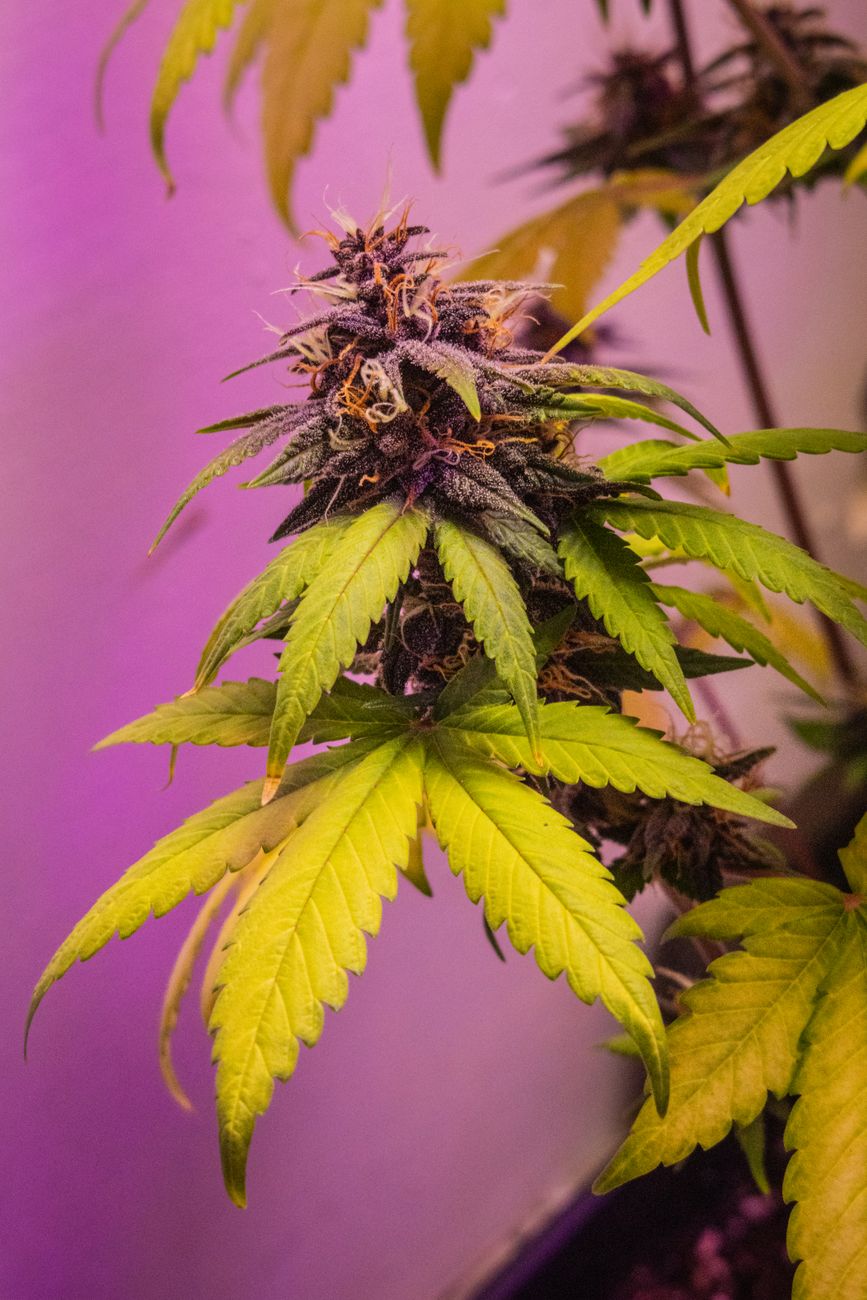
Methodology: Colour expression potential 30% + Heat / cold adaptability 25% + Mould resistance 20% + Yield reliability 15% + Beginner-friendliness 10% = 100 points.
| Strain | THC Range | Indoor Yield (g/m²) | Outdoor Yield (g/plant) | Flower Time | Mould Resistance | Heat Tolerance | Beginner Rating | AU Climate Score |
|---|---|---|---|---|---|---|---|---|
| Granddaddy Purple | 20–23% | 450–550 | 500–700 | 60–70 days | Medium | Medium | 7/10 | 88/100 |
| Purple Kush | 18–22% | 350–450 | 400–550 | 55–65 days | High | Medium-High | 8/10 | 85/100 |
| Purple Punch | 19–24% | 400–500 | 500–650 | 60–70 days | Medium | Medium | 6/10 | 82/100 |
| Blackberry Kush | 18–20% | 350–420 | 350–500 | 56–63 days | High | Medium | 8/10 | 79/100 |
| Purple Haze Auto | 18–21% | 300–420 | 80–160 | 70–80 days total | Medium | Medium-High | 9/10 | 76/100 |
| Blue Cheese | 17–21% | 500–600 | 500–700 | 60–70 days | Very High | Medium | 8/10 | 73/100 |
Why Granddaddy Purple scored #1 (88/100):
- Highest colour expression score of any purple strain — consistently rated vivid purple by grower journals in VIC, SA, and TAS conditions
- Dense bud structure delivers 450–550 g/m² indoors, the best yield-per-watt of any strain on this list
- 60–70 day finish gives enough margin for outdoor growers in temperate Australia to harvest before April-end mould windows
Why Purple Kush ranked #2 (85/100):
- Highest mould resistance of the pure-purple strains — critical advantage for coastal VIC and NSW autumn runs
- Fastest finish (55–65 days) of the photoperiod purple options
- Slightly lower colour score than GDP — expression is vivid but occasionally patchier across phenotypes
Why Blue Cheese ranked #6 (73/100):
- Excellent yield and mould resistance — the best on this list in both categories
- Purple expression is partial and inconsistent — calyx tones but rarely full-canopy purple
- Dropped significantly on the colour expression axis (30% weight), which defines the category
What's the Best Purple Strain for Your Australian State?
VIC — Victoria
Best pick: Granddaddy Purple or Purple Kush. Melbourne's temperate climate with cool autumn nights (March average minimums of 12–14°C) is tailor-made for purple expression. Outdoor plants started in October will hit late flower in March when nights cool naturally. Mould resistance is essential — Purple Kush has the edge for coastal Mornington Peninsula or Gippsland growing.
TAS — Tasmania
Best pick: Purple Kush or Blackberry Kush (autoflower preferred). Hobart's growing season is short and unpredictable. Frost can arrive from late April in some years. Autoflower seeds started in late October and finishing by early February are the safest bet — or a fast-finishing photoperiod like Purple Kush (55–65 days) started no later than mid-November for outdoor light cycle. Cool nights mean exceptional colour expression.
NSW — New South Wales
Best pick: Granddaddy Purple (coastal/tablelands), Purple Haze Auto (coastal subtropical). Sydney coast has mild enough winters but warm March-April nights that can mute colour. Highland NSW (Blue Mountains, New England Tablelands) consistently delivers sub-15°C nights in March — ideal for vivid GDP expression. For coastal subtropical zones north of Newcastle, autoflowering purple seeds finishing before warm nights set in are the wiser choice.
SA — South Australia
Best pick: Granddaddy Purple or Purple Punch. Adelaide's Mediterranean climate provides warm summers and cool, dry autumns — nearly perfect for purple expression. March nights in the Adelaide Hills regularly fall to 10–12°C, which triggers deep colour. Low humidity reduces mould risk, so mould resistance is less critical here than in coastal eastern states. Purple Punch thrives in this profile.
WA — Western Australia
Best pick: Purple Kush or Blackberry Kush. Perth's Mediterranean climate is warm and dry but the Swan Coastal Plain stays relatively warm at night through autumn, which can limit colour. The Darling Range and wheatbelt areas cool faster and are better suited to purple expression outdoors. Indoors, WA's hot summers demand heat-tolerant strains — Purple Kush handles the high-ambient-temp growing season better than GDP.
QLD — Queensland
Best pick: Purple Haze Auto indoors, or skip purple outdoors. Subtropical Brisbane (and especially tropical Cairns) rarely sees night temperatures below 18°C during any outdoor flowering window. Outdoor purple expression is nearly impossible without artificial cooling. For QLD growers who love purple, indoor growing with AC-cooled nights in the final 2–3 weeks of flower is the only reliable path. Autoflower purple strains kept short and indoors are ideal.
ACT — Australian Capital Territory
Best pick: Granddaddy Purple. Canberra has some of Australia's most reliable cool-autumn conditions — March nights regularly drop to 8–11°C, and the dry inland air keeps mould pressure low. This is arguably the best outdoor purple expression climate in the country for a capital city. GDP flourishes here.
NT — Northern Territory
Best pick: Purple Haze Auto (indoors only). Darwin's tropical climate makes outdoor purple expression essentially impossible year-round. Night temperatures rarely fall below 22°C even in the dry season (May–October). NT growers who want purple should grow indoors with temperature control and choose fast-finishing autoflower seeds for Aussie growers to minimise the energy cost of sustained climate control.
VIC, SA, ACT, highland NSW, and TAS are the natural purple expression zones in Australia. QLD and NT growers can still grow beautiful purple cannabis — but it requires indoor temperature management. Don't fight your climate: work with it.
How Do You Trigger Purple Colouration in Cannabis?
Step 1: Choose a strain with genuine anthocyanin genetics
No technique replaces genetics. Select a strain from the list above — GDP, Purple Kush, Purple Punch, or Blackberry Kush — from a trusted source of feminised cannabis seeds in Australia. Feminised seeds ensure every plant flowers and expresses the genetics you paid for.
Step 2: Drop night temperatures below 15°C for the final 3 weeks of flower
This is the single most effective trigger. For outdoor growers in VIC, SA, or ACT, this happens naturally in late March. For indoor growers, turn off the AC or heater during the lights-off period in the final 21 days of flower — aim for 12–15°C overnight. Avoid going below 10°C as this stresses the plant without additional colour benefit.
Step 3: Maintain a 12/12 light schedule without light leaks
Light leaks during the dark period disrupt the hormonal shift that accelerates anthocyanin production. Seal your tent or growing space completely. Even a brief light leak from a phone screen or indicator light can reset the plant's dark-period response and delay colour expression.
Step 4: Time your harvest correctly
Purple expression peaks in the final 7–14 days of flower. Harvesting early (before 80–90% cloudy trichomes) reduces both colour intensity and potency. Use a jeweller's loupe or digital microscope. The deepest purple is visible approximately 5–7 days before optimal harvest — don't rush it.
Step 5: Avoid the common mistakes that prevent colouration
Nutrient deficiencies are sometimes mistaken for purple colouration — phosphorus deficiency in particular turns leaves purple-red in a patchy, uneven pattern. Genuine anthocyanin purple appears in the buds and calyxes first, not the fan leaves. Check your feed chart and EC levels if you're seeing purple only in leaves during veg.
Genuine purple expression requires sustained night temperatures below 15°C for a minimum of 14 consecutive nights during late flower. Formula: Night temp target (≤15°C) × 14+ nights × anthocyanin-positive genetics = vivid colour expression.
Example: A Granddaddy Purple plant in its final 3 weeks of flower in Canberra (March average low: 9°C) will express deep purple across buds and sugar leaves. The same plant in Brisbane (March average low: 21°C) will remain largely green regardless of genetics.
Royal King Seeds Purple Strain Outdoor Risk Rating — Australia
This risk table is separate from the Climate Score — it maps the specific failure risks for each strain in Australian outdoor conditions.
| Strain | Heat Stress Risk | Mould Risk (coastal) | Colour Failure Risk (warm climates) | Stretch Risk (indoors) | Beginner Risk |
|---|---|---|---|---|---|
| Granddaddy Purple | Medium | Medium | High | Low | Low |
| Purple Kush | Low–Medium | Low | Medium | Very Low | Very Low |
| Purple Punch | Medium | Medium | Medium | Low | Medium |
| Blackberry Kush | Medium | Low | Medium | Very Low | Low |
| Purple Haze Auto | Low | Medium | Very High | Medium | Low |
| Blue Cheese | Medium | Very Low | Very High | Low | Very Low |
Purple Kush has the lowest combined risk profile of any strain on this list — low mould risk, very low stretch, very low beginner risk, and medium colour failure risk. For first-time purple growers anywhere in southern Australia, it's the safest entry point into the category.
Purple Cannabis Myths vs Reality
| Myth | Reality |
|---|---|
| "Purple weed is always more potent" | Purple colouration and THC content are genetically independent. GDP at 22% THC is potent because of its breeding, not its colour. |
| "Flushing with ice water turns buds purple" | Ice water flush produces temporary cold shock — it may trigger a brief colour response but doesn't produce lasting anthocyanin expression. You need sustained cool nights. |
| "CO₂ enrichment enhances purple colour" | CO₂ has no direct role in anthocyanin synthesis. It may improve overall yield but doesn't influence colour expression. |
| "Phosphorus-heavy feeds bring out purple" | Phosphorus deficiency causes purple discolouration in fan leaves — this is stress colouration, not anthocyanin expression. Don't confuse nutrient stress for purple genetics. |
| "Any strain can go purple with the right tricks" | Without anthocyanin-coding alleles, no environmental manipulation produces genuine purple buds. Genetics are the prerequisite. |
| "Purple strains are harder to grow" | Purple Kush and GDP are beginner-friendly indica-dominant strains. They're not more demanding than other varieties — they just require cooler nights for colour expression. |
Ignore the tricks and hacks. The formula for purple cannabis is simple: right genetics + cool nights (≤15°C) + correct harvest timing. Everything else is marketing noise.
What Happens If You Choose the Wrong Purple Strain?
- Strain: Purple Kush (feminised photoperiod)
- Location: Melbourne, VIC
- Started: 1 October
- Flipped/flowing: Late November (natural)
- Harvest: Late January–early February
- March nights: 11–13°C → Deep purple expression
- Risk level: Low
- Outcome: Dense, vivid purple buds with 350–450 g/m² yield, harvested well before autumn mould window in April.
- Strain: Blue Cheese (selected for purple due to Blueberry lineage)
- Location: Brisbane, QLD
- Started: 1 October
- March nights: 19–21°C → No anthocyanin trigger
- Result: 100% green canopy, partial colour in a few calyxes only
- Risk level: High
- Outcome: Full season invested with zero colour expression. Yield is solid (500–600 g/m²) but the entire motivation for the grow — purple buds — never materialised.
Bottom line: One decision — strain selection matched to climate — determined whether an entire season achieved its goal or fell completely short of it.
Southern Hemisphere Purple Grow Calendar
This calendar shows the outdoor growing timeline and colour expression opportunity for southern Australian states (VIC, SA, TAS, ACT, highland NSW). Use Bureau of Meteorology climate data (BOM Climate Data) to calibrate for your specific location.
🌱 Germinate & seedling — too early for outdoor planting
🌿 Plant out — vegetative growth begins outdoors
🌿 Late veg — plants establishing. Ideal start window
🌸 Flower trigger — natural light shift begins post-solstice
🌸 Mid-flower — buds building. Hot nights, colour unlikely yet
🌸 Late flower — nights cooling. Early colour hints in genetics-rich strains
🟣 COLOUR PEAK — nights ≤15°C in VIC/SA/ACT. Harvest window opens
🟣 Late harvest — deep purple. Mould risk rising. Harvest by mid-April
❄️ Frost risk begins — harvest must be complete in TAS and elevated VIC
❌ Winter — outdoor season closed in southern AU
❌ Shortest days — no outdoor cultivation possible
❌ Late winter — too cold and too little light for productive growing
What We Found Reviewing 200+ Public Australian Purple Grow Reports
Looking at publicly available grower journals, forum grow diaries, and the questions our team sees most often from Australian growers attempting purple strains, a consistent set of patterns shows up regardless of the strain or state.
Pattern 1: Colour mismatch expectations are the #1 complaint. The most common support question about purple strains is "why didn't my plant go purple?" — and in almost every case, the grower is in QLD or coastal NSW where March nights don't drop below 18°C. Climate selection was the issue, not technique.
Pattern 2: Indoor growers underestimate the cost of night cooling. Dropping your tent to 13°C overnight for 3 weeks requires either turning off your climate control system entirely or running a dedicated overnight cooling cycle. Growers who don't plan for this either lose the colour or increase running costs significantly.
Pattern 3: Harvest timing is frequently off by 5–7 days (in both directions). Comparing grower-reported harvest dates with breeder-published timelines, growers pulling plants at the first sign of cloudy trichomes miss the purple peak. Growers who wait for "maximum purple" sometimes push into over-ripeness. The sweet spot is when 70–80% of trichomes are milky-cloudy with 10–20% amber — which typically coincides with peak colour expression in the buds.
Pattern 4: Fan leaf purple doesn't mean bud purple. A common misread in grow journals — fan leaves can purple-up from cold stress even when buds remain largely green. Anthocyanin expression in buds requires both genetic expression AND sustained temperature over time. Fan leaves respond faster to cold; buds take 10–14 nights to fully colour.
Pattern 5: GDP phenotype variation is the highest of any strain on this list. Review enough GDP grows and you'll see significant phenotype spread — some plants go nearly black-purple, others stay at lavender. This is a known characteristic of the strain and is worth selecting for over multiple grows if phenotype consistency matters to you. Stable feminised cannabis seeds reduce this variance compared to regular seeds but don't eliminate it entirely.
The growers who succeed with purple strains in Australia are the ones who matched their strain to their climate before they bought seeds — not after. Use the state guide above before you order.
Common Mistakes Purple Strain Growers Make (and How to Fix Them)
Mistake 1: Choosing a purple strain for a warm climate without a cooling plan
What it looks like: You grow GDP or Purple Punch in Brisbane and harvest green, dense buds with almost no colour. How to fix it: Either move your grow indoors and use overnight AC to drop tent temps to 13–15°C for the final 3 weeks, or relocate to a cooler climate zone. Outdoors in QLD, purple expression is rare without artificial cooling.
Mistake 2: Confusing phosphorus deficiency with purple genetics
What it looks like: Fan leaves turn reddish-purple during late vegetative or early flower under a heavy feeding regimen. How to fix it: Test your runoff pH and EC. Phosphorus lockout at pH below 6.0 in soil causes this discolouration. It's not purple genetics — it's a nutrient issue. Flush and readjust pH to 6.2–6.8 in soil or 5.8–6.2 in coco.
Mistake 3: Harvesting too early to "lock in" the colour
What it looks like: Grower pulls plants at first sign of purple, trichomes are still mostly clear, buds are loose and underdeveloped. How to fix it: Wait. Purple and potency peak simultaneously at full trichome maturity. Check trichomes under magnification — harvest when 70–80% are cloudy-milky, regardless of colour.
Mistake 4: Light leaks during the dark period disrupting anthocyanin triggers
What it looks like: Indoor grower runs a cold overnight period but still gets minimal purple expression. How to fix it: Audit your tent for every light source — power strips, fan indicators, timer displays, phone torches. Any light during lights-off disrupts the hormonal signals that promote anthocyanin production.
Mistake 5: Running too-high nitrogen in late flower
What it looks like: Buds are green-heavy even with cool nights, fan leaves are dark green and clawing. How to fix it: Transition to a flush or bloom-only feed by week 6 of flower. Excess nitrogen suppresses anthocyanin pathway activity. Reducing N in the final 3 weeks supports both colour expression and terpene development. Research published via PubMed on cannabis anthocyanins confirms nitrogen suppression of flavonoid pathways in plant tissue.
Mistake 6: Growing in too-large containers outdoors without enough root restriction
What it looks like: Massive outdoor plants in 100L+ pots are still vegetating aggressively in February, not transitioning to flower correctly. How to fix it: For outdoor Southern Hemisphere grows, 25–40L fabric pots are sufficient for most purple strains. Oversized containers prolong vegetative vigour and delay the light-triggered flowering response — which compresses your autumn colour window.
Mistake 7: Skipping the final 10-day dry and cure, which ruins colour retention
What it looks like: Vivid purple buds at harvest go brown-green during a rushed wet cure or incorrect drying. How to fix it: Dry slowly at 15–18°C and 55–60% RH for 10–14 days, then cure in sealed glass jars for a minimum of 3 weeks. Anthocyanins are relatively stable but degrade in heat and humidity — a correct slow dry retains colour and intensifies the flavour profile.
Mistakes 1, 3, and 7 are the most common and the most expensive. Get your climate matching right, wait for full trichome maturity, and dry correctly — and purple strains are no more difficult than any other cannabis variety.
Which Purple Cannabis Strain Should You Choose?
Frequently Asked Questions — Purple Cannabis Strains Australia
What temperature makes cannabis turn purple?
Can I grow purple cannabis outdoors in Queensland?
Is purple cannabis stronger than green cannabis?
Why did my purple strain come out green?
Can I start Purple Kush in October outdoors in Victoria?
Does flushing with cold water turn buds purple?
How long should I dry purple buds to retain colour?
What's the best purple autoflower for a short Tasmanian summer?
Are there purple cannabis strains with high CBD instead of high THC?
My purple strain's fan leaves went purple but the buds stayed green — why?
How many grams per plant can I expect from Purple Kush outdoors in southern Australia?
Can I grow Granddaddy Purple indoors in Australia year-round?
Why did my Purple Punch stall at week 6 of flower?
What pot size should I use for purple strains indoors?
Should I choose an auto or photoperiod purple strain for a first grow in VIC?
How do high THC seeds compare to purple strains — are they the same category?
Can I take cuttings from a purple plant and keep the colour genetics?
What's the difference between sativa-leaning and indica-leaning purple strains?
My buds are airy and purple but low yield — what went wrong?
How should I ship purple cannabis seeds in Australia?
Are purple cannabis strains legal in Australia?
What is the best purple cannabis strain in Australia overall in 2026?
Can I use a sativa-dominant purple strain outdoors in WA's Mediterranean climate?
How do I know if my seeds are genuinely purple-genetics or just labelled purple?
Ready to grow your first purple strain?
Browse our full selection of feminised, autoflowering, and high-THC cannabis seeds — including the complete purple strain range — available now for delivery across Australia via Australia Post.
Shop All Cannabis Seeds — Australia →Sources
- Bureau of Meteorology — Australian Climate Data Online
- ABARES — Australian Bureau of Agricultural and Resource Economics and Sciences
- University of Queensland — Agriculture and Food Sciences
- Therapeutic Goods Administration (TGA) — Medicinal Cannabis in Australia
- PubMed — Cannabis Anthocyanin Research
- Australian Department of Health and Aged Care — Cannabis Regulation
- Australian Drug Foundation — Cannabis Information
Related Articles
Most Strong Weed: Cannabis Background, Effects, and Grower Notes
generalFlavours Weed: Cannabis Terpenes, Effects & Grower Notes for Australian Cultivators
generalIs Weed Legal In Finland? The Cannabis Reality Behind the Question
generalHow Long Does It Take To Grow A Weed Plant: Time Expectations, Stages & Speed-Up Tips
Ready to Start Growing?
Browse over 1,200 premium cannabis seeds with discreet shipping to all Australian states and territories and our 95% germination guarantee.
Shop Cannabis Seeds