Potassium Deficiency In Cannabis: Diagnosing the Deficiency, Fixing pH, and Restoring Healthy Growth
Royal King Seeds
Cultivation team
Your cannabis plant's biggest silent killer isn't pests or overwatering — it's a locked-out nutrient sitting millimetres from the roots, completely inaccessible because the pH is off by half a point. Potassium deficiency is misdiagnosed more than almost any other cannabis problem, and growers spend weeks throwing expensive nutrients at plants that simply can't absorb what's already there. The fix almost always starts with pH, not with adding more feed.
Understanding exactly what to look for, where to measure, and how to correct it in Australian growing conditions — whether you're running soil in Brisbane's subtropical heat or coco in a Melbourne garage — is what separates a recovered crop from a lost one. This guide gives you the full diagnostic and correction protocol.
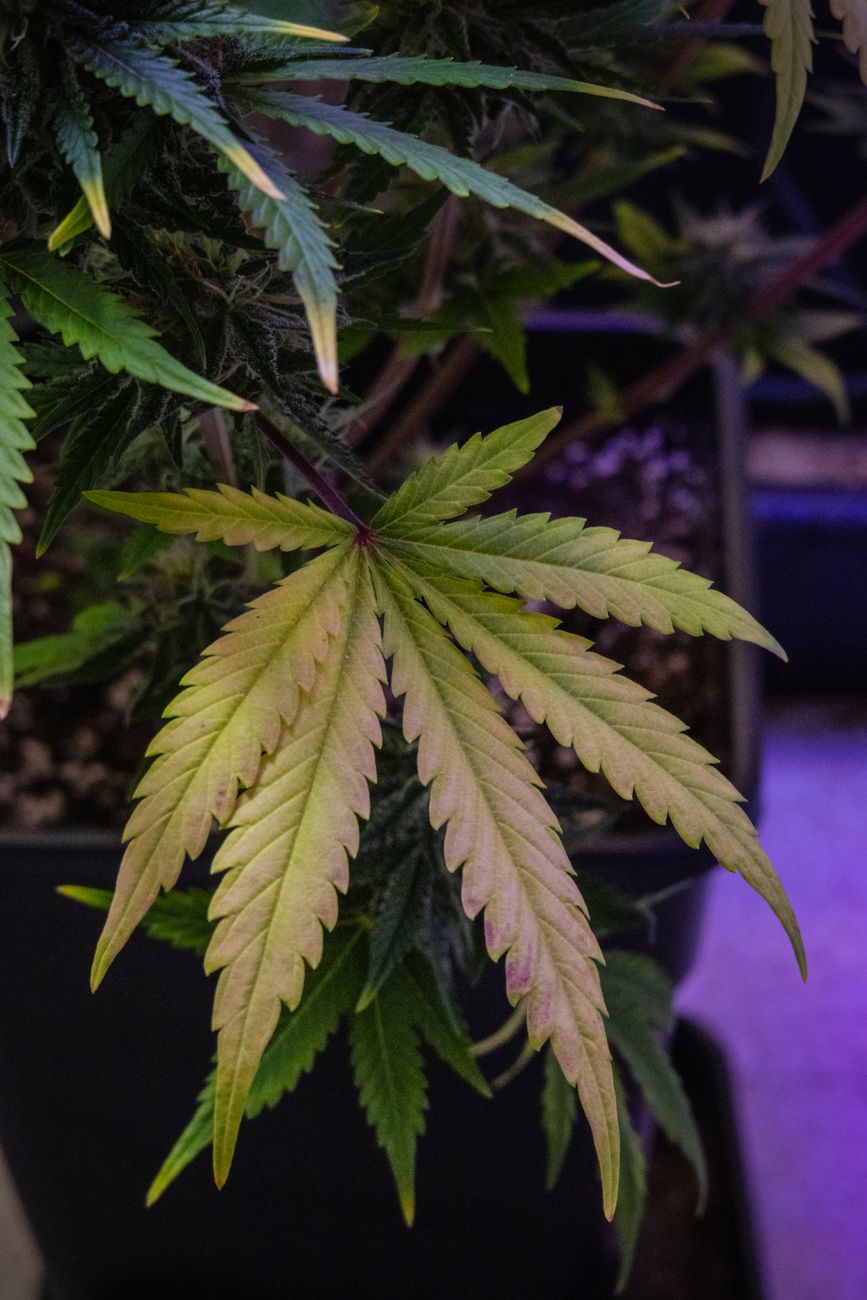
Potassium (K) deficiency in cannabis shows as brown, scorched leaf edges and tips — starting on older lower leaves — combined with yellowing between veins and progressively weakening stems. The root cause is most often an incorrect root-zone pH that locks potassium out even when it's present in the growing medium. Correct pH first (6.0–7.0 for soil; 5.5–6.5 for coco or hydro), flush if necessary, then reintroduce a balanced feed with elevated potassium. Recovery is typically visible within 7–10 days on new growth.
- ✓ Soil, coco, and hydro growers diagnosing brown leaf edges
- ✓ Growers whose plants look "burnt" despite correct feeding
- ✓ Anyone entering the flowering stage and seeing rapid decline
- ✓ Australian outdoor growers battling hot, dry summer conditions
- ✓ First-time growers who want a clear nutrient correction protocol
- ✗ Growers experiencing nitrogen or calcium deficiency (separate symptom profiles)
- ✗ Fully hydroponic recirculating systems without a runoff monitor
- ✗ Those seeking strain-selection advice (see our feminised seeds guides)
What Is Potassium Deficiency in Cannabis?
Potassium (chemical symbol K) is one of the three primary macronutrients cannabis plants require in the largest quantities — the "K" in the NPK ratio printed on every nutrient bottle. It doesn't build plant structure directly, but it governs almost every physiological process that keeps a plant alive and productive.
Potassium regulates water movement through stomata, drives sugar transport from leaves to buds, activates dozens of enzymes involved in photosynthesis, and is the primary mineral responsible for strong, thick stems that support heavy flowers. Without adequate potassium, a cannabis plant cannot efficiently convert light into energy, move carbohydrates to developing colas, or regulate moisture under heat stress.
In Australia, potassium deficiency becomes especially critical during the December–February summer period when temperatures regularly exceed 35°C in inland NSW, SA, and WA. Heat dramatically increases a plant's transpiration rate — and potassium is the gatekeeper of that process. A plant under heat stress and potassium deficiency simultaneously is doubly compromised, and the damage compounds faster than most growers expect. For jurisdictions where cultivation is permitted, understanding this interaction is essential to keeping a crop viable through the Australian summer.
Potassium is a master regulator, not just a nutrient. Treating it as an afterthought — or only correcting it when symptoms are advanced — is one of the most common yield-robbing mistakes in Australian home grows. Catch it early, and recovery is fast.
How Do You Identify Potassium Deficiency Symptoms?
Potassium deficiency produces a very specific visual signature. The key is knowing what order the symptoms appear, because early-stage deficiency looks almost identical to other problems if you're not watching carefully.
Stage 1: Early Warning Signs (Days 1–5)
The first sign is a slight yellowing or browning at the very tips of the oldest, lowest fan leaves. The leaf surface may develop a dull, slightly bluish-green tone. Stems may feel slightly less rigid than normal. These early signs are easy to miss under grow lights — always check under natural daylight or a white-spectrum torch.
Stage 2: Moderate Deficiency (Days 6–14)
Brown, scorched-looking edges spread inward along leaf margins — a symptom called "leaf scorch" or marginal necrosis. The yellowing expands from tip to margin while the leaf's centre may remain green. Because potassium is mobile in plant tissue, the deficiency progresses upward from old growth to newer leaves as the plant cannibalises reserves.
Stage 3: Severe Deficiency (Day 14+)
At advanced stages, large portions of the leaf turn brown and brittle. Stems weaken and may visibly droop even with adequate watering. Bud development stalls or produces loose, airy flowers. Terpene and resin production drops measurably. At this stage, the plant has been under-supplied for at least two to three weeks, and recovery requires complete intervention.
How to distinguish potassium deficiency from look-alikes:
- Nitrogen deficiency: Yellowing starts uniform and pale yellow — no brown crispy edges.
- Calcium deficiency: Brown spots appear in the middle of leaves, not at margins; new growth is affected first.
- Windburn / light burn: Only affects leaves closest to the light or fan; no progression pattern.
- Potassium lock-out (pH issue): Looks identical to true deficiency — pH testing is the only way to tell them apart.
If you see brown, crispy leaf edges progressing from bottom to top on older leaves, potassium deficiency is your prime suspect. Check pH before buying any new nutrient products — lock-out is the most common cause, and it costs nothing to fix.
What Causes Potassium Deficiency in Cannabis?
There are four primary causes, and understanding which one applies to your situation determines the correct fix. Getting this diagnosis wrong is why so many growers waste money on nutrients that don't help.
Cause 1: Incorrect Root-Zone pH (Most Common)
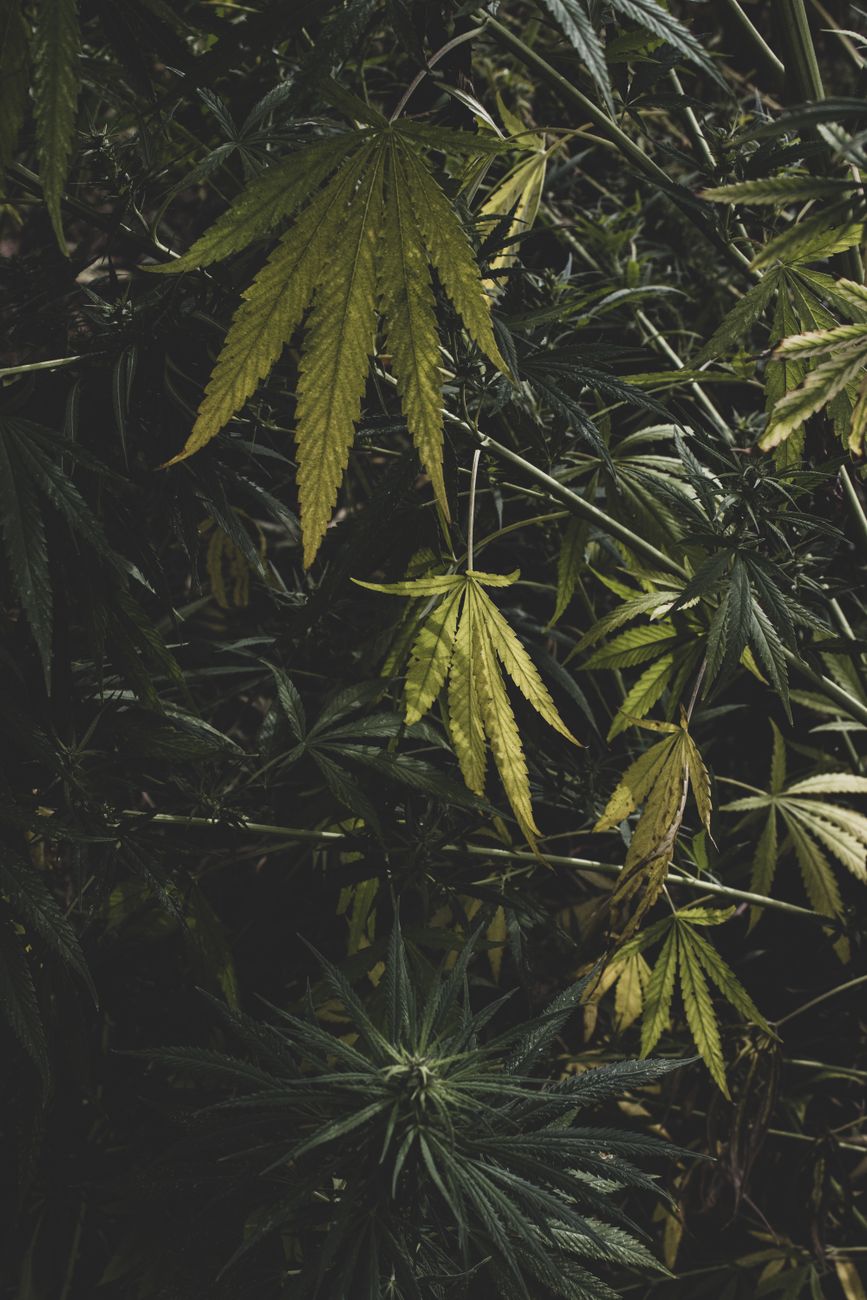
Cannabis roots absorb potassium most efficiently at specific pH ranges. Outside those ranges, potassium becomes chemically "locked" to growing-medium particles and is unavailable to the plant — even if your solution or soil is full of it. In soil, potassium absorption peaks between pH 6.0 and 7.0. In coco coir or hydroponic systems, the range is narrower: 5.5–6.5. A reading of 7.5 in soil effectively starves the plant of potassium regardless of feed strength.
Cause 2: Insufficient Potassium in the Feed
Base nutrients labelled for the vegetative stage are often low in potassium relative to what a flowering plant needs. Cannabis triples its potassium demand in weeks 3–6 of flower. Using a "grow" formula right through bloom without switching to a bloom or PK booster is a direct path to deficiency.
Cause 3: Nutrient Antagonism
Excessive sodium, calcium, or magnesium in the root zone can competitively block potassium uptake at the root membrane. This is a common issue in tap water areas across Perth and Adelaide where water hardness (calcium carbonate) is elevated. Flushing and re-feeding with correctly balanced nutrients is the fix.
Cause 4: Heat and Drought Stress (Australia-Specific)
Looking at public grower forum data and the support questions that come in throughout the Australian outdoor summer, one pattern is impossible to ignore: potassium deficiency complaints spike in January and February, clustering around plants exposed to multiple consecutive days above 38°C. Heat-stressed plants dramatically increase their potassium demand for stomatal regulation.
Outdoor plants in WA, SA, and inland NSW are most vulnerable. A plant that was fine on a standard feed schedule in November can show deficiency by mid-January without any change in nutrients — simply because demand has outpaced supply under heat loading.
pH mismatch causes the majority of potassium deficiency cases we see reported in Australian grow communities. Always test pH at the root zone (not just your input solution) before assuming you need more nutrients.
How Does pH Affect Potassium Uptake — And How Do You Fix It?
pH is the single most important variable in cannabis nutrient availability, and it's also the most neglected. The relationship between pH and potassium uptake is direct and predictable: small deviations from the optimal range produce large drops in absorption efficiency.
At pH 7.5 in soil, potassium availability drops to roughly 30–40% of what's present. At pH 5.0 in soil, it drops even further as the medium becomes too acidic for adequate K mobility. The sweet spot is 6.2–6.8 for most soil grows — this is where potassium, phosphorus, and micronutrient availability converge at their collective highest point.
How to measure root-zone pH correctly:
- Use a calibrated digital pH meter — pH test strips are not accurate enough for cannabis diagnosis.
- Measure both your input solution AND your runoff water. The runoff number reflects actual root-zone conditions.
- A gap of more than 0.5 between input and runoff pH indicates the medium is buffering strongly against your input — a flush is likely needed.
- In Australian tap water, many cities (especially Melbourne and Sydney) have slightly alkaline tap water around pH 7.2–7.8. Always pH-down your input solution before feeding.
pH correction products: pH Down (phosphoric acid) is the standard for lowering pH. pH Up (potassium hydroxide — note: this actually adds small amounts of potassium as it raises pH) is used for acidic solutions. For organic growers, dolomite lime (raises pH) and citric acid or apple cider vinegar (lowers pH) are common alternatives, though they act more slowly.
If your runoff pH deviates more than 0.5 units from your target range, flush with 3× the container volume of pH-corrected plain water before reintroducing nutrients.
Formula: Runoff pH – Target pH midpoint = Drift. If Drift > 0.5, flush with (container litres × 3) litres of pH-corrected water, then feed at half strength for the next 5 days.
Worked example: 15 L pot in Melbourne, soil grow, runoff reads 7.4, target is 6.5. Drift = 0.9 — flush required. Flush with 45 L of pH 6.2 water over two sessions. Reintroduce a bloom feed at half strength on day 3. Recheck runoff on day 5. Target: runoff between 6.2 and 6.8 within two feed cycles.
The 0.5/5 Runoff Rule is a practical, measurable trigger for flush decisions. Most growers who apply it avoid the common mistake of flushing too early (before pH has actually drifted) or too late (after the plant has been locked out for weeks).
How Do You Fix Potassium Deficiency Step by Step?
Step 1: Test Root-Zone pH
Collect runoff water from your most recent watering and measure it with a calibrated digital pH meter. Record the number. If it's outside 6.0–7.0 (soil) or 5.5–6.5 (coco/hydro), pH correction is your first move — not additional nutrients.
Step 2: Flush If pH Has Drifted Beyond 0.5
Apply the 0.5/5 Runoff Rule. Flush with 3× container volume of pH-corrected water. For a 15 L pot, that's 45 L of water at your target pH (6.3–6.5 for soil). Let the medium partially dry before reintroducing feed — roughly 60–70% dry by weight.
Step 3: Switch to a Bloom-Stage Nutrient with Elevated K
Flowering plants need a feed with a higher K number in the NPK ratio. Look for products with a K value of 5–8+ during mid-flower. Popular options available in Australia include GHE Flora Series, Canna Flores, and Aptus Fasilitor combined with a PK booster. Start at half the manufacturer's recommended dose for the first feed post-flush to avoid nutrient shock.
Step 4: Add a PK Supplement in Peak Flower (Weeks 3–6)
A dedicated PK 13/14 booster or equivalent potassium silicate supplement during the heaviest flowering weeks addresses the demand spike directly. Potassium silicate also strengthens cell walls, improving heat and drought tolerance — highly relevant for outdoor Aussie grows in QLD, WA, and SA through January.
Step 5: Monitor Recovery on New Growth
Damaged leaves do not recover — the brown edges stay brown. Watch for NEW growth: healthy, dark green, firm leaves with clean edges are your confirmation that potassium uptake has been restored. Recovery is typically visible within 7–10 days of correction. If symptoms continue spreading to new growth after 10 days, retest pH and consider whether a nutrient antagonism (excess calcium or sodium) may be the underlying issue.
The five-step protocol above resolves the vast majority of potassium deficiency cases within two weeks. Step 1 (pH testing) is the gate — skip it, and every subsequent step may be treating the wrong problem entirely.
Australian State-Specific Potassium Deficiency Considerations
Queensland (QLD) — Subtropical
QLD's subtropical humidity accelerates plant metabolism and increases nutrient demand faster than in cooler states. Potassium deficiency during the January–February wet season is compounded by root zone saturation that limits oxygen, reducing root efficiency. Growers in Brisbane and coastal QLD should elevate K levels from the start of flower and ensure excellent drainage to prevent secondary root issues.
Western Australia (WA) — Mediterranean / Arid
Perth's hot dry summers and high-pH tap water (often 7.5–8.0 from calcium bicarbonate) create a double potassium lock-out risk. The hard water elevates medium pH over time even when feeding correctly, while summer heat spikes K demand. WA growers should use a reverse osmosis filter or at minimum pH-correct every feed, and test runoff weekly through December–February. For outdoor grows in WA where cultivation is legally permitted, potassium silicate is a recommended addition through the hottest months.
Victoria (VIC) — Temperate
Melbourne's famously variable weather — 40°C one day, 18°C the next — creates erratic potassium demand swings. A plant that stabilised on a standard bloom feed in mid-December may show rapid K deficiency after a heat event in January. VIC growers should keep a PK booster on hand and increase potassium input the day before and after forecast heat waves above 35°C.
New South Wales (NSW) — Temperate to Subtropical
Sydney's coastal humidity is lower risk than QLD but still warrants attention during summer flowering. Inland NSW (e.g., Dubbo, Wagga Wagga) experiences extreme heat and lower humidity — conditions where potassium deficiency can develop within 5–7 days of a heat event. Sydney tap water is relatively soft and sits around pH 7.2–7.6, requiring routine pH adjustment.
South Australia (SA) — Mediterranean
Adelaide's dry summers create drought-stress conditions that amplify potassium demand significantly. The city's tap water is among Australia's hardest, with high calcium and magnesium content that directly antagonises potassium uptake. SA growers are strongly advised to use RO water or a water softener, and to add a potassium silicate supplement throughout the growing season for outdoor grows where legally permitted.
Tasmania (TAS) — Cool-Temperate
TAS presents the opposite risk: cooler root temperatures in autumn (March–May) slow potassium uptake even at correct pH. Growers in Hobart should ensure medium temperatures stay above 18°C for efficient nutrient absorption. Cold root zones reduce enzyme activity and can mimic deficiency even with well-calibrated feeding. Heat mats under fabric pots during cooler periods make a measurable difference.
WA and SA growers face the hardest baseline challenge due to high-pH, high-hardness tap water. QLD growers face the highest demand pressure due to heat and humidity. Every Australian state has a potassium risk profile — tailor your approach accordingly rather than following international feeding guides that don't account for these conditions.
When Is Potassium Deficiency Risk Highest? — Australian Seasonal Timeline
Potassium demand and lock-out risk change significantly across the Southern Hemisphere growing calendar. Outdoor growers starting in October need to understand when vulnerability peaks:
Spring Start
Low Risk
Veg Ramp-Up
Low Risk
Pre-Flower
Moderate
Early Flower
High Risk
Peak Flower + Heat
Very High Risk
Late Flower
High Risk
Harvest Window
Moderate
Autumn Wind-Down
Low Risk
Flush / Finish
Low Risk
Winter — Indoor Only
Low
Winter — Indoor Only
Low
Winter — Indoor Only
Low
The January peak-risk window is driven by three simultaneous factors: peak flower nutrient demand, maximum heat stress in southern states, and accumulated medium pH drift from weeks of feeding. If you only monitor potassium closely during one period, make it December through mid-February.
Royal King Seeds Potassium Risk Score — By Growing Medium
Not all growing setups carry the same potassium deficiency risk. This proprietary scoring ranks common Australian growing mediums by their overall K-deficiency risk, weighted across four factors: pH stability (40%), potassium retention (30%), heat sensitivity (20%), and buffering capacity (10%).
| Growing Medium | pH Stability | K Retention | Heat Sensitivity | Buffering | RKS K-Risk Score (/100) |
|---|---|---|---|---|---|
| Premium Potting Mix (with perlite) | Medium | High | Low | High | 28 (Low Risk) |
| Coco Coir (buffered) | Medium | Low | Medium | Low | 55 (Moderate Risk) |
| Coco Coir (unbuffered) | Low | Very Low | High | Very Low | 78 (High Risk) |
| DWC / Deep Water Culture | Low | None | Very High | None | 82 (High Risk) |
| Living Soil / Super Soil | High | Very High | Low | Very High | 18 (Very Low Risk) |
| Outdoor Native Soil (amended) | Variable | High | Medium | Medium | 42 (Low-Moderate) |
Why Living Soil scores lowest risk: Microbial communities buffer pH naturally and bind potassium in plant-available forms. Mycorrhizal networks dramatically extend effective root surface area, improving uptake efficiency even when K levels are moderate.
Why DWC scores highest risk: There is zero buffering capacity. A pH meter calibration error or a missed feed cycle creates immediate lock-out. In Australian summer heat above 28°C, DWC reservoir temperatures rise rapidly, reducing dissolved oxygen and root function simultaneously.
Why unbuffered coco scores high risk: Raw coco coir is naturally high in sodium and low in available calcium and potassium. It requires pre-buffering with a calcium-magnesium solution (Cal-Mag soak) before use. Skipping this step creates immediate potassium and calcium competition issues from week one.
For beginner Australian growers or anyone wanting to minimise nutrient intervention, living soil or a quality potting mix with perlite is the safest medium choice from a potassium risk perspective. DWC and unbuffered coco require consistent daily monitoring to avoid problems.
Royal King Seeds Potassium Risk Rating Table — By Growing Scenario
| Scenario | pH Drift Risk | K Demand Risk | Water Quality Risk | Beginner Risk | Overall |
|---|---|---|---|---|---|
| Indoor soil, mid-flower, VIC | Medium | High | Medium | Medium | Moderate |
| Outdoor coco, January, WA | High | Very High | Very High | High | Very High |
| Indoor DWC, peak flower, QLD | High | High | Medium | Very High | High |
| Living soil, outdoor, NSW coast | Low | Medium | Low | Low | Low |
| Indoor coco, veg stage, any state | Medium | Low | Medium | Medium | Low-Moderate |
| Outdoor native soil, amended, SA | Medium | High | High | Medium | Moderate-High |
What Happens If You Choose Wrong? — Two Grower Scenarios
- Grower: Indoor coco, Brisbane
- Detection: Tip browning noticed at day 5 of flower
- Action: Tested runoff pH (7.1), flushed with 45 L of pH 5.8 water, switched to bloom feed with PK booster
- Buffer: 9 days before problem escalated
- Risk Level: Low
- Outcome: New growth clean and vigorous by day 14 of flower. Yield unaffected. Final harvest within normal expected range.
- Grower: Indoor coco, same conditions
- Detection: Browning noticed at day 5 of flower
- Action: Added more PK booster without testing pH. pH remained at 7.2.
- Buffer: None — symptoms continued spreading
- Risk Level: High
- Outcome: Deficiency spread to mid-canopy by week 4 of flower. Bud development compromised. Estimated yield reduction of 25–35%. Grower had to harvest 5 days early to salvage what remained.
Bottom line: The only difference between these two growers was a 30-second pH test. One action — or inaction — determined an entire season's outcome.
Which Fix Should You Choose? — Potassium Deficiency Decision Guide
Start here: What does your runoff pH read?
- 📍 pH above 7.0 (soil) or 6.5 (coco/hydro): → Flush with pH-corrected water, then reintroduce bloom feed. Do not add more nutrients until pH is in range.
- 📍 pH below 5.8 (soil) or 5.3 (coco/hydro): → Flush with pH-Up-corrected water. Check for over-acidification from citric acid use or aged organic matter.
- 📍 pH is correct but symptoms persist: → Check for nutrient antagonism. Test EC (electrical conductivity). If EC is very high (>3.0 mS/cm), the medium is salt-loaded — full flush required.
- 📍 pH correct, EC normal, symptoms persist: → Add a potassium silicate supplement. Check root zone temperature — if below 18°C (TAS, VIC winter), use a heat mat.
- 📍 Using DWC in QLD summer, reservoir >28°C: → Cool reservoir with frozen water bottles or a reservoir chiller. High temps destroy root function regardless of pH.
- 📍 Outdoor WA or SA grower with hard tap water: → Invest in an RO filter or pH-correct every single feed without exception. Add K-silicate as a standard preventive measure.
- 📍 Running autoflower seeds in a tight schedule: → Prioritise preventive potassium management from week 3 of life. Autoflower strains have no time to recover from a week-long deficiency window.
What We See Looking Across Australian Grower Community Data
Reviewing questions from the Australian growing community and public grower forum threads across the past several seasons, a few patterns repeat with remarkable consistency around potassium deficiency.
The single most common thread title across grow forums is a variation of "plant looks burnt but I'm feeding correctly." In nearly every documented case, the first suggested fix — test your runoff pH — reveals a reading 0.5 to 1.5 units outside the optimal range. The grower had been feeding correctly, but the medium was no longer in range.
A second pattern is the mid-January symptom cluster: growers who were fine through November and December report sudden decline in the second week of January. This maps directly to the period when Australian heat reaches its statistical peak in most states and when flowering plants hit their peak potassium demand window simultaneously. The 2024 BOM summer data recorded 12 consecutive days above 38°C across large parts of inland NSW, SA, and WA — a period that generated a documented spike in nutrient distress reports from outdoor growers.
A third pattern: coco growers who skip medium buffering before first use report potassium deficiency-like symptoms as early as week 1 of seedling growth. Unbuffered coco actively pulls calcium and magnesium out of the nutrient solution, leaving the plant short on both, and the knock-on effect disrupts the entire macro and micronutrient uptake chain from day one.
The community data points clearly: pH testing and medium preparation are not optional steps. They're the foundation. Growers who treat them as baseline habits report dramatically fewer mid-cycle nutrient emergencies than those who test only when problems appear.
Common Potassium Deficiency Mistakes — What to Avoid
Mistake 1: Adding More Nutrients Before Testing pH
This is the number-one error. Adding a PK booster when pH is out of range achieves nothing — the nutrient cannot be absorbed. Worse, it raises the EC of the solution, which can cause osmotic stress on roots. Always test pH first. If it's out of range, fix pH before introducing any new product.
Mistake 2: Testing Input pH Instead of Runoff pH
Your input solution pH can be a perfect 6.5 while your root-zone pH sits at 7.3 due to accumulated salt deposits, limestone particles in the medium, or alkaline tap water buffering. Only runoff pH tells you what's actually happening at the root level. Test both — the gap between them reveals the problem.
Mistake 3: Flushing Without pH-Correcting the Flush Water
Flushing with unchlorinated tap water that sits at pH 7.5 doesn't fix a high-pH root zone — it makes it worse. Every litre of flush water must be pH-adjusted to your target range. In WA and SA particularly, tap water at pH 7.5–8.0 makes this step non-negotiable.
Mistake 4: Expecting Damaged Leaves to Recover
Brown, necrotic leaf tissue does not regenerate. Once cells are dead, they stay dead. The correct assessment point is new growth: if new leaves emerging after correction show clean, healthy margins, the problem is resolved. Growers who remove all damaged leaves immediately often mistake a resolved problem for an ongoing one because the new growth takes 7–10 days to become visible.
Mistake 5: Using Vegetative Feed Formula Through Flowering
Veg-stage nutrients are typically formulated with high nitrogen and lower potassium — the opposite of what a flowering plant needs. Continuing a grow formula into weeks 3–6 of flower is a direct cause of potassium deficiency in otherwise healthy plants. Transition to a bloom-specific feed at the first sign of pre-flowering, and introduce a PK booster from week 3 onward.
Mistake 6: Skipping Coco Buffering Before Use
Unbuffered raw coco has a natural affinity for calcium and magnesium ions. It will pull these from your nutrient solution for the first several weeks of use unless pre-treated. Pre-buffer all coco by soaking in a 150–200 mL/10 L calcium-magnesium solution for 24 hours before first use. This prevents the calcium/magnesium depletion that indirectly causes potassium antagonism.
Mistake 7: Ignoring Root Zone Temperature
In TAS and VIC during cool autumn months, root zone temperatures below 15°C dramatically slow all nutrient uptake — including potassium. Symptoms mimic deficiency because absorption efficiency drops even with correct pH and adequate feed. If plants are in fabric pots on a concrete floor in a cool garage, add insulation under the pots and consider a seedling heat mat.
Looking for genetics with strong nutrient tolerance and vigorous root systems? Our range of feminised cannabis seeds and autoflower seeds are selected for robust growth across Australian conditions — from subtropical QLD to cool-temperate TAS.
Browse All Cannabis Seeds →Frequently Asked Questions — Potassium Deficiency in Cannabis
What does potassium deficiency look like in cannabis?
What causes potassium deficiency in cannabis?
What pH should I target to prevent potassium deficiency?
How long does it take to recover from potassium deficiency?
Can I fix potassium deficiency by just adding more nutrients?
How do I know if my problem is pH lock-out or an actual potassium shortage?
Why does potassium deficiency happen during flowering more than vegetative growth?
My plant is in coco and I'm getting K deficiency symptoms. What went wrong?
Is potassium deficiency worse in summer in Australia?
Can potassium deficiency look like nutrient burn?
What fertilisers fix potassium deficiency in Australia?
Can I start autoflowers in December in WA if I'm worried about potassium issues?
Why did my plant show potassium deficiency even though I use premium nutrients?
What's the difference between potassium deficiency and magnesium deficiency?
Should I flush my soil if I suspect potassium lock-out?
My autoflower stalled at week 6 and has brown edges. What's happening?
Can heat waves cause potassium deficiency in outdoor plants?
What's the fastest way to get potassium into a deficient plant?
Why doesn't my potassium deficiency fix itself even after I corrected the pH?
Are indica strains more prone to potassium deficiency than sativa strains?
How do I prevent potassium deficiency in future grows?
Find the Right Genetics for Your Australian Grow
Strong genetics make nutrient management easier. Explore our full seed range — from autoflower seeds for Aussie growers to high THC seeds Australia and CBD strains — selected for performance across Australian climate conditions.
Shop All Cannabis Seeds →Sources
- Bureau of Meteorology — Australian Climate Data
- ABARES — Australian Bureau of Agricultural and Resource Economics and Sciences
- Therapeutic Goods Administration (TGA) — Medicinal Cannabis in Australia
- PubMed — Cannabis Nutrient Research
- Australian Drug Foundation — Cannabis Facts
- CSIRO — Soil Biology and Plant Nutrition Research
Related Articles
Nitrogen Deficiency Cannabis: Diagnosing the Deficiency, Fixing pH, and Restoring Healthy Growth
support-nutrientGanja Indoor: Tent Setup, Lighting Schedule, Nutrients & Yields — The Complete Australian Guide
support-nutrientMagnesium Deficiency in Cannabis: Diagnose It, Fix pH, and Restore Healthy Growth
support-nutrientWeed Magnesium Deficiency: Diagnosing the Problem, Fixing pH, and Restoring Healthy Growth
Ready to Start Growing?
Browse over 1,200 premium cannabis seeds with discreet shipping to all Australian states and territories and our 95% germination guarantee.
Shop Cannabis Seeds