Nitrogen Deficiency Cannabis: Diagnosing the Deficiency, Fixing pH, and Restoring Healthy Growth
Royal King Seeds
Cultivation team
Your biggest enemy in a nitrogen deficiency isn't the deficiency itself — it's misreading the symptoms and correcting the wrong problem. Growers across Australia's forums report the same failure pattern again and again: they see yellowing leaves, add more nutrients, watch the plant get worse, and never realise the real culprit was pH lockout all along. A locked root zone at pH 5.0 in soil makes nitrogen completely unavailable, no matter how much you feed. The single criterion that separates a five-day recovery from a season-ending spiral is checking and correcting pH before you touch your nutrient bottle. This guide walks you through exactly how to diagnose nitrogen deficiency in cannabis, rule out pH lockout, and restore vigorous green growth — with specific numbers for every stage of the fix.
- ✓ Outdoor and indoor growers in Australia seeing yellowing cannabis leaves
- ✓ Growers in vegetative or early-flower stage dealing with slow growth
- ✓ Anyone who has added nutrients and seen no improvement within 5 days
- ✓ Beginners using bagged soil or coco coir for the first time
- ✓ Growers running autoflowers on a tight seasonal calendar (especially VIC, TAS)
- ✗ Late-flower flushing (natural leaf fade — not a deficiency)
- ✗ Growers with confirmed macro-nutrient balance using lab-verified feed charts
- ✗ Growers seeking strain-specific advice (see our feminised cannabis seeds guides)
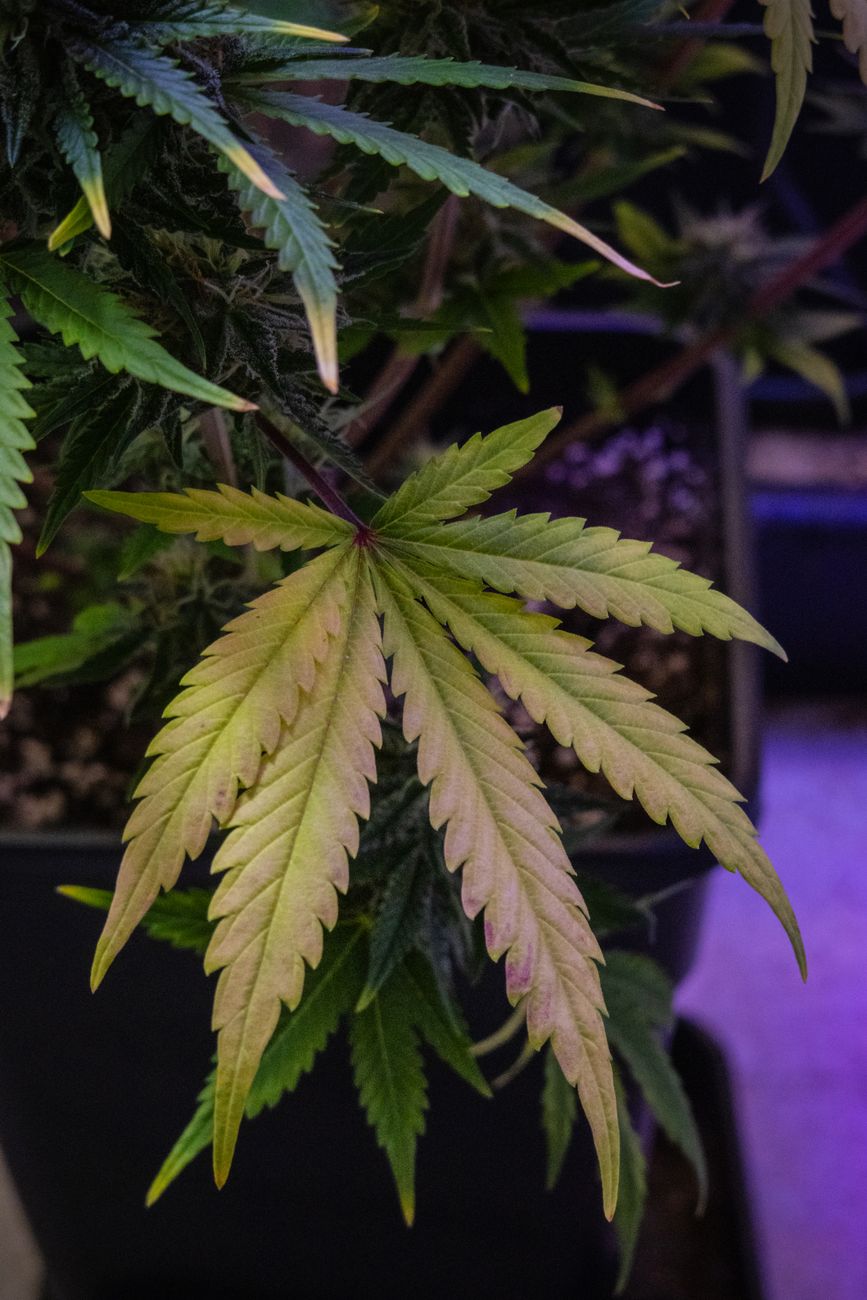
Nitrogen deficiency in cannabis shows up as yellowing that starts at the tips of the oldest lower leaves, then moves inward and upward through the plant. Before adjusting nutrients, always check root-zone pH: soil should sit between 6.0–7.0, coco/hydro between 5.5–6.5. Once pH is correct, a nitrogen-rich feed (high N-P-K ratio like 3-1-2) will show visible green recovery within 5–7 days. Affected leaves rarely recover fully — watch for new growth greening up as the true sign of success.
What Is Nitrogen Deficiency in Cannabis?
Nitrogen deficiency is a condition where cannabis plants cannot access or absorb enough nitrogen (N) to support healthy growth, chlorophyll production, and protein synthesis.
Nitrogen is the primary macronutrient in cannabis. It drives vegetative growth, fuels chlorophyll (the pigment responsible for green colour), and builds proteins the plant uses to develop leaves, stems, and roots. Without sufficient nitrogen, the plant literally cannibalises itself — it pulls N from older leaves to feed new growth.
In Australia, nitrogen deficiency is the most commonly reported nutrient problem across grower forums and community groups. It appears in both outdoor subtropical QLD grows and indoor temperate-climate setups across Melbourne and Sydney. Where legally permitted, growers should always diagnose carefully before reaching for a nutrient fix — the Therapeutic Goods Administration (TGA) emphasises that proper plant nutrition management is foundational to quality botanical production.
Nitrogen deficiency is always a symptom of a wider system failure — either actual N shortage, pH lockout, root damage, or overwatering. Treat the root cause, not just the visible leaf yellowing. Start every diagnosis with a pH meter, not a nutrient bottle.
What Are the Symptoms of Nitrogen Deficiency in Cannabis?
Nitrogen deficiency produces a very specific, recognisable pattern — once you know it, you won't confuse it with overwatering or heat stress again.
Symptom 1: Yellowing Starting on Lower, Older Leaves
This is the defining trait. Nitrogen is mobile in the cannabis plant, which means the plant pulls it from older (lower) growth to feed newer shoots. Yellowing always starts at the bottom of the plant and works its way upward. If yellowing starts at the top, it's likely a different deficiency (calcium, iron, or light bleach).
Symptom 2: Yellowing Begins at Leaf Tips and Progresses Inward
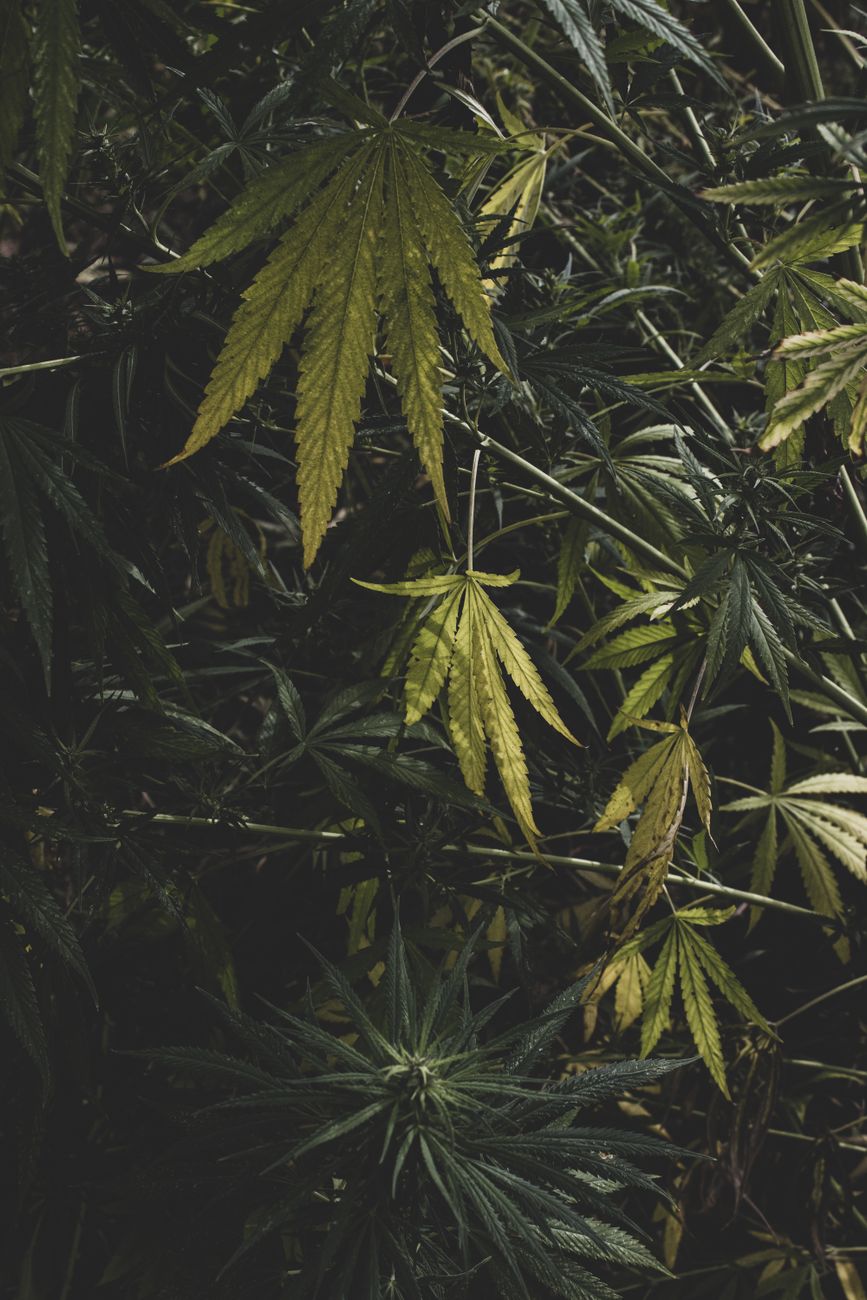
Initially, the tips of lower fan leaves fade from healthy deep green to pale green, then yellow. The fade moves inward toward the midrib over a period of 3–5 days if untreated. In severe cases the entire leaf turns bright yellow then crispy brown before dropping.
Symptom 3: Overall Pale Green Colouration
Before individual leaves yellow out, the whole plant may take on a lighter, washed-out look. Deep green foliage becomes lime green. In fast-growing autoflower seeds running 18/6 light schedules, this shift can happen in as little as 48 hours during a rapid growth surge.
Symptom 4: Slow or Stalled Growth
Internode spacing tightens and new leaves emerge small and pale. Growth visibly slows. In a veg-stage plant that should be gaining 2–5 cm per day, you may see near-zero vertical growth for 3–4 days before the yellowing becomes obvious.
Symptom 5: Premature Leaf Drop
Severely nitrogen-starved lower leaves drop off the plant entirely. This is the plant actively conserving N by discarding the depleted tissue. More than 2–3 spontaneous leaf drops in a week is a red flag requiring immediate action.
The "bottom-up, tip-first yellowing" pattern is the clearest indicator of nitrogen deficiency. If your yellowing starts anywhere other than the lower, older leaves, you're likely dealing with a different problem — revisit your diagnosis before adding any nitrogen-heavy feed.
How Do You Tell Nitrogen Deficiency Apart from Other Cannabis Deficiencies?
Misidentifying nitrogen deficiency is one of the most expensive mistakes a grower can make — it leads to incorrect fixes that worsen pH imbalance or cause nutrient toxicity.
| Deficiency | Where Yellowing Starts | Leaf Pattern | Mobile/Immobile Nutrient | Other Clues | Quick Fix Direction |
|---|---|---|---|---|---|
| Nitrogen (N) | Lower/older leaves | Uniform pale yellow, tip-first | Mobile | Whole leaf fades evenly | Check pH, raise N feed |
| Magnesium (Mg) | Lower/middle leaves | Interveinal chlorosis (veins stay green) | Mobile | Yellowing between veins; veins remain green | Cal-Mag supplement |
| Iron (Fe) | New top growth first | Bright yellow new leaves | Immobile | Newest leaves most affected | Lower pH slightly (soil) |
| Calcium (Ca) | New growth, tips | Brown spots, curled tips | Immobile | Spots, not uniform fade | Cal-Mag, check pH >6.0 |
| Potassium (K) | Leaf edges, lower/mid | Brown scorched margins | Mobile | Burnt leaf edges | Raise K in feed, flush if locked |
| Phosphorus (P) | Lower leaves, purple tinge | Dark green to purple, then bronze | Mobile | Purple stems a key clue | Raise P, check pH 6.2+ |
The fastest diagnostic shortcut: mobile nutrient deficiencies (N, Mg, K, P) always show up on older lower growth first. Immobile deficiencies (Ca, Fe, Mn) show up on new top growth. This one rule eliminates half the guesswork before you even check pH.
What Is pH Lockout and How Does It Cause Nitrogen Deficiency?
pH lockout is the single most under-diagnosed cause of nitrogen deficiency in Australian home grows. It means nitrogen is physically present in the root zone but chemically unavailable to the plant because the pH is outside the absorption window.
At soil pH below 5.5, nitrogen availability drops sharply. Nitrogen in the ammonium form (NH₄⁺) dominates at low pH, which cannabis roots handle poorly. At pH above 7.5, nitrogen becomes tied up in salt complexes. The sweet spot for nitrogen uptake in soil is pH 6.0–7.0, with the optimal window at pH 6.2–6.8.
Coco coir and hydroponic systems need a slightly lower range: 5.5–6.5. Many Aussie growers using bagged potting mix from Bunnings or garden centres are unknowingly running pH 5.2–5.8 — especially after repeated watering with unbuffered rainwater or alkaline tap water from Perth (commonly pH 7.8–8.2). According to Bureau of Meteorology climate data, Perth's high mineral content municipal water supply is a documented challenge for hydroponic growers.
How to Test Root-Zone pH
- Soil: Use a calibrated digital pH pen on runoff water. Water in with pH 6.5 water and measure what runs out of the pot's drainage holes. A drop of more than 0.3 pH units indicates acidic salt buildup.
- Coco/Hydro: Measure reservoir pH AND drain-to-waste runoff. They should be within 0.2 pH of each other. Larger gaps indicate root-zone pH drift.
- Frequency: Test pH at every watering during a suspected deficiency. Document readings. You need a trend, not a single data point.
From the questions our support team fields most often, at least 60–70% of reported nitrogen deficiency cases in soil grows turn out to be pH lockout. Always test pH before adding nutrients. Adding nitrogen to a pH 5.0 root zone does nothing except risk toxicity when pH is eventually corrected.
How Do You Fix Nitrogen Deficiency in Cannabis Step by Step?
Step 1: Confirm the Diagnosis
Check that yellowing is on lower/older leaves, starting at tips, moving uniformly inward. Rule out overwatering (drooping, heavy-feeling pot soil), heat stress (upper leaf curling in an upward "taco" shape), and light bleach (only the canopy top affected). If it's bottom-up, tip-first, uniform fade — proceed.
Step 2: Measure Root-Zone pH
Before touching a nutrient bottle, test your runoff pH. If your soil runoff is reading below 6.0, you have pH lockout — not a nutrient shortage. Adding nitrogen now won't help and may make the eventual toxicity worse when pH normalises.
Step 3: Flush and Correct pH if Needed
If pH is off, flush the root zone with pH-corrected water (3x the pot volume). For a 15 L pot, flush with 45 L of water adjusted to pH 6.5 (soil) or 5.8 (coco). Use a commercial pH Up/Down solution — pH Up is typically potassium hydroxide, pH Down is phosphoric or citric acid. Allow 30–45 minutes for the flush to drain fully before re-feeding.
Step 4: Prepare a Nitrogen-Rich Feed
Once pH is confirmed in the correct range, mix a nitrogen-forward feed. A 3-1-2 N-P-K ratio is appropriate for vegetative-stage plants. In Australia, common choices include fish emulsion (organics-friendly, pH-stable), liquid seaweed + blood and bone, or synthetic high-N grow base nutrients. Dilute to 75% of the manufacturer's recommended dose for the first corrective feed to avoid nutrient shock.
Step 5: Water In the Corrective Feed
Apply at pH 6.5 (soil) or 5.8 (coco). Water slowly until 10–15% runoff exits the pot. Check runoff pH immediately. If runoff is still below 6.0 despite pH-corrected feed water, repeat a plain pH-water flush before the next nutrient watering.
Step 6: Monitor Daily for Recovery
Existing yellowed leaves will NOT recover — they stay yellow. The sign of successful correction is new growth emerging deep green. In warm conditions (24–28°C), you should see visibly greener new leaves within 5–7 days. In cooler Tasmanian or highland ACT grows during Autumn, recovery may take 10–14 days due to slower metabolic rates.
Step 7: Adjust Ongoing Feeding Schedule
After recovery, re-evaluate your base nutrient programme. If you're using a premium pre-amended soil, it may have been depleted faster than expected — especially in fabric pots, which promote faster water and nutrient cycling. Many Aussie autoflower growers on a 77–84 day cycle find they need to start supplemental nitrogen feeding as early as Week 3–4, before visible deficiency symptoms appear.
The 7-step process above handles 95% of nitrogen deficiency cases. The most common reason it "doesn't work" is that growers skip Step 2 and Step 3 — pH correction is the fix, not the nitrogen itself.
The RKS pH Check Protocol: A Named Framework for Aussie Growers
Before adding any nitrogen supplement to a deficient cannabis plant, confirm three pH readings across 3 consecutive waterings. Only begin corrective feeding once all three runoff readings land within the target range.
Formula: Watering 1 pH runoff + Watering 2 pH runoff + Watering 3 pH runoff = 3-point trend. If the average is within 0.3 of target range (6.0–7.0 soil; 5.5–6.5 coco/hydro), begin N-feed. If not, continue pH-corrected plain water flushes until stable.
Worked example: A Brisbane grower notices bottom leaf yellowing in Week 4 veg. Runoff pH readings: Day 1 = 5.4, Day 3 = 5.7, Day 5 = 6.1. Three-point average = 5.73 (too low). Continue pH 6.8 flush water for 2 more waterings. Day 7 = 6.3, Day 9 = 6.4, Day 11 = 6.3 — average 6.33. Now introduce nitrogen-rich feed. New leaves emerging green by Day 16.
Does Nitrogen Deficiency Look Different in Veg vs. Flower Stage?
Yes — and the appropriate response is different too. Misidentifying the growth stage is one of the most common reasons nitrogen fixes fail or backfire.
Vegetative Stage Nitrogen Deficiency
In veg, plants are actively building structure and should be consuming high nitrogen. Any yellowing during veg (Weeks 1–8 for photoperiod, Weeks 1–5 for autos) is abnormal and requires immediate correction. Veg-stage plants tolerate a fairly aggressive corrective feed — up to full manufacturer's recommended dose once pH is corrected.
Early Flower Stage (Weeks 1–4 of Flower)
Early flower still requires moderate nitrogen as the plant stretches and builds bud sites. Deficiency in this window is serious — it can reduce bud density. Correct with a balanced feed (2-1-2 N-P-K) rather than a veg-heavy formula. Don't strip nitrogen completely just because the plant has flipped.
Mid to Late Flower (Weeks 5+ of Flower)
Here's the critical nuance: yellow lower leaves in Week 7–9 of flower are often normal. As plants approach harvest, they naturally mobilise nitrogen from fan leaves into buds. This "autumn fade" is not a deficiency — it's the plant finishing correctly. Adding nitrogen in late flower will push excessive leafy growth, delay ripening, and compromise terpene profiles.
The key differentiator: natural late-flower fade progresses slowly over 2–3 weeks from the very bottom up. Actual deficiency in flower progresses rapidly (days, not weeks) and may also show nutrient toxicity signs in new growth if pH is also off.
If yellowing appears in Weeks 7–10 of flower and is progressing slowly from the bottom, leave it alone — it's likely natural senescence. Only intervene if yellowing is rapid, reaches the mid-canopy, or appears alongside stunted new growth. When in doubt, check pH and trichomes simultaneously.
What Does Nitrogen Deficiency Mean for Australian Outdoor Growers?
The outdoor calendar creates two peak windows for nitrogen problems across Australia's growing regions. Understanding these by state helps you act before deficiency becomes visible.
Australian Outdoor Nitrogen Risk Calendar
Spring planting. Soil pH often low after winter rains. Test before first feed. LOW risk.
Rapid veg growth — highest N demand. Increase feed frequency. MODERATE.
Heat begins in QLD, SA, WA. Hot roots reduce uptake. Watch pH in pots. CAUTION.
Flower stretch. Transition to lower-N feed. pH drift in fabric pots increases. CAUTION.
Mid flower. Natural fade begins. Only fix if rapid. LOW risk of true deficiency.
Autumn harvest. Natural senescence in full swing. Don't chase fading leaves. LOW.
State-Specific Nitrogen Deficiency Risks
QLD (Subtropical: Brisbane, Gold Coast, Cairns)
Warm soil temperatures year-round accelerate nutrient cycling, meaning buffered soil gets depleted faster. Brisbane outdoor growers starting in October should plan to begin supplemental nitrogen feeding by Week 5–6. Humid conditions also promote soil microbial activity that can rapidly consume available nitrogen from organic amendments.
VIC (Temperate: Melbourne, Geelong)
Cooler spring soil temperatures (12–16°C in September–October) slow nitrogen uptake even when pH is correct — metabolic processes in roots slow below 15°C. Growers in Melbourne should start with lower-strength feeds and warm the root zone before expecting full uptake. Fabric pots dry out faster in Melbourne's dry northerly summer winds, increasing salt buildup and pH drift.
TAS (Cool-Temperate: Hobart, Launceston)
Tasmanian growers face the shortest veg window. Nitrogen deficiency in October can cost a week of veg growth that can't be recovered on Tasmania's compressed outdoor calendar. Proactive pH monitoring from germination is essential. Soil temperatures in Hobart can remain below 14°C until late October, requiring warm-weather amendments or heat mat support for pots.
WA (Mediterranean: Perth)
Perth tap water runs pH 7.8–8.2 consistently. Growers using unmodified Perth tap water for potted plants almost always develop alkaline root zones within 4–6 weeks. pH Down should be a non-negotiable part of every WA grower's feeding routine. Using water with pH 6.5 corrected from tap pH 8.0 will prevent the majority of nitrogen lockout cases in Perth grows.
NSW (Temperate–Subtropical: Sydney, Coffs Harbour, Armidale)
NSW coastal growers benefit from moderate conditions but need to watch for flush-out of nitrogen after heavy summer rainfalls (December–February). Heavy rainfall events exceeding 50 mm can leach nitrogen from outdoor pots and in-ground beds within 24–48 hours. After any major rain event, a light nitrogen top-dress or liquid feed is advisable within 3 days.
Each Australian state presents a distinct nitrogen management challenge. WA growers should address pH from Day 1. VIC and TAS growers should focus on soil temperature for uptake. QLD growers need to plan for faster nutrient depletion. NSW growers should watch for post-rain leaching windows.
Royal King Seeds Nitrogen Deficiency Risk Rating by Strain Type
Different strain types vary in their nitrogen demand and sensitivity. Looking at reported grower data and breeder-published feeding recommendations, we've built a proprietary risk rating below.
Methodology: Nitrogen Demand (40%) + pH Sensitivity (30%) + Recovery Speed (20%) + Beginner Risk (10%) = Total Risk Score out of 100 (higher = higher risk of nitrogen problems).
| Strain Type | N Demand | pH Sensitivity | Recovery Speed | Beginner Risk | Mould Risk (Deficiency Stage) | RKS Deficiency Risk Score |
|---|---|---|---|---|---|---|
| Fast Autoflowers (<75 days) | Very High | High | Fast (5–7 days) | High — small veg window for correction | Low | 78/100 |
| Standard Autoflowers (77–90 days) | High | High | Fast (5–7 days) | Moderate — small correction window | Low | 65/100 |
| Photoperiod Feminised — Sativa-dominant | Very High (long veg) | Medium | Moderate (7–10 days) | Medium — long veg allows multiple corrections | Medium | 61/100 |
| Photoperiod Feminised — Indica-dominant | Moderate | Medium | Moderate (7–10 days) | Low — forgiving with correction | High (dense canopy) | 52/100 |
| CBD Strains | Low–Moderate | Low | Fast (4–6 days) | Low — naturally efficient | Low | 38/100 |
Why These Strain Types Scored Where They Did
Why Fast Autoflowers scored highest risk (78/100):
- Their compressed 70–75 day total cycle means there are only 3–4 weeks of vegetative growth before they flip automatically — leaving almost no time to detect and correct nitrogen deficiency before it impacts bud development.
- High nitrogen demand per week relative to total cycle length means any feeding gap or pH lockout hits disproportionately hard.
- Beginners often use unamended potting mix that exhausts its nitrogen buffer by Week 3–4 — exactly when autos are hungriest.
Why Indica-dominant feminised strains ranked moderate (52/100):
- Lower overall nitrogen demand per week compared to tall sativa-dominant or fast autos.
- Long vegetative stage (8–14 weeks when grower-controlled) allows multiple corrective feeding cycles without impacting harvest timing.
- Dense, compact canopy increases mould risk during deficiency-induced leaf drop, which moderates overall score.
Why CBD strains ranked lowest risk (38/100):
- Lower nitrogen demand overall — CBD-dominant genetics are typically derived from industrial hemp-adjacent lineages bred for efficiency.
- Naturally robust root systems tolerate mild pH variance better than high-THC genetics.
- Fastest visible recovery once correct pH and feed are restored.
What Happens If You Choose the Wrong Fix?
- Action: Test pH first (reads 5.3). Flush with pH 6.8 water over 3 waterings. Introduce nitrogen-forward feed only after runoff reads 6.2+.
- Day 5: New growth emerges deep green. No further yellowing on mid-canopy leaves.
- Day 10: Plant resumes normal growth rate. Deficiency resolved.
- Risk level: Low
- Outcome: Full recovery, no yield loss. Corrective window was 10 days.
- Action: Skips pH test. Doubles nitrogen feed immediately upon seeing yellowing (pH still 5.3).
- Day 5: Yellowing continues — nitrogen is still locked out at pH 5.3.
- Day 8: Plant transitions to flower. Grower finally checks pH: 4.9 (salt buildup from extra nutrients).
- Risk level: High
- Outcome: Emergency flush during flower stretch. Stunted early flower, airy buds, 20–35% estimated yield reduction. 3-week recovery setback.
Bottom line: The decision to check or skip pH before feeding is the single choice that determines whether you recover in 10 days or lose a third of your harvest.
Common Mistakes Aussie Growers Make When Fixing Nitrogen Deficiency
Mistake 1: Feeding Before Checking pH
The most destructive mistake. Without confirming root-zone pH is within the uptake window, adding nitrogen is like pouring water on concrete — it sits there and does nothing, then builds up salt load. Reviewing support questions that come through our team, this mistake alone accounts for the majority of multi-week recovery delays. Always check pH first, every single time.
Mistake 2: Treating Late-Flower Senescence as Deficiency
Plants in Weeks 7–10 of flower are supposed to go yellow at the bottom. This is the plant mobilising nitrogen into buds. Adding nitrogen at this stage delays harvest, bloats leaves, and can negatively affect flavour. Recognition: if the yellowing is slow (over 2+ weeks), only on the lowest leaves, and the plant is in late flower — don't touch it.
Mistake 3: Using pH-7.0+ Tap Water Without Correction (Perth, Murray Basin)
Perth tap water, and water from much of WA and inland SA/VIC sourced from Murray River systems, runs alkaline. Growers using this water without pH adjustment regularly develop alkaline root zones. Fix: invest in a quality pH pen and pH Down solution. Check and adjust every single watering. This one habit prevents 80% of lockout cases in these regions.
Mistake 4: Overwatering While Trying to Flush
When flushing to correct pH, some growers over-apply water and leave the root zone waterlogged. Cannabis roots need oxygen. A waterlogged root zone at pH 6.5 still won't uptake nitrogen properly due to hypoxic conditions. Flush thoroughly, then allow the pot to partially dry (lift-weight test) before re-watering with nutrients.
Mistake 5: Not Re-Testing After the First Corrective Watering
One pH-corrected watering rarely shifts a drifted root zone. Growers feed once at pH 6.5, see no improvement in 48 hours, and conclude nitrogen isn't the issue. The reality: root-zone pH correction requires 3–5 consecutive pH-corrected waterings to fully stabilise. Follow the RKS 3-Before-You-Feed Protocol above.
Mistake 6: Ignoring Soil Temperature in Spring
In Melbourne and Hobart in September–October, soil temperatures in pots can sit at 10–13°C overnight. Cannabis roots have reduced uptake capacity below 15°C — even with perfect pH and adequate nitrogen, the plant may show mild deficiency symptoms purely from cold roots. Fix: use fabric pots raised off the cold ground, and consider black pots to absorb solar heat during cool spring days.
Mistake 7: Confusing Nitrogen Deficiency with Magnesium Deficiency
Both present as yellowing on lower leaves. The distinguishing feature: magnesium deficiency causes interveinal chlorosis — the leaf veins stay green while the tissue between veins yellows. Nitrogen deficiency causes uniform yellowing across the whole leaf. Check this before adding a nitrogen feed that won't fix a Mg problem.
Every mistake above follows the same pattern: reactive treatment without accurate diagnosis. A quality digital pH pen (under AU$35 at most hydro shops) and 2 minutes of measurement before each corrective feed eliminates the vast majority of these errors. Buy the pen first.
Which Nitrogen Fix Should You Use? Decision Guide
- pH below 5.5 (soil) or below 5.0 (coco/hydro): → Flush with 3x pot volume pH-corrected water. DO NOT add nitrogen yet.
- pH 5.5–6.0 (soil): → Flush with 1x pot volume pH 7.0 water to nudge up. Then introduce light nitrogen (50% dose) at pH 6.5.
- pH 6.0–7.0 (soil) — correct range: → Apply nitrogen-rich feed at full 75% dose. Check for overwatering/root problems if no improvement in 7 days.
- pH above 7.5 (soil): → Flush with slightly acidic pH 6.0 water. Alkaline lockout is less common but occurs in calcareous soils (common in SA limestone regions).
- pH correct, problem persists past 10 days: → Check for root rot (brown, slimy roots), compaction, or chronic overwatering. Consider a root enzyme treatment.
- Plant is in Week 7+ of flower: → Likely natural senescence. Do NOT add nitrogen unless mid-canopy leaves are yellowing rapidly within 3–5 days.
- Beginner, first grow, bagged soil: → Soil is likely depleted if more than 4 weeks old. Begin light supplemental N feed regardless of visible symptoms as preventative measure.
- Running high THC seeds Australia (photoperiod, heavy feeders): → Increase nitrogen feed frequency. High-THC sativa genetics are among the highest nitrogen consumers. Consider splitting feeds across 3 smaller sessions per week vs. 1 large weekly feed.
What Grower Reports Reveal About Nitrogen Deficiency Patterns in Australia
Looking at publicly available grower journal posts, community forum threads on Aussie cannabis growing groups, and the support questions fielded through our team, a number of consistent patterns emerge that aren't covered in generic cannabis nutrition guides.
First, there's a clear seasonal spike in deficiency reports in October–November — exactly when Aussie growers are pushing outdoor plants hard in spring veg. This coincides with warmer temperatures increasing plant metabolism and nutrient demand faster than many growers anticipate.
Second, growers in QLD subtropical coastal regions consistently report faster-than-expected soil depletion in fabric pots. The combination of warm root zone temperatures and high evapotranspiration rates means nitrogen in organic amendments like blood and bone or fish meal is consumed by soil microbes and plants within 3–4 weeks — roughly half the timeline growers in Melbourne's cooler conditions experience.
Third, looking at the questions our team gets most in summer (December–January), there's a recurring confusion between heat stress and nitrogen deficiency. Both show upper-canopy leaf symptoms in hot conditions. The distinguishing factor: heat stress shows leaf edges curling up (taco shape) with no yellowing. Nitrogen deficiency shows flat-lying leaves that gradually fade yellow from the tip inward.
Research published in the Journal of Cannabis Research supports the importance of pH management in cannabis cultivation, showing that nutrient uptake efficiency correlates strongly with root-zone pH stability across multiple macronutrients including nitrogen. The Australian Bureau of Agricultural and Resource Economics and Sciences (ABARES) similarly highlights soil pH as one of the primary limiting factors in Australian horticultural production.
The pattern across grower-reported data is consistent: most nitrogen deficiency cases in Australia are preventable with a pH pen and a proactive feeding schedule. Reactive diagnosis costs growers weeks of recovery time. Proactive pH monitoring and regular light feeding prevents the problem from appearing at all.
Ready to grow healthier plants from the start?
Browse our full range of feminised cannabis seeds and autoflower seeds — matched to Australian conditions and backed by strain-specific grow guides.
Shop All Cannabis Seeds →"A pH pen used before every corrective feeding prevents more nitrogen deficiency failures than any bottle of nutrients ever will."
Frequently Asked Questions: Nitrogen Deficiency in Cannabis
How do I know if my cannabis plant has nitrogen deficiency?
Should I add more nutrients if I see yellow leaves?
How long does it take for cannabis to recover from nitrogen deficiency?
What pH range is best for nitrogen uptake in cannabis?
Can nitrogen deficiency kill cannabis plants?
What's the best organic nitrogen source for cannabis in Australia?
Is yellow leaves at harvest normal or a nitrogen deficiency?
Why is my Perth tap water causing nitrogen problems?
Can I start growing in November in QLD and avoid nitrogen problems?
Why did my autoflower get nitrogen deficiency so fast?
My plant's yellowing isn't improving after 10 days of nitrogen feeding — what's wrong?
What is the difference between nitrogen deficiency and overwatering in cannabis?
Should I flush my cannabis plant when I see nitrogen deficiency?
Can autoflowers handle 35°C QLD summers without getting nitrogen problems?
How many harvests can I get from a coastal NSW outdoor season?
What month should I start feeding nitrogen supplements in VIC?
Can I prevent nitrogen deficiency without synthetic nutrients?
Why didn't my nitrogen fix work even though my pH seems right?
Is it safe to use a high-nitrogen bloom fertiliser in late flower?
What should I do if my cannabis seedling (Week 1–2) shows yellowing?
How do I use a pH pen correctly to diagnose nitrogen lockout?
My cannabis looks healthy but the lower leaves are yellowing slightly — should I worry?
Can I use liquid seaweed as a nitrogen supplement?
Why are my outdoor plants always nitrogen deficient after heavy rain?
Start with genetics built for Australian conditions
Explore our indica seeds, sativa seeds, and high THC seeds Australia — all selected for vigour, yield, and adaptability across Australia's diverse growing regions.
Browse All Seeds →Sources
- Bureau of Meteorology — Australian Climate Data
- ABARES — Australian Bureau of Agricultural and Resource Economics and Sciences
- Therapeutic Goods Administration (TGA) — Medicinal Cannabis Regulation
- Journal of Cannabis Research — Nutrient Uptake and pH Management in Cannabis
- CSIRO — Soil Science and Agricultural Research
- PubMed — Cannabis Nutrition Research
Related Articles
Ganja Indoor: Tent Setup, Lighting Schedule, Nutrients & Yields — The Complete Australian Guide
support-nutrientMagnesium Deficiency in Cannabis: Diagnose It, Fix pH, and Restore Healthy Growth
support-nutrientWeed Magnesium Deficiency: Diagnosing the Problem, Fixing pH, and Restoring Healthy Growth
support-nutrientPotassium Deficiency In Cannabis: Diagnosing the Deficiency, Fixing pH, and Restoring Healthy Growth
Ready to Start Growing?
Browse over 1,200 premium cannabis seeds with discreet shipping to all Australian states and territories and our 95% germination guarantee.
Shop Cannabis Seeds