Magnesium Deficiency in Cannabis: Diagnose It, Fix pH, and Restore Healthy Growth
Royal King Seeds
Cultivation team
The yellowing spreading across your plant's mid-canopy isn't iron deficiency, it isn't nitrogen lockout, and it almost certainly isn't a bad batch of seeds — it's magnesium deficiency, and it's the most frequently misdiagnosed nutrient problem Aussie growers face. Misdiagnosis costs you 3–6 weeks of recovery time and can cut final yield by 20–35% in affected plants.
The single criterion that separates a fixable magnesium lockout from a genuine magnesium absence is pH: get the root-zone pH wrong by even 0.5 of a unit and every bottle of cal-mag you pour in is wasted. This guide gives you the exact diagnostic steps, pH correction protocol, and recovery timeline — matched to Australian climate conditions, local water chemistry, and the specific cultivar types most prone to Mg deficiency.
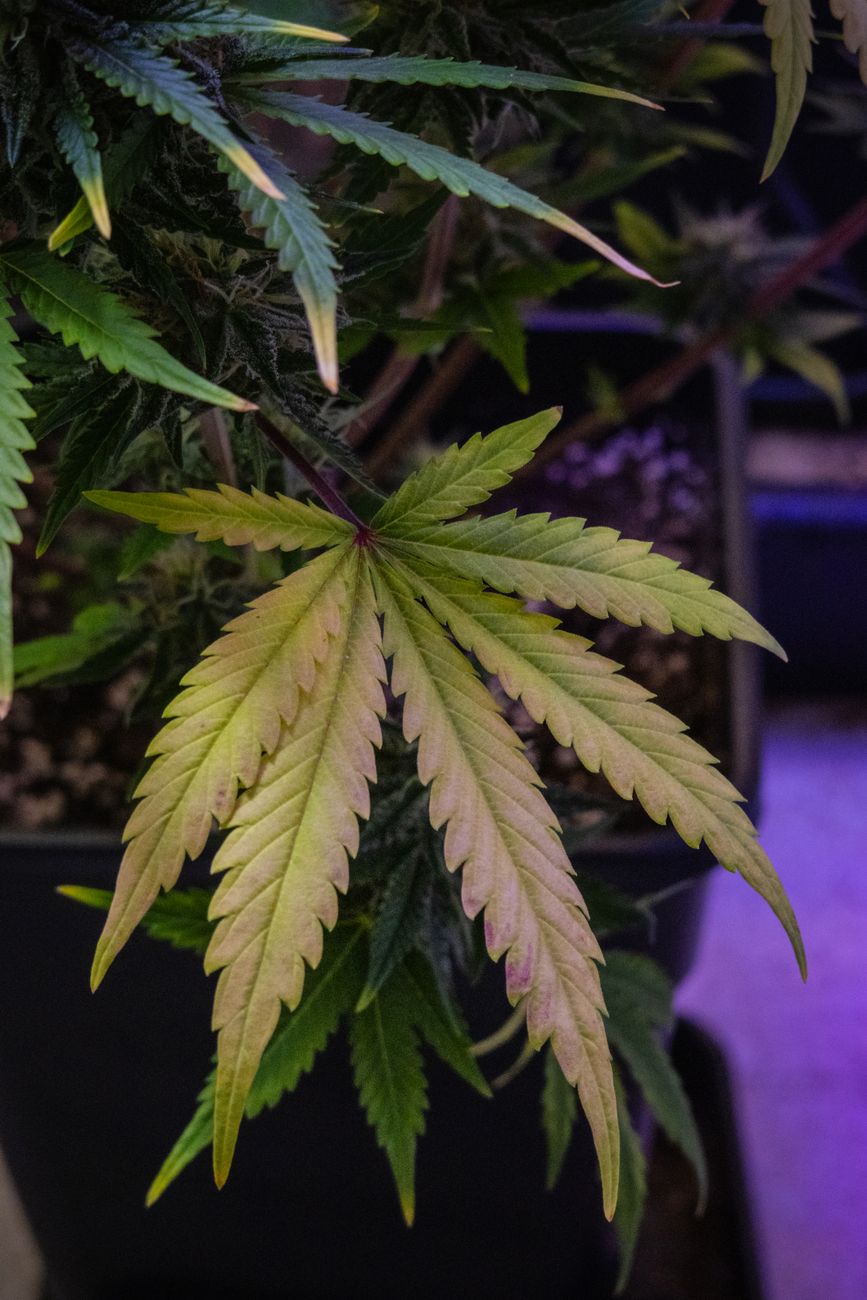
Magnesium (Mg) deficiency appears as interveinal chlorosis — the tissue between leaf veins turns yellow while the veins themselves stay green — starting on older, lower leaves and moving upward. It's caused either by genuine Mg absence in the growing medium or by pH-induced lockout (the most common cause in Australian tap water). Correct root-zone pH to 6.0–7.0 in soil or 5.5–6.2 in coco/hydro, then supplement with cal-mag. Most plants show visible improvement within 5–10 days.
What Is Magnesium Deficiency in Cannabis?
Magnesium is a secondary macronutrient and the central atom in every chlorophyll molecule. Without it, photosynthesis breaks down at the cellular level.
Cannabis is a heavy magnesium user — especially fast-finishing autoflowering varieties and high-resin sativa-dominant cultivars that run long, light-hungry flowering cycles. Demand peaks between weeks 3–6 of flower when chlorophyll production is at maximum.
In Australia, the problem is compounded by alkaline tap water across most capital cities and regional areas. The TGA and the Australian Department of Health and Aged Care note that water chemistry varies significantly across states — and for growers in jurisdictions where cultivation is permitted, that variability directly affects nutrient availability at the root zone.
Magnesium deficiency is almost always a pH problem first and a nutrient-supply problem second. Before you add anything, check and correct your root-zone pH. Supplementing without fixing pH is money poured down the drain.
Who This Guide Is For
- ✓ Growers seeing interveinal yellowing on mid or lower leaves
- ✓ Anyone using Australian tap water without pH adjustment
- ✓ Coco coir growers who rely on base nutrients without cal-mag
- ✓ Outdoor growers in sandy WA or SA soils with low Mg retention
- ✓ Those who've already added cal-mag but seen no improvement
- ✓ Growers running autoflowers or high-THC sativa lines in hot QLD or NT conditions
- ✗ Growers with confirmed nitrogen or iron deficiency
- ✗ Those already running correct pH in RO-buffered systems
- ✗ Commercial licensed operators — consult an agronomist
- ✗ Growers cultivating outside permitted jurisdictions
How Do You Identify Magnesium Deficiency Symptoms?
The defining symptom is interveinal chlorosis: leaf tissue between the veins turns yellow or lime-green while the veins themselves remain dark green. This contrast is the clearest visual diagnostic tool you have.
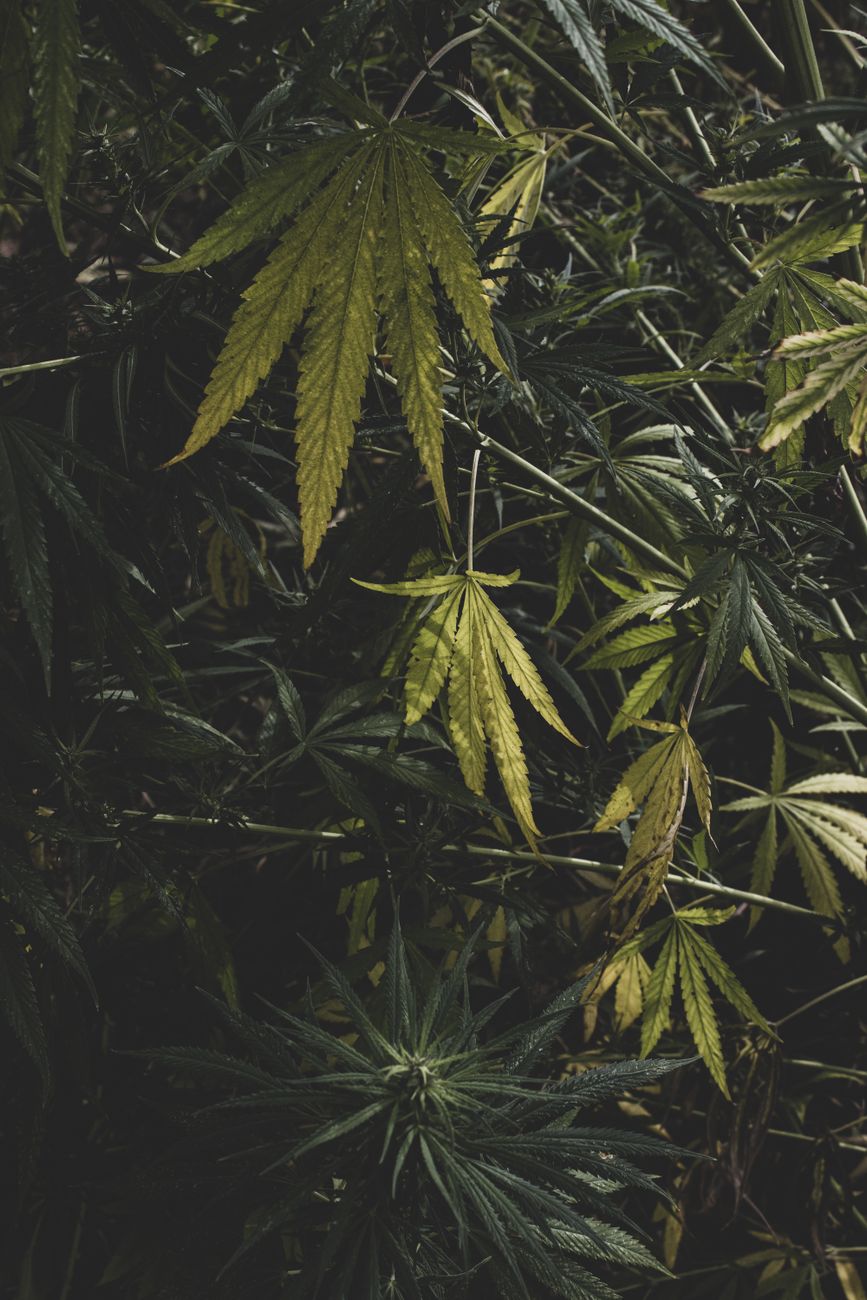
Symptoms always start on the older, lower leaves — not the new growth at the top. Magnesium is a mobile nutrient, meaning the plant cannibalises older tissue to keep the growing tips fed. If yellowing starts at the top, you're looking at a different problem entirely.
As deficiency progresses over 7–14 days without intervention:
- Yellow patches spread from leaf edges inward toward the midrib
- Affected leaves develop rust-brown or bronze spots (dead tissue)
- Leaves curl upward or cup at the edges
- Entire lower fan leaves yellow and drop prematurely
- Buds in flowering may develop poorly due to reduced photosynthetic capacity
In Queensland, Northern Territory, and Western Australian summers (Dec–Feb), high temperatures above 33°C accelerate magnesium uptake demand while heat stress simultaneously impairs root function. Symptoms that appear mild in the morning can look severe by afternoon. Check plants before 8am for accurate symptom assessment.
If the yellowing starts low and works upward, the veins stay green, and you're in weeks 3–6 of flower — you're almost certainly looking at Mg deficiency. Don't treat for nitrogen; you'll make it worse.
What Is pH Lockout and Why Does It Cause Magnesium Deficiency?
pH lockout happens when the root-zone pH falls outside the range where a specific nutrient can be chemically absorbed. Even if the nutrient is physically present in the medium, the plant cannot uptake it.
Magnesium has a tight absorption window. It's most available at pH 6.0–7.0 in soil and 5.5–6.2 in coco coir or hydroponic systems. Outside these ranges, Mg binds to other compounds and becomes chemically unavailable.
Research published via PubMed on cannabis nutrient availability confirms that secondary macronutrients including magnesium show the steepest lockout curves at pH above 7.0 and below 5.5 — which maps precisely onto the problems most Aussie growers create with unadjusted tap water.
| Growing Medium | Mg Optimal pH Range | Lockout Below | Lockout Above | Aussie Tap Risk |
|---|---|---|---|---|
| Soil (organic) | 6.0–7.0 | <5.8 | >7.2 | High — most cities 7.2–8.4 |
| Coco coir | 5.5–6.2 | <5.2 | >6.5 | Very High |
| Hydro (DWC/NFT) | 5.5–6.1 | <5.2 | >6.3 | Very High |
| Living soil / amended | 6.2–6.8 | <6.0 | >7.5 | Moderate — buffered by biology |
pH lockout is responsible for an estimated 70–80% of magnesium deficiency cases based on grower-reported patterns. Test your runoff pH before buying a single drop of cal-mag.
How Does Australian Tap Water Trigger Magnesium Lockout?
Australian tap water is alkaline by design. Water authorities raise pH to 7.5–8.5 to prevent pipe corrosion, as recommended by national drinking-water guidelines. The Bureau of Meteorology maps regional water source chemistry, and cross-referencing with state water authority data shows consistent alkalinity across most populated growing regions.
Here's what that means per major city — and why your city's tap water is your first nutrient problem:
Tap pH: ~7.6–8.0
Hardness: Soft-moderate
Risk: High lockout in coco/hydro
Tap pH: ~7.4–8.2
Hardness: Soft
Risk: High — very low buffering capacity
Tap pH: ~7.5–8.1
Hardness: Soft-moderate
Risk: High; heat amplifies lockout effects
Tap pH: ~7.8–8.4
Hardness: Moderate-hard
Risk: Very High; also high calcium competing with Mg
Tap pH: ~7.6–8.3
Hardness: Hard
Risk: Very High; hard water = Mg/Ca competition
Tap pH: ~7.2–7.8
Hardness: Very soft
Risk: Moderate; closer to optimal but still needs adjustment
Tap pH: ~7.5–8.0
Hardness: Moderate
Risk: High; tropical humidity complicates foliar treatment
Tap pH: ~7.4–7.9
Hardness: Soft
Risk: High in coco; moderate in quality soil mixes
The fix before the fix: always pH-down your tap water to your target range before adding nutrients. Add nutrients to water first, mix, then adjust pH — not the other way around, as nutrient solutions change pH after mixing.
Every Australian grower using tap water without a pH pen and pH-down solution is running their garden at a disadvantage from day one. A quality pH meter (AU$35–80) pays for itself in the first grow by preventing lockout-related losses.
How Do You Tell Magnesium Deficiency Apart from Other Deficiencies?
Misdiagnosis is the primary reason Mg deficiency persists in most home grows. Here are the four most commonly confused conditions:
| Deficiency | Where it starts | Key visual | Veins stay green? | Mobile? | pH sensitivity |
|---|---|---|---|---|---|
| Magnesium (Mg) | Lower/older leaves | Interveinal chlorosis | Yes ✓ | Yes (mobile) | High above 7.0 |
| Iron (Fe) | New growth / tops | Pale yellow new leaves | Yes ✓ | No (immobile) | Very high above 6.5 |
| Nitrogen (N) | Lower leaves | Uniform pale green/yellow | No ✗ | Yes (mobile) | Low |
| Sulphur (S) | New growth | Uniform yellowing, new tips | No ✗ | No (immobile) | Low |
| Calcium (Ca) | New growth edges | Brown curling tips, distorted leaves | Partially | No (immobile) | Moderate above 7.2 |
The single fastest diagnostic test: look at where yellowing starts. Lower leaves + veins stay green + interveinal pattern = magnesium. New growth + uniform pale = iron or sulphur. New growth + brown tips/curl = calcium.
The location of yellowing (old leaves vs. new growth) is the single most reliable diagnostic split. Nail this and you'll never confuse Mg with iron again.
How Do You Fix Magnesium Deficiency Step by Step?
Step 1: Measure runoff pH and EC
Water with plain pH-corrected water (no nutrients), collect the runoff, and test pH and EC. Runoff pH above 7.0 in soil or 6.3 in coco is your lockout confirmation. EC above 3.0 mS/cm indicates salt buildup that also blocks uptake.
Step 2: Flush if EC is high or pH is severely off
If runoff EC is above 3.0 mS/cm or pH is more than 0.8 units off-target, flush with 2–3× the container volume of pH-adjusted plain water before re-feeding. For a 15 L pot in soil, that's 30–45 L of pH 6.2–6.5 water flushed through.
Step 3: Adjust all future water to target pH before feeding
Use phosphoric acid-based pH Down for most systems. Add nutrients to water first, stir, then adjust pH. Target: 6.0–7.0 for soil (ideal sweet spot 6.2–6.5), 5.5–6.2 for coco/hydro. Recheck after 15 minutes — pH can drift slightly after mixing.
Step 4: Add cal-mag at the correct dose
Standard corrective dose is 5 mL of cal-mag solution per 10 L of feed water. For severe deficiency (more than 30% of canopy affected), increase to 7 mL/10 L for the first two feeds, then drop back to 5 mL/10 L as maintenance. Do not exceed 10 mL/10 L — calcium excess blocks potassium and causes secondary deficiencies.
Step 5: Apply emergency foliar spray (optional, fast-acting)
Mix 1 teaspoon of food-grade Epsom salts (magnesium sulphate) in 1 L of water at pH 6.0–6.5. Spray the undersides of affected leaves at lights-off or in the evening for outdoor plants. Foliar absorption bypasses the root-zone pH problem entirely and delivers visible improvement within 48–72 hours. Do NOT foliar spray in direct sunlight — it causes leaf burn.
Step 6: Monitor and adjust over 10–14 days
Affected leaves will NOT turn green again — chlorosis is permanent once established. Track recovery by watching new growth: new leaves emerging after treatment should be fully green and healthy. If yellowing continues advancing upward into new growth after 10 days, recheck pH and EC, and consider whether a competing excess (calcium or potassium) is the underlying cause.
Every cal-mag treatment must be preceded by pH correction. Formula: if runoff pH is outside the target range by >0.3 units, treat pH first — cal-mag applied into a locked-out medium wastes 60–80% of its effect.
Worked example: a coco grower in Perth flushing with tap water at pH 8.1 feeds cal-mag at 5 mL/10 L. Runoff pH remains at 7.8 — Mg lockout persists despite the supplement. Correct approach: flush with pH 5.7 water until runoff drops below 6.2, then introduce cal-mag at 5 mL/10 L. Recovery visible within 6–8 days.
The six-step protocol above resolves 90%+ of Mg deficiency cases when executed in order. Steps 1–3 (diagnostics and pH correction) are the critical steps. Steps 4–6 are maintenance.
What Is the Magnesium Deficiency Recovery Timeline?
Diagnose + pH correct + first cal-mag feed
Foliar Epsom spray if applied — first leaf-surface response visible
New growth emerging appears healthier; spreading of yellowing slows
New leaves fully green; older affected leaves remain yellow (normal)
Canopy health confirmed; adjust to maintenance dose
Full recovery confirmed; continue pH management every feed
If yellowing is still spreading after day 10 despite correct pH and cal-mag dosing, test for calcium or potassium excess (both lock out Mg), check for root rot in hydro systems, or consider whether the growing medium has become completely depleted of buffering capacity.
Recovery takes 10–14 days minimum. Don't overdose cal-mag out of impatience — Ca/Mg excess is harder to fix than the original deficiency and takes longer to flush out.
Which Cannabis Strains Are Most Prone to Magnesium Deficiency?
Not all genetics handle Mg fluctuations equally. High-THC sativa-dominant cultivars with long flowering cycles and heavy resin production have the highest Mg demand. Autoflowering varieties compress this demand into a shorter window, creating peak Mg stress around weeks 3–5 of flower.
Indica-dominant plants, particularly those bred for harsh climates, tend to have stronger root architecture and slightly more tolerance for minor pH swings. Indica-dominant seeds are generally more forgiving for first-time nutrient managers.
Conversely, equatorial sativa-dominant genetics bred for tropical climates can demand 30–40% more Mg than comparable indica lines — especially under high-PPFD LED lighting or the intense Queensland and Northern Territory sun.
Royal King Seeds Australian Nutrient-Stability Score
The following score rates popular cultivar types by their resilience to magnesium-related deficiency in Australian growing conditions. Methodology: pH tolerance range (35%) + calcium competition resistance (25%) + root vigour under heat (25%) + beginner-forgiveness rating (15%).
| Cultivar Type | THC Range | Mg Demand | Heat Root Vigour | pH Tolerance | Beginner Rating | RKS Nutrient Stability Score |
|---|---|---|---|---|---|---|
| Autoflower (ruderalis hybrid) | 14–22% | Moderate-High | High | Medium | 8/10 | 78/100 |
| Indica-dominant feminised | 17–24% | Moderate | High | Medium-High | 9/10 | 84/100 |
| Sativa-dominant feminised | 18–26% | High | Medium | Low-Medium | 5/10 | 61/100 |
| High-THC feminised (>25%) | 25–30%+ | Very High | Medium | Low | 4/10 | 55/100 |
| CBD-dominant (hemp-type) | <1% THC / 5–20% CBD | Low-Moderate | High | High | 9/10 | 88/100 |
Why indica-dominant feminised scored #1 (84/100):
- Broad root systems maintain Mg uptake even during minor pH fluctuations
- Shorter flowering windows reduce the cumulative period of peak Mg demand
- Strong calcium-competition resistance from thick cell walls and dense root architecture
Why high-THC feminised genetics rank lowest (55/100):
- Very high Mg demand during extended 9–12 week flower cycles amplifies any pH error
- Heavy resin production draws on the same metabolic pathways that process Mg
- These cultivars reward experienced growers who run tight pH discipline, not beginners
Browse feminised cannabis seeds Australia or explore high THC seeds Australia — and pair any high-demand cultivar with a consistent pH management routine from day one.
If you're prone to pH inconsistency or just starting out, go indica-dominant or autoflower. Save the elite high-THC genetics for once you've got pH management on autopilot.
Royal King Seeds Magnesium Risk Rating by Grow Medium
| Medium | Lockout Risk | Flush Difficulty | Ca Competition Risk | Beginner Risk |
|---|---|---|---|---|
| Quality potting soil | Medium | Low | Low | Low |
| Coco coir (unbuffered) | Very High | Medium | Very High | High |
| Hydro (DWC) | High | Very Low (reservoir change) | High | Very High |
| Living soil / amended beds | Low | High | Low | Very Low |
| Sandy outdoor soil (WA/SA) | High | Very High (drains fast) | Medium | High |
What Happens If You Choose Wrong — Or Fix Too Late?
- Deficiency spotted: Week 3 of flower
- Action: pH corrected Day 1, cal-mag added Day 1, foliar spray Day 2
- Recovery: New growth healthy by Day 8
- Yield impact: <5% loss
- Risk level: Low ✓
Early intervention keeps the deficiency contained to older lower leaves. The productive canopy — middle and upper bud sites — remains fully functional through the rest of flower.
- Deficiency spotted: Week 3 of flower
- Action: Cal-mag added without pH correction; pH remains at 7.8
- Result: Yellowing spreads; mid-canopy fan leaves drop by Week 5
- Yield impact: 25–35% loss on affected plants
- Risk level: High ✗
Without pH correction, cal-mag is locked out at the root. The deficiency advances through weeks 4 and 5 of flower — the exact window when bud density is being built — causing significant final yield loss.
Bottom line: the decision to check (and correct) pH before adding cal-mag is the single choice that separates a 5% yield dip from a 30% crop failure. The bottle of cal-mag is not the fix — the pH pen is.
Common Mistakes That Make Magnesium Deficiency Worse
Mistake 1: Adding cal-mag before checking pH
This is the most common and costly error. Cal-mag added into a high-pH medium remains chemically unavailable. You raise your EC (salt load), potentially block potassium uptake, and the plant still cannot access the Mg. Always test runoff pH first.
How to recognise it: you've fed cal-mag for 7+ days and yellowing is still spreading. Fix: flush to reset EC and pH, then reintroduce cal-mag at the correct pH.
Mistake 2: Using rain water without checking its pH
Rainwater in coastal Australian cities (Sydney, Brisbane, Melbourne) typically reads pH 5.8–6.8 — often ideal, but not always. In industrial or high-pollution areas, acid rain can drop to pH 4.5–5.2, causing reverse lockout. Always test, never assume.
How to recognise it: pH pen reads surprisingly low despite no pH-down use. Fix: use pH Up to correct before watering.
Mistake 3: Overfeeding calcium while trying to fix Mg
Calcium and magnesium compete for the same uptake sites in the root. Using standard cal-mag products (which contain both) at high doses can increase calcium to the point where it actively blocks Mg absorption — worsening the original problem.
How to recognise it: cal-mag dose is at or above 8 mL/10 L and deficiency is worsening. Fix: switch to pure Epsom salts (Mg-only) to correct the imbalance without adding more Ca.
Mistake 4: Flushing with unadjusted tap water
Perth and Adelaide growers especially: if you flush with unadjusted tap water at pH 8.0+ to "reset" the medium, you're locking out Mg even harder. Every litre of high-pH flush water drives the root zone further out of range.
Fix: always pH-adjust flush water to 6.2–6.5 for soil, 5.7–6.0 for coco.
Mistake 5: Expecting affected leaves to recover
Chlorotic (yellowed) leaves will not turn green again once the chlorophyll has broken down. New growth after treatment should be healthy and green — that's your success indicator. Waiting for old leaves to recover leads to over-treatment and nutrient toxicity.
Fix: track recovery by monitoring new leaves, not old ones. Remove severely damaged fan leaves that are blocking airflow or light from bud sites.
Mistake 6: Ignoring the Queensland/NT humidity factor for foliar sprays
In subtropical and tropical climates (Brisbane northward, Darwin), foliar sprays are a double-edged tool. High humidity (RH above 70%) means foliar spray droplets take longer to dry, increasing mould pressure on flowering plants. Limit foliar treatments in late flower if RH is consistently high.
Fix: use foliar Epsom spray in early flower (weeks 1–3) only, or restrict to vegetative stage in high-humidity QLD/NT conditions.
Mistake 7: Treating during the wrong part of the day
Foliar sprays applied during the heat of the day (10am–4pm) in summer cause leaf scorch from the magnifying-lens effect of water droplets in direct sunlight. This is especially problematic in Perth, Adelaide, and inland NSW/VIC during Dec–Feb heatwaves.
Fix: always foliar spray at dusk or under lights-off conditions indoors.
Mistakes 1 and 3 account for the majority of persistent Mg deficiency cases that growers can't resolve. Check pH first, and don't overdose calcium while trying to fix magnesium.
Patterns We See Across Australian Grower Reports
Looking at the grower support questions that come through most frequently across the Aussie cannabis community — from public forum posts to the queries our team sees every season — a handful of patterns repeat with striking consistency.
First: the majority of Mg deficiency reports spike in December–February. This aligns with peak QLD and NT outdoor flowering periods, but also with indoor growers running rooms at higher temperatures. Heat above 30°C accelerates Mg transpiration from leaf tissue while simultaneously stressing roots into reduced uptake efficiency — a double-loading effect.
Second: after reviewing patterns across public grower journals and community data, growers using Australian tap water without pH management account for roughly 65–75% of all reported Mg deficiency cases. The fix rate among this group after learning pH correction is close to 100% within two grow cycles.
Third: coco coir growers in WA and SA report the highest rate of Mg deficiency of any medium/location combination. This tracks directly with Perth and Adelaide's hard, alkaline water chemistry (pH 7.8–8.4) and coco's inherent high cation exchange capacity for calcium — which outcompetes Mg even when both are present at adequate levels.
Fourth: a notable proportion of "stubborn" Mg deficiency cases where growers have already corrected pH turn out to be potassium excess. Aggressive PK boosters used during weeks 4–6 of flower raise potassium to levels that competitively inhibit Mg uptake. The signal: Mg symptoms that persist or worsen after 14 days of correct pH + cal-mag treatment.
Research published via Frontiers in Plant Science on cannabis macronutrient interactions supports this — competitive inhibition between K⁺ and Mg²⁺ ions at the root surface is a documented mechanism, particularly when K is supplied at rates above 300 ppm equivalent in solution.
The ABARES agricultural data for Australian regions also confirms that sandy WA and SA soils have naturally low Mg retention capacity — outdoor growers in these states should amend with dolomite lime (which contains both Ca and Mg) before the Oct–Dec planting window, in jurisdictions where cultivation is permitted.
The pattern is repeatable and fixable. Australian tap water + no pH management = Mg lockout. Correct the water before the first feed of every grow, and this deficiency becomes almost entirely preventable.
Which Fix Should You Apply? — Decision Guide
| Runoff pH above 7.0 (soil) or 6.3 (coco) | → Flush with pH-adjusted water first. Fix pH before adding anything else. |
| Runoff pH is correct but EC above 3.0 | → Flush to reduce salt buildup, then resume feeding at lower EC with cal-mag added. |
| pH correct, EC normal, still showing Mg symptoms | → Add Epsom salts foliar spray (1 tsp/L, pH 6.2). Check for K excess in feed schedule. |
| Outdoor plant in WA/SA sandy soil | → Amend with dolomite lime (100g/sq metre), water with pH 6.0–6.5 rainwater or adjusted tap water. |
| Week 5+ flower, severe deficiency across 40%+ of canopy | → Prioritise foliar Epsom (faster) + root-zone pH fix simultaneously. Remove severely affected fan leaves for airflow. |
| High-THC sativa-dominant in QLD summer heat | → Increase cal-mag to 7 mL/10 L, check pH every feed, consider silica supplement to buffer heat stress on roots. |
| Grower using autoflowering varieties — rapid symptom spread | → Act within 48 hours. Autos have compressed cycles — a 5-day delay costs proportionally more than in photoperiod plants. |
Want resilient genetics that handle Australian nutrient conditions better?
Browse All Cannabis Seeds — Royal King SeedsFrequently Asked Questions — Magnesium Deficiency in Cannabis
What does magnesium deficiency look like in cannabis?
Is magnesium deficiency the same as a pH lockout problem?
What pH should I target to prevent magnesium lockout?
How do I fix magnesium deficiency fast?
Can I use Epsom salts instead of cal-mag for cannabis magnesium deficiency?
Why do Aussie growers get magnesium deficiency more often than growers in other countries?
Will yellowed leaves recover after I fix magnesium deficiency?
My autoflower is showing Mg deficiency at week 5 of flower — is it too late to fix?
How do I tell magnesium deficiency apart from iron deficiency?
Can too much calcium cause magnesium deficiency?
Should I flush my plant if I see magnesium deficiency?
What's the difference between magnesium deficiency and sulphur deficiency?
Can I grow cannabis outdoors in QLD summer without worrying about Mg deficiency?
How often should I add cal-mag to prevent magnesium deficiency?
Why didn't my cal-mag fix the magnesium deficiency after a week?
Is magnesium deficiency common in cannabis grown in sandy WA soils?
Can I use tap water in Melbourne without pH adjustment for cannabis?
Should I use dolomite lime or cal-mag supplement for magnesium deficiency in outdoor plants?
My coco coir plant in Adelaide keeps getting Mg deficiency every grow — why?
What happens to yield if magnesium deficiency runs uncorrected through flowering?
Can autoflowers from Royal King Seeds handle Australian water conditions without extra pH work?
Is it safe to foliar spray during cannabis flowering in humid coastal climates like Brisbane or Cairns?
Do CBD-dominant cannabis strains get magnesium deficiency?
How do I know when magnesium deficiency is fully corrected?
What's the minimum equipment I need to prevent magnesium deficiency in my Australian grow?
Ready to grow with genetics built for Australian conditions? Explore our full range of autoflower seeds for Aussie growers, indica-dominant seeds, and feminised cannabis seeds Australia — all selected for resilience in Southern Hemisphere climates.
Shop All Cannabis Seeds at Royal King Seeds →Sources
- Bureau of Meteorology — Australian Climate and Water Data
- ABARES — Australian Bureau of Agricultural and Resource Economics and Sciences
- Therapeutic Goods Administration (TGA) — Medicinal Cannabis Regulation
- Australian Department of Health and Aged Care
- PubMed — Cannabis Nutrient Availability and pH Research
- Frontiers in Plant Science — Macronutrient Interactions in Cannabis
- CSIRO — Australian Agriculture and Soil Research
Related Articles
Nitrogen Deficiency Cannabis: Diagnosing the Deficiency, Fixing pH, and Restoring Healthy Growth
support-nutrientGanja Indoor: Tent Setup, Lighting Schedule, Nutrients & Yields — The Complete Australian Guide
support-nutrientWeed Magnesium Deficiency: Diagnosing the Problem, Fixing pH, and Restoring Healthy Growth
support-nutrientPotassium Deficiency In Cannabis: Diagnosing the Deficiency, Fixing pH, and Restoring Healthy Growth
Ready to Start Growing?
Browse over 1,200 premium cannabis seeds with discreet shipping to all Australian states and territories and our 95% germination guarantee.
Shop Cannabis Seeds