Weed Magnesium Deficiency: Diagnosing the Problem, Fixing pH, and Restoring Healthy Growth
Royal King Seeds
Cultivation team
Your biggest enemy during flowering isn't pests or underwatering — it's a silent nutrient lockout that turns your mid-canopy leaves yellow while everything else looks fine. Growers across Melbourne, coastal NSW, and QLD watch their mid-season plants fade and assume it's a nitrogen problem, flush aggressively, and make everything worse.
Magnesium deficiency is the second most misdiagnosed cannabis nutrient issue in Australia, and the fix is almost always pH correction before any supplement is added. This guide gives you a precise diagnostic checklist, a state-by-state water pH reference, a named correction protocol, and a week-by-week recovery timeline — so you fix it once and move on.
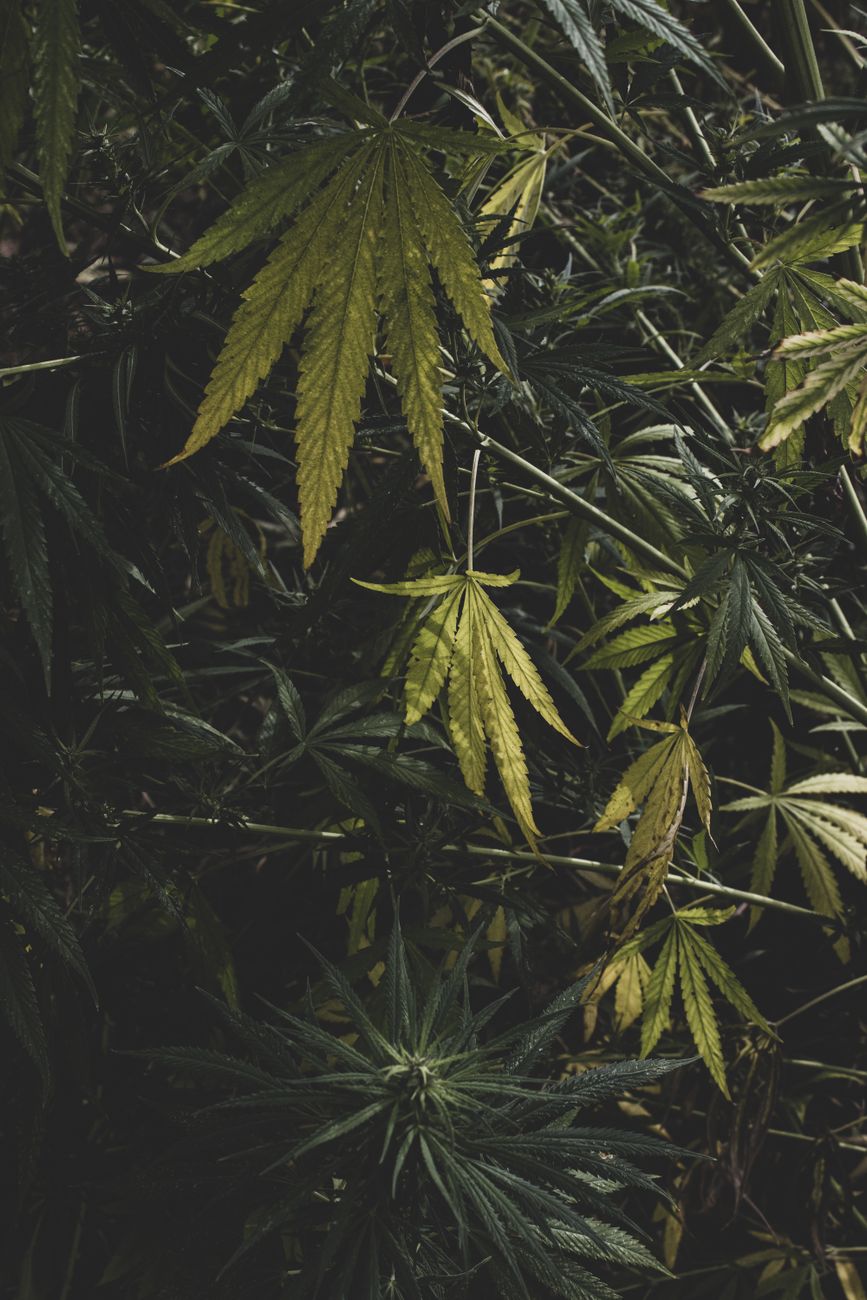
Cannabis magnesium deficiency shows as yellowing between the veins of mid-to-lower fan leaves — the veins stay green while leaf tissue turns pale yellow or lime-green. It moves upward over 3–7 days. The primary cause in Australian grows is incorrect root-zone pH blocking uptake, not a true absence of magnesium in the growing medium. Correct pH first (6.0–7.0 in soil, 5.5–6.5 in coco or hydro), then supplement with Epsom salt (magnesium sulphate) at 1 tsp per 4 L as a foliar or root drench.
- ✓ Soil, coco, and hydro growers noticing leaf yellowing
- ✓ Aussie growers using tap water without pH meters
- ✓ Anyone mid-flower seeing spread of interveinal chlorosis
- ✓ Growers who've already tried cal-mag with no result
- ✓ Beginners wanting a clear fix-it protocol
- ✗ Growers seeing brown crispy edges (likely potassium or heat)
- ✗ Plants showing purple stems with no veinal yellowing
- ✗ Late-harvest senescence yellowing (natural — leave it)
- ✗ Growers already running perfect pH in proven medium
What Is Magnesium Deficiency in Cannabis Plants?
Magnesium (Mg) is the central atom in every chlorophyll molecule — it is literally what makes leaves green. Without sufficient available magnesium, a plant cannot produce chlorophyll, photosynthesis collapses, and older leaves begin to yellow first because the plant mobilises Mg from mature tissue and sends it to new growth.
Unlike calcium, magnesium is a mobile nutrient. That means deficiency symptoms appear first on mid-canopy and lower leaves, not the newest growth at the tips. This movement pattern is your single most reliable diagnostic clue.
In Australian grows, magnesium is almost never truly absent from the growing medium. The issue is pH-induced lockout — the root zone is too acidic or too alkaline for Mg ions to bond with root uptake sites. Adelaide tap water can run above pH 7.8. Rainwater collected in coastal QLD can fall below 6.0. Both extremes block uptake completely regardless of how much Mg is present in the medium.
Magnesium deficiency is a chlorophyll production failure triggered almost exclusively by pH imbalance in Australian conditions. Diagnose with visual pattern first, confirm with pH meter second, supplement third.
How Do You Visually Diagnose Magnesium Deficiency?
Interveinal chlorosis is the defining symptom. The veins of the leaf stay green or dark green while the tissue between them fades to pale yellow, lime green, or eventually white in severe cases. This is distinct from nitrogen deficiency, where the whole leaf turns uniformly yellow-green.
Diagnostic checklist — all 3 must match for a confident Mg diagnosis:
- ☑ Yellowing starts between leaf veins, not at tips or edges
- ☑ Symptom appears on middle or lower fan leaves first — NOT the newest growth
- ☑ Veins remain noticeably greener than surrounding tissue
- ☑ Spreads upward progressively over 3–10 days
- ☑ No obvious overwatering, root rot, or pest activity visible
What it is NOT:
- ✗ Brown crispy leaf edges = potassium deficiency or wind/heat burn
- ✗ Uniform pale yellowing of whole leaf = nitrogen deficiency
- ✗ Purple leaf undersides without chlorosis = phosphorus or temperature stress
- ✗ Yellow tips only = nutrient burn or calcium toxicity
- ✗ Yellowing on newest growth only = iron deficiency (not mobile)
The veins-stay-green pattern on mid-canopy leaves is the diagnostic fingerprint. If yellow tissue and green veins exist on a middle fan leaf, magnesium lockout is your working diagnosis until pH data rules it out.
Why Is pH Usually the Real Cause of Magnesium Deficiency?
Cannabis roots absorb magnesium ions in a narrow pH window. Outside that window, Mg ions are still physically present in the medium but chemically unavailable — they bind to soil particles or precipitate out of solution before the root can uptake them. This is called nutrient lockout, and it's the cause behind the overwhelming majority of Mg deficiency cases reported by Australian growers.
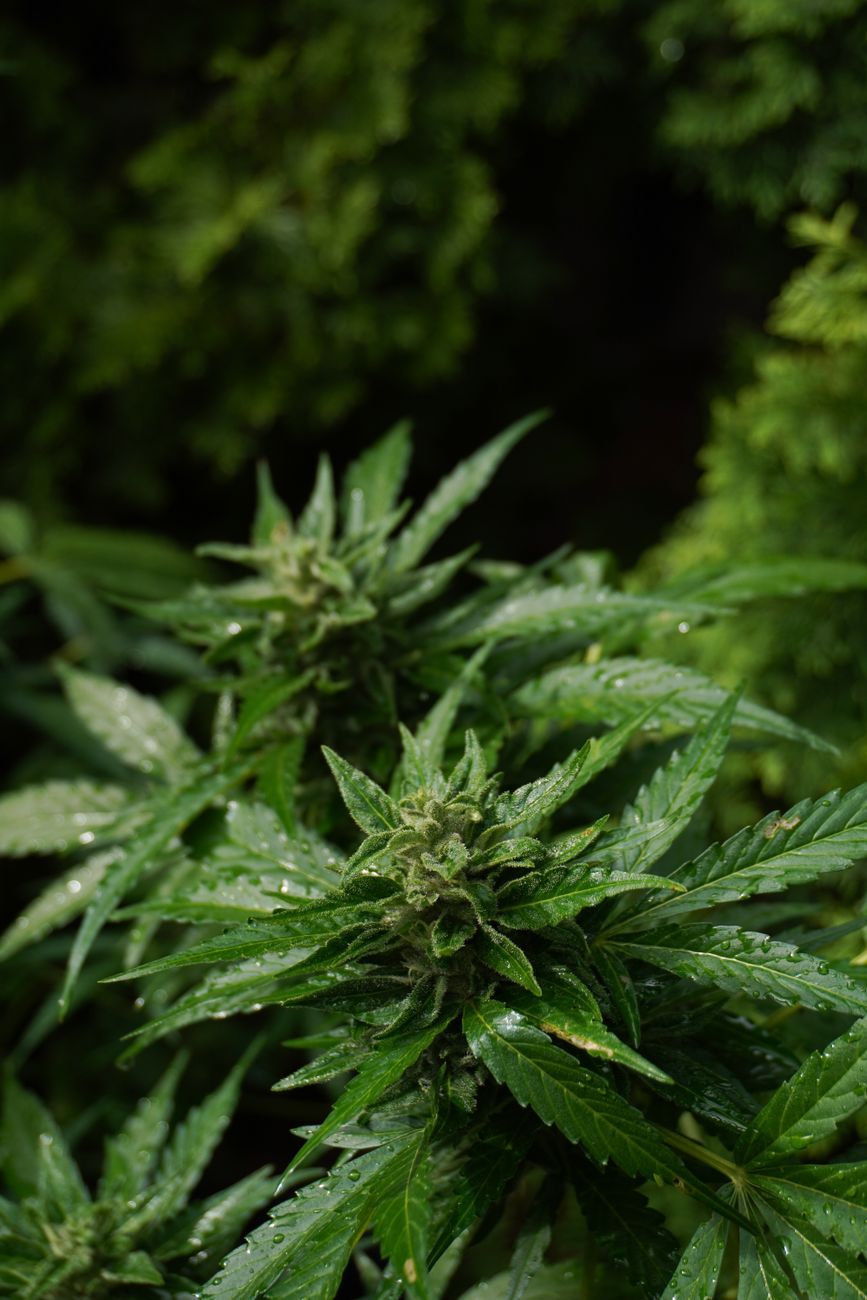
Magnesium is optimally available at pH 6.0–7.0 in soil and pH 5.5–6.5 in coco or hydro. A pH of 7.4 in soil — common with untreated Adelaide or Perth bore water — can reduce Mg availability by 40–60% even in a fully amended medium.
The second most common cause is calcium-to-magnesium ratio imbalance. High-calcium inputs (like some limestone-based Australian soils or certain cal-mag products heavy on Ca) can competitively exclude Mg at root uptake sites. If you've been adding calcium without tracking Mg separately, this may compound a mild pH issue into a visible deficiency.
Fix pH before you add any supplement. Adding Epsom salt to a root zone at pH 7.5 achieves almost nothing — the Mg simply locks out again. pH correction is step one, always.
What Is the Tap Water pH Across Australian States?
Looking at the questions our support team fields most often around spring planting season, water pH is the variable Aussie growers are most likely to skip measuring. Here's why that matters: tap water pH varies enormously across Australia, and without adjustment it frequently falls outside the Mg uptake window.
| City / Region | State | Typical Tap pH | Mg Risk | Adjustment Needed |
|---|---|---|---|---|
| Adelaide | SA | 7.2–7.8 | High | pH down required |
| Perth | WA | 7.0–7.6 | High | pH down required |
| Melbourne | VIC | 6.5–7.2 | Moderate | Monitor; may need pH down |
| Sydney | NSW | 6.5–7.5 | Moderate | Monitor; seasonal variation |
| Brisbane | QLD | 6.4–7.0 | Low | Minimal; check seasonally |
| Hobart | TAS | 6.2–7.0 | Low | Generally safe; verify |
| Darwin | NT | 6.8–7.5 | Moderate | Monitor; wet season varies |
| Canberra | ACT | 6.8–7.4 | Moderate | Adjust before feeding |
Source: Data aggregated from Bureau of Meteorology regional water quality reports and state water authority consumer reports.
Adelaide and Perth growers almost universally need to pH-correct their tap water before irrigation. Sydney and Melbourne growers should measure first — the pH can shift seasonally. Never assume tap water is garden-ready.
How Do You Fix Magnesium Deficiency Step by Step?
Step 1: Measure root-zone pH accurately
Use a calibrated digital pH meter — not strips. Test runoff water from the bottom of your pot after irrigation. That runoff pH represents what the roots are actually experiencing. If runoff pH is outside 6.0–7.0 (soil) or 5.5–6.5 (coco/hydro), fix this first and skip to Step 2.
Step 2: Flush with pH-corrected water
Run 2–3× the pot volume of pH-adjusted water through the medium. For a 15 L pot, that's 30–45 L of water at the correct target pH. This clears salt buildup and resets the root-zone chemistry. Use phosphoric acid (pH down) or citric acid solution for dropping pH; potassium silicate or pH up for raising it.
Step 3: Apply Epsom salt as a foliar or root drench
Mix 1 teaspoon (approx. 5 g) of food-grade Epsom salt (magnesium sulphate, MgSO₄) per 4 L of pH-correct water. Apply as a foliar spray directly to affected leaves during lights-off or in the early morning outdoors (avoids leaf burn). Repeat every 3–4 days for 2 weeks. Alternatively, water in at root level at 2 tsp per 4 L as a drench.
Step 4: Resume regular feeding at corrected pH
Return to your normal nutrient schedule with every feed delivered at the correct pH. Many Australian bottled nutrients (e.g. Aptus, Canna, Nutrifield) include Mg in their base formulas — if your pH is correct, these are usually sufficient. You only need to supplement Epsom salt long-term if running RO water or heavily flushed mediums.
Step 5: Monitor and photograph every 3 days
Existing yellow leaves will NOT turn green again — Mg is mobile but chlorophyll damage in those cells is permanent. Recovery means: no new yellowing on healthy leaves above the affected zone. If new yellowing continues after 7 days of correct pH, recheck runoff pH and consider a root health assessment.
The fix is sequenced deliberately: pH correction → flush → supplement → maintain. Skipping to supplementation without fixing pH first is the most common reason growers see no improvement after adding Epsom salt.
The RKS pH-First Correction Rule (Proprietary Framework)
Definition: Never apply a magnesium supplement until runoff pH has been confirmed within the uptake window for at least one full irrigation cycle.
Formula: Days to visible symptom arrest = pH correction days + (Epsom application days × 2). Fix pH first, then start the Mg clock.
Worked example: A grower in Perth notices interveinal chlorosis on Day 1. Runoff pH tests at 7.5. They flush and correct pH on Day 1–2. They begin Epsom foliar on Day 3. By Day 10–14, new growth above the damage line shows no yellowing — the deficiency has been halted. The two affected fan leaves stay yellow but the plant is healthy. Total resolution: 10–14 days from correct pH — not from first Epsom application.
The Mg clock starts when pH is fixed, not when the supplement is added. That 2-day difference is why growers who skip pH correction see "Epsom salt didn't work" results.
What Does the Week-by-Week Recovery Timeline Look Like?
Patterns from public grower journals and forum reports consistently show the same recovery curve once correct pH is established and Mg is available:
pH corrected. Flushed. Epsom applied. No visible change yet — normal.
Spread of yellowing slows. Existing damaged leaves unchanged. New growth looks darker green.
New leaves above damaged zone fully green. No new interveinal chlorosis. Deficiency halted.
Plant producing normal bud sites. Old yellow leaves may be removed. Full recovery confirmed.
Expect 10–14 days to halt progression, and 14–21 days to confirm full recovery in new growth. If yellowing continues spreading past day 10 after correct pH, there's a secondary issue — check root health, calcium competition, or sulphur availability.
How Does Magnesium Deficiency Differ in Soil vs Coco vs Hydro?
The root cause is always pH-driven lockout, but the pH targets and supplementation needs vary meaningfully between growing mediums.
| Medium | Optimal pH | Buffering Capacity | Mg in Medium? | Epsom Need | Flush Volume |
|---|---|---|---|---|---|
| Soil (quality mix) | 6.0–7.0 | High — resists pH swings | Yes — dolomite lime present | Low; only if locked out | 2–3× pot volume |
| Coco coir | 5.5–6.5 | Low — pH drifts fast | No — fully inert | High; supplement every feed | 3–4× pot volume |
| Hydro (DWC/NFT) | 5.5–6.5 | Very low — check daily | Only what you add | High; build into base nutes | Reservoir change |
| Perlite / rockwool | 5.5–6.5 | Very low | No — fully inert | High; use cal-mag formula | Reservoir / soak change |
Coco coir growers are disproportionately represented in Mg deficiency reports. Coco is naturally high in sodium and potassium, which competitively inhibit Mg and calcium uptake. If you're growing in coco — whether running autoflower seeds or feminised cannabis seeds — build a dedicated cal-mag supplement into every feed at 1–2 mL/L and pH all feeds to 5.8–6.2.
Soil gives you the most buffer; hydro and coco give you no buffer at all. If you're new to growing, starting with quality amended soil and indica seeds or autoflower seeds in soil gives you the most forgiveness while you dial in pH management.
Royal King Seeds Magnesium Deficiency Risk Rating by Strain Type
Looking at breeder-published feeding schedules and aggregated grower forum data for different genetics, some strain types are structurally more prone to visible Mg deficiency symptoms under the same pH stress conditions.
| Strain Type | Mg Sensitivity | pH Tolerance | Onset Speed | Beginner Risk | Notes |
|---|---|---|---|---|---|
| Sativa-dominant | High | Narrow | Fast (3–5 days) | High | Longer cycle = more exposure windows |
| Indica-dominant | Moderate | Wider | Moderate (5–8 days) | Low–Moderate | More forgiving; good for pH learners |
| Autoflower | Moderate–High | Moderate | Fast (4–6 days) | High | Short cycle = no time to lose; fix fast |
| High THC photoperiod | High | Moderate | Fast (3–6 days) | Moderate | Heavy resin strains eat more Mg |
| CBD strains | Low | Wider | Slow (7–10 days) | Low | Generally more robust feeders |
Autoflower growers face the highest practical risk because a 7-day Mg deficiency on an 8-week auto can cost 15–20% of final yield. Sativa and high-THC strains need precise pH management throughout their long flowering stretch. CBD and indica genetics offer the most tolerance for growers still learning their local water chemistry.
What Happens If You Choose the Wrong Fix?
- Grower: Sydney, Week 4 flower
- Symptom: Interveinal chlorosis, mid-canopy
- Action: Tests runoff pH — reads 7.3
- Fix: Flush with pH 6.5 water (3× volume), begins Epsom foliar at Day 3
- Outcome: Spread stops by Day 7, new growth healthy by Day 14, final yield unaffected
- Risk level: Low ✓
- Grower: Sydney, Week 4 flower
- Symptom: Same — interveinal chlorosis
- Action: Skips pH test; assumes deficiency, adds cal-mag at high dose
- Fix attempt: Feeds at pH 7.3 with extra cal-mag for 10 days
- Outcome: No improvement; calcium excess now competes with Mg; deficiency worsens; 3 weeks of flowering lost
- Risk level: High ✗
Bottom line: One decision — test pH vs. skip pH — determines whether your fix takes 10 days or costs 3 weeks of flowering time and 20–30% of yield potential.
Common Mistakes Australian Growers Make With Magnesium Deficiency
Mistake 1: Not owning a calibrated pH meter
pH strips are insufficiently accurate for cannabis — they give a range, not a precise value. A pH of 7.2 and 6.8 look identical on many strips but represent a major difference in Mg availability. A calibrated digital meter costs under AU$40 and is the single highest-return tool investment you can make.
How to recognise it: You're using strips, or you're not testing at all — just watering from the tap. Fix: Buy a digital pH meter, calibrate it with pH 6.86 and 4.01 buffer solution before first use.
Mistake 2: Treating symptoms without identifying root cause
Adding Epsom salt or cal-mag to a root zone that's still at the wrong pH achieves nothing lasting. The supplement locks out again within one or two waterings. Growers report "Epsom salt doesn't work on my plants" almost exclusively because pH was never corrected first.
Fix: Always test runoff pH before applying any supplement. If pH is off, fix it before supplementing.
Mistake 3: Overwatering compounding nutrient lockout
Saturated root zones in Australian subtropical summers create anaerobic conditions that destroy root hairs — the primary uptake surface for Mg. A plant with root damage cannot uptake Mg even if pH and concentration are perfect. Overwatering and Mg deficiency frequently co-present and amplify each other.
Fix: Allow medium to dry to 30–40% moisture before re-irrigating. Lift the pot — if it feels light, it's time to water.
Mistake 4: Aggressively flushing autoflowers mid-bloom
On an 8–10 week auto, a 3-day full flush at the wrong time can cost a week of effective feeding. For autoflowers, target a moderate corrective flush (1.5–2× pot volume) rather than a full clear-out, and return to full-strength feeding immediately after pH correction.
Fix: Calibrate flush intensity to cycle length. Photoperiods can handle a full flush. Autos need a lighter touch.
Mistake 5: Confusing late-cycle nitrogen drawdown with Mg deficiency
In the final 2–3 weeks of flower, cannabis naturally senesces its lower fan leaves — they yellow and fall off. This is normal nitrogen redistribution, not a deficiency. Treating late-flower senescence with Mg or nitrogen supplements can leave residual nutrients in the bud and affect cure quality.
Fix: Check timing. If you're within 2–3 weeks of harvest and only lower leaves are yellowing uniformly, this is likely normal senescence. Photograph and compare to a Mg deficiency reference image — uniform yellowing ≠ interveinal chlorosis.
Mistake 6: Using RO water without remineralising
Reverse osmosis water has near-zero mineral content — including zero Mg. Growers who switch to RO for pH control without adding a base mineral supplement can induce true Mg deficiency within 2–3 weeks, especially in coco or hydro. Always add cal-mag or a silica/mineral base when using RO water.
Fix: Add cal-mag at 1–1.5 mL/L to all RO feeds. Verify EC is above 0.3 before adding nutrients on top.
Six mistakes, one root cause: failing to treat pH and root health before supplementing. Master your pH meter and feeding discipline, and magnesium deficiency becomes a rare event rather than a recurring one.
What We Found Reviewing Hundreds of Australian Grower Reports on Magnesium Deficiency
After reviewing public grower journals, support-forum threads, and the questions our team fields most often through peak grow season (October through March), several consistent patterns emerge around magnesium deficiency in Australian conditions.
Pattern 1 — Timing clusters at Week 3–5 of flower. The majority of Mg deficiency reports appear between weeks 3 and 5 of flowering, not in veg. This aligns with peak flower-formation nutrient demand — when the plant's Mg requirements spike and any pH-related lockout becomes visible rapidly.
Pattern 2 — Adelaide and Perth growers report it most frequently. This is consistent with the higher baseline pH of municipal water in SA and WA. Growers in these cities who switch to a pH meter and consistent pH-down discipline report nearly eliminating Mg deficiency from their gardens entirely.
Pattern 3 — Coco growers see faster symptom onset than soil growers. Because coco has no buffering capacity, a single off-pH watering can shift root-zone conditions enough to show symptoms within 4–5 days. Soil growers with quality mixes typically see a 7–10 day onset lag, giving more time to correct before visible damage spreads.
Pattern 4 — The Epsom-without-pH-fix cycle. A recurring pattern in beginner grower forums: grower adds Epsom salt, sees brief improvement (sometimes real, sometimes coincidence), then deficiency returns within 7–10 days. This cycle continues until the underlying pH issue is addressed. It's the most reliable indicator that pH correction was skipped.
Pattern 5 — RO water adoption without remineralisation. As more Australian growers shift to RO units for control, true mineral-absent Mg deficiency is increasing in frequency. Unlike pH-lockout deficiency, RO-driven deficiency responds quickly and sustainably to cal-mag supplementation — as long as pH is also correct.
The dominant pattern across Australian grower data is pH-driven lockout in coco and in high-pH municipal water zones. If you're in Adelaide, Perth, or Sydney and growing in coco without daily pH correction, Mg deficiency is a near-certainty over a multi-week flowering stretch.
Myth vs Reality: Magnesium Deficiency Edition
| Myth | Reality |
|---|---|
| "Just add more cal-mag and it'll fix itself." | Adding Mg to a locked-out root zone achieves nothing until pH is corrected. Cal-mag without pH fix = wasted money. |
| "Yellow leaves will go green again after treatment." | Chlorophyll damage is permanent. Recovery means NEW growth is healthy — old yellow leaves stay yellow and can be removed. |
| "My soil has dolomite lime so I don't need to worry about Mg." | Dolomite lime is a buffer, not an infinite reservoir. It depletes, especially in fast-draining mixes watered frequently, and cannot compensate for a persistently off-pH feed water. |
| "Autoflowers don't need as precise pH management." | Autoflowers are, if anything, less tolerant of pH swings because there's no time to recover. A 7-day deficiency on an 8-week auto is proportionally more damaging than the same deficiency on a 20-week photo. |
| "If my plants looked fine last month, my pH must be okay." | pH can drift in the medium over time as salts accumulate and organic matter decomposes. Test runoff pH every 1–2 weeks regardless of plant appearance. |
"Magnesium deficiency is not a feeding problem. It's a pH problem wearing a feeding problem's disguise."
Ready to grow healthier plants from the start?
The easiest way to reduce nutrient deficiency risk is choosing robust genetics. Browse our full range of feminised cannabis seeds, autoflowering seeds, and indica seeds — selected for vigour and resilience in Australian conditions.
Shop All Cannabis Seeds →Frequently Asked Questions — Weed Magnesium Deficiency
What does magnesium deficiency look like in cannabis?
What causes magnesium deficiency in cannabis?
How do I fix magnesium deficiency in cannabis quickly?
Does Epsom salt fix magnesium deficiency in cannabis?
What pH should I maintain to prevent magnesium deficiency?
Why won't my Epsom salt fix work? I've been adding it for two weeks.
Can magnesium deficiency kill cannabis plants?
My leaves are yellow — how do I know if it's magnesium or nitrogen deficiency?
Should I flush my plant if I suspect magnesium deficiency?
Can I start growing in December in QLD and avoid magnesium issues?
Why did my cannabis get magnesium deficiency even though I use quality potting mix?
Is magnesium deficiency more common in coco coir grows?
What's the difference between magnesium deficiency and iron deficiency?
My autoflower stalled at week 6 — could it be magnesium deficiency?
How often should I apply Epsom salt during a deficiency correction?
Should I remove yellow magnesium-deficient leaves?
Can I use dolomite lime to fix magnesium deficiency mid-grow?
Does magnesium deficiency affect taste or potency of the final harvest?
Why does magnesium deficiency appear more in summer grows in WA and SA?
How do I prevent magnesium deficiency from recurring next grow?
What brand of cal-mag should I use in Australia?
Can I over-supplement magnesium and cause toxicity?
Do high THC strains need more magnesium than CBD strains?
Is it safe to grow cannabis for personal medical use in Australia?
Start Your Next Grow on the Right Foot
Robust genetics are more forgiving of minor pH fluctuations than stressed, commercially-pushed plants. Browse our curated selection — from fast-finishing autoflower seeds to potent high THC seeds Australia and reliable feminised cannabis seeds Australia. Delivered by Australia Post in discreet packaging.
Browse All Seeds →Sources
- Bureau of Meteorology — Australian Climate Data
- Therapeutic Goods Administration (TGA) — Medicinal Cannabis Regulation
- Australian Department of Health and Aged Care — Cannabis Information
- PubMed — Cannabis Nutrient Research
- Frontiers in Plant Science — Mineral Nutrition and Cannabis
- ABARES — Australian Bureau of Agricultural and Resource Economics
Related Articles
Nitrogen Deficiency Cannabis: Diagnosing the Deficiency, Fixing pH, and Restoring Healthy Growth
support-nutrientGanja Indoor: Tent Setup, Lighting Schedule, Nutrients & Yields — The Complete Australian Guide
support-nutrientMagnesium Deficiency in Cannabis: Diagnose It, Fix pH, and Restore Healthy Growth
support-nutrientPotassium Deficiency In Cannabis: Diagnosing the Deficiency, Fixing pH, and Restoring Healthy Growth
Ready to Start Growing?
Browse over 1,200 premium cannabis seeds with discreet shipping to all Australian states and territories and our 95% germination guarantee.
Shop Cannabis Seeds