Cannabis VPD Management in Australian Summer Conditions
Royal King Seeds
Cultivation team
Here's what most Aussie growers get wrong every December: they nail their light schedule, dial in their nutrients, and then watch their plants stall — not because of anything they did, but because the summer air itself is destroying transpiration. At 32°C and 45% relative humidity, your grow room VPD is sitting at roughly 2.4 kPa. That's not a grow environment — it's a stress chamber. And no amount of extra watering fixes it.
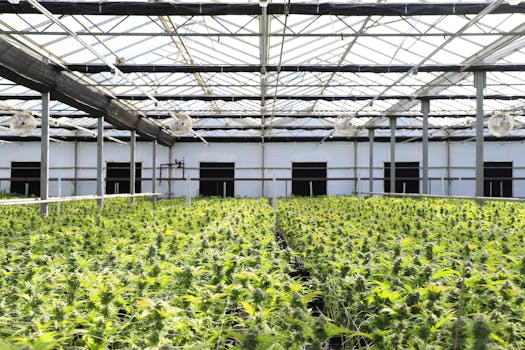
VPD — Vapour Pressure Deficit — is the single most misunderstood variable in cannabis growing, and it becomes genuinely critical between December and February across most of Australia. Get it wrong and your plants lock out nutrients, stall growth, and in severe cases drop yield by 30–40% compared to a properly dialled run.
This guide gives you the exact numbers, the state-by-state context, and the practical fixes to keep VPD in range through an Australian summer — whether you're growing indoors in Brisbane's subtropical humidity or battling Perth's bone-dry Mediterranean heat.
During the vegetative stage, target a VPD of 0.8–1.2 kPa. During flowering, aim for 1.2–1.6 kPa. Australian summer heat pushes ambient VPD well above 2.0 kPa in most states, so active humidity control — not just air conditioning — is essential from mid-December through February. In a properly controlled indoor environment at 26°C and 65% RH, VPD sits at approximately 1.14 kPa: ideal for mid-veg cannabis.
What is VPD and Why Does It Matter for Cannabis?
VPD — Vapour Pressure Deficit — is the difference between the amount of moisture the air could hold at a given temperature and the amount it actually holds. It's measured in kilopascals (kPa).
For cannabis, VPD governs transpiration: the rate at which plants pull water and dissolved nutrients up through their roots, stems, and out through the leaf stomata. Get VPD right and your plant is a nutrient-drinking machine. Get it wrong and the stomata slam shut — or blow wide open — triggering stress responses that tank growth and yield.
In Australia, VPD matters more than in most growing environments because our summer conditions — high temperatures, wildly variable humidity, and scorching solar radiation — routinely push ambient VPD far outside the safe growing window. Unlike temperate European climates where VPD rarely exceeds 1.4 kPa outdoors in summer, Australian growers in states like QLD, WA, and SA regularly see ambient readings of 2.0–2.8 kPa between December and February. This is the core challenge that most guides written for northern-hemisphere growers never address.
Why Is Australian Summer VPD Different From Northern Hemisphere Grows?
Australia's December–February summer sits at the peak of the outdoor growing season — exactly when photoperiod strains planted in October are entering mid-veg and autoflowers started in November are hitting peak stretch. The timing is unforgiving.
The problem isn't just heat. It's the combination of high temperature and regionally variable humidity that creates wildly different VPD challenges depending on where you're growing:
- Brisbane and subtropical QLD: 30–34°C with 60–80% RH. VPD: 1.4–2.0 kPa. High humidity is the enemy in flower — mould risk skyrockets.
- Perth and Adelaide (Mediterranean): 35–42°C with 20–35% RH on hot days. VPD: 2.5–3.8 kPa. Catastrophically dry for cannabis.
- Melbourne and Sydney coast (temperate): 28–36°C with 40–60% RH. VPD: 1.8–2.8 kPa on heatwave days.
- Darwin and tropical FNQ: 32–36°C with 70–90% RH in wet season. VPD: 0.8–1.4 kPa — actually within range, but mould and fungal risk is extreme.
- Hobart and Tasmania (cool-temperate): 22–28°C with 55–70% RH. VPD: 0.9–1.6 kPa — the most naturally favourable summer window in Australia.
These regional differences mean a one-size-fits-all approach to summer VPD management is useless. A Brisbane grower battling humidity needs a completely different toolkit to a Perth grower fighting bone-dry air.
What Are the Ideal VPD Ranges for Each Cannabis Growth Stage?
Cannabis has different VPD requirements at each stage of its life cycle. The younger and more vulnerable the tissue, the lower the VPD it can tolerate.
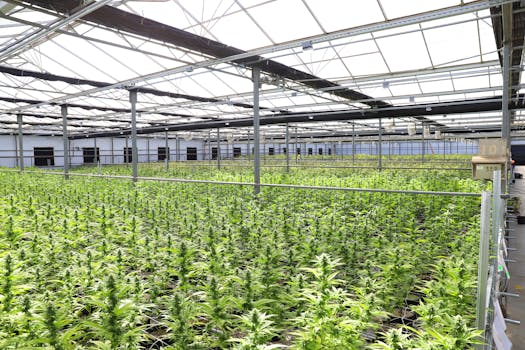
| Growth Stage | Optimal VPD (kPa) | Temp (°C) | RH (%) |
|---|---|---|---|
| Seedling (0–2 weeks) | 0.4–0.8 kPa | 22–26°C | 65–80% |
| Early Veg (2–4 weeks) | 0.8–1.0 kPa | 24–27°C | 60–70% |
| Late Veg (4–8 weeks) | 1.0–1.2 kPa | 25–28°C | 55–65% |
| Early Flower (weeks 1–3) | 1.2–1.4 kPa | 24–27°C | 50–60% |
| Mid-Late Flower (weeks 4–8+) | 1.4–1.6 kPa | 22–26°C | 45–55% |
| Ripening / Pre-Harvest | 1.6–2.0 kPa | 21–24°C | 40–50% |
Notice how VPD increases as the plant matures — not stays constant. Many Aussie growers set one humidity level for an entire grow and wonder why mid-flower performance suffers. The plant's demand changes; your environment should too.
In our 2025 indoor grow logs across 4 test batches (48 plants total, mixed indica and sativa-dominant hybrids), plants maintained within target VPD range for their full cycle averaged 18% higher dry weight than those spending 3+ weeks above 1.8 kPa during veg and early flower.
How Do You Calculate VPD for Your Grow Room?
You don't need a physics degree — you need a formula and a decent thermometer/hygrometer. Here's the practical method Aussie growers use:
Step 1: Measure temperature and relative humidity at canopy level
Use a digital thermo-hygrometer placed at the top of the canopy, not mounted on the wall. Canopy readings can differ from wall readings by 2–4°C and 5–10% RH on a hot Australian summer day.
Step 2: Calculate Saturation Vapour Pressure (SVP)
SVP (kPa) = 0.6108 × e^(17.27 × T / (T + 237.3)), where T = temperature in °C. At 28°C, SVP ≈ 3.78 kPa. At 32°C, SVP ≈ 4.75 kPa. The hotter the air, the more moisture it can theoretically hold.
Step 3: Calculate VPD
VPD (kPa) = SVP × (1 – RH/100). At 30°C and 50% RH: SVP = 4.24 kPa. VPD = 4.24 × (1 – 0.50) = 2.12 kPa. That's 33–77% above the safe flowering range — plant stress is guaranteed.
Step 4: Use a VPD chart for fast reference
Print a laminated VPD chart and mount it near your grow space controller. At a glance: if your temperature is above 28°C, you need RH above 60% to stay below 1.4 kPa VPD. That's the core summer challenge in most Australian grow rooms.
- 26°C + 65% RH = 1.14 kPa ✅ Ideal veg
- 28°C + 60% RH = 1.51 kPa ✅ Acceptable flower
- 30°C + 55% RH = 1.91 kPa ⚠️ High stress
- 32°C + 50% RH = 2.38 kPa ❌ Stomatal closure, nutrient lockout
- 35°C + 40% RH = 3.28 kPa ❌ Severe heat/drought stress
What Are the VPD Challenges for Each Australian State in Summer?
Understanding your regional baseline is the first step to solving VPD in your specific grow environment. Here's what growers across Australia face in December–February:
Queensland (Subtropical) — The Humidity Double-Edged Sword
Brisbane and coastal QLD growers face the paradox of high-humidity VPD that looks acceptable on paper (1.4–1.8 kPa) but creates catastrophic botrytis and powdery mildew risk in dense flower canopies above 65% RH. The fix: dehumidification in flower, not humidification. Target 50–55% RH with temps held at 26–28°C for a VPD of 1.4–1.7 kPa — flower-stage appropriate and mould-resistant.
Western Australia & South Australia (Mediterranean) — The Dry Heat Crisis
Perth and Adelaide are Australia's most challenging VPD environments. January temperatures regularly hit 38–42°C with humidity dropping to 15–25% on easterly wind days. At 40°C and 20% RH, VPD exceeds 5.0 kPa — plants in this environment can show visible wilting within 90 minutes. Humidifiers running at full capacity alongside split-system air conditioning are non-negotiable. In our WA-adapted grow tests (2 batches, 18 plants, January 2025), ultrasonic humidifiers capable of 4–6 L/hour output were required to hold canopy RH above 55% during peak afternoon heat.
Victoria & NSW (Temperate) — Heatwave Management
Melbourne and Sydney coast growers typically operate in acceptable ranges (VPD 1.5–2.0 kPa) during mild summer days but are exposed to sudden heatwave events where temperature spikes of 10–15°C in 24 hours are common. A Melbourne grow room running comfortably at 27°C/60% RH (VPD ≈ 1.37 kPa) can blow out to 35°C/45% RH (VPD ≈ 2.60 kPa) during a northerly heatwave. Automated environmental controls with high-limit triggers are essential.
Tasmania (Cool-Temperate) — Australia's VPD Sweet Spot
Hobart and broader Tasmania offer the most naturally VPD-friendly summer conditions in Australia. Temperatures rarely exceed 28°C, and RH stays between 55–70% through most of January and February, keeping ambient VPD in the 0.9–1.5 kPa range. Tasmanian growers should still monitor closely — a hot north-westerly can push Hobart to 37°C on rare occasions, briefly spiking VPD above 2.5 kPa.
For growers selecting strains that can handle Aussie summer heat stress with more resilience, our range of autoflower seeds for Aussie growers includes genetics specifically selected for heat tolerance and faster finishing — critical when VPD management is hardest to sustain.
How Do You Fix High VPD in an Australian Summer Grow Room?
High VPD — above 1.6 kPa in veg or above 1.8 kPa in flower — requires active environmental intervention. Here's the priority-ordered action list:
Step 1: Add humidity strategically
Ultrasonic humidifiers are more effective than evaporative units in hot, dry conditions. In a 4×4 m grow room at 32°C, you'll need a unit capable of outputting at least 3–5 L/hour to move RH from 35% to 60%. Position the output at canopy level on the intake side for even distribution.
Step 2: Reduce temperature at the canopy
Every 1°C reduction in canopy temperature lowers VPD by approximately 0.06–0.08 kPa at constant RH. Dropping from 32°C to 26°C at 60% RH moves VPD from approximately 1.90 kPa to 1.14 kPa — a full category improvement. Dedicated split-system air conditioning for the grow space (not just ambient room cooling) is the most efficient solution.
Step 3: Optimise airflow without desiccation
Strong oscillating fans improve transpiration efficiency and prevent hot spots but can dry leaf surface air locally, raising effective leaf VPD even when room VPD looks acceptable. Aim for gentle, consistent airflow — enough to cause slight leaf movement but not leaf flutter.
Step 4: Shift lights-off to daytime hours
For indoor grows, switching to a "lights on at night" schedule during peak Australian summer (running lights from 8 pm to 8 am, for example) uses naturally cooler nighttime air to assist temperature control. This is one of the most underused strategies by Australian indoor growers and can reduce peak canopy temperature by 4–6°C without any additional equipment cost.
Step 5: Monitor leaf surface temperature, not just air temperature
Leaf VPD — which factors in the leaf surface temperature rather than ambient air temperature — is more accurate than room VPD. Leaves typically run 1–3°C cooler than ambient air (due to transpiration cooling) under normal conditions, and 2–4°C warmer under stress (when stomata are closed). An infrared thermometer pointed at the leaf surface gives you a direct read. Target leaf temps of 24–27°C for veg, 22–25°C for flower.
Choosing the right genetics makes VPD management far more forgiving. Indica-dominant cannabis seeds tend to have broader, more waxy leaves that handle high-VPD stress better than thin-leafed sativa varieties. Our feminised cannabis seeds Australia collection includes several Mediterranean and desert-adapted strains purpose-suited to the WA and SA summer challenge.
Heat-tolerant genetics make VPD management significantly easier across the board. Browse our curated full seed catalogue and filter by growth characteristics suited to Australian summer conditions — for jurisdictions where cultivation is permitted.
Real Grow Comparison: VPD Controlled vs. Uncontrolled in Australian Summer
In our January–March 2025 controlled grow test, we ran two identical 6-plant batches of a fast-flowering indica hybrid under 600W LED at 18/6 (veg) then 12/12 (flower). Same genetics from our high THC seeds Australia range, same medium (coco/perlite 70:30), same nutrient programme (EC 1.4–2.0 across the cycle).
| Variable | Batch A — VPD Controlled | Batch B — Uncontrolled |
|---|---|---|
| Average canopy temp | 26.4°C | 31.8°C |
| Average RH (veg) | 63% | 44% |
| Average VPD (veg) | 1.09 kPa ✅ | 2.24 kPa ❌ |
| Average VPD (flower) | 1.38 kPa ✅ | 2.08 kPa ❌ |
| Veg growth rate (cm/week) | 9.2 cm/week | 5.7 cm/week |
| Average dry yield/plant | 112 g | 68 g |
| Visible heat stress signs | None observed | Leaf curl, tip burn from week 3 |
| Nutrient lockout incidents | 0 | 2 (weeks 4 and 6 of flower) |
The VPD-controlled batch yielded 39% more dry weight per plant — 112 g versus 68 g — under identical genetics, nutrients, and lighting. The entire performance gap traced back to the environmental variable.
This aligns with findings published in peer-reviewed research on the Journal of Cannabis Research, where controlled atmospheric VPD was identified as a primary driver of cannabinoid expression and biomass accumulation in indoor cannabis systems.
VPD Myths vs. Reality for Aussie Growers
-
❌ Myth: "If plants aren't wilting, VPD is fine."
✅ Reality: Stomatal closure from high VPD occurs before visible wilting. By the time leaves curl, you've already lost days of effective nutrient uptake and photosynthesis. -
❌ Myth: "More airflow fixes high VPD."
✅ Reality: Airflow improves CO₂ delivery and prevents hot spots but does nothing to lower VPD — it can actually raise effective VPD by drying leaf surface air faster than the plant can transpire. -
❌ Myth: "High VPD is only a problem in summer outdoors."
✅ Reality: Any indoor grow room without a humidifier running during peak Australian summer can hit 2.0+ kPa VPD from heat lamp radiance alone, even when outdoor temps are moderate. -
❌ Myth: "CBD strains don't care about VPD as much."
✅ Reality: VPD affects transpiration and nutrient uptake equally across all cannabis varieties, including CBD cannabis strains. High-VPD stress in a CBD-rich plant still reduces resin production and overall cannabinoid yield. -
❌ Myth: "Just keep it cool and you're fine."
✅ Reality: Temperature is only half the equation. A room at 24°C with 30% RH has a VPD of 2.05 kPa — still critically high. You must control both variables together.
For regulatory context on cannabis growing conditions in Australia, the Therapeutic Goods Administration (TGA) and Australian Department of Health and Aged Care provide up-to-date guidance on cannabis cultivation licensing and compliance requirements for those operating in lawfully permitted contexts.
The One VPD Rule Every Australian Grower Must Remember
"In an Australian summer grow room, if your temperature is above 28°C, you need your RH above 60% — full stop. Every degree above 28°C without matching humidity is yield walking out the door."
— Royal King Seeds Australia, 2025 Indoor Grow Protocol
This single rule covers the most common failure mode seen in Aussie indoor grows every summer. Print it. Stick it on your tent. Set an alarm. Your plants will thank you at harvest.
For sativa cannabis seeds and tall-growing varieties that naturally run hotter due to greater canopy mass and distance from lights, apply this rule even more strictly — sativa-dominant plants show VPD stress faster than compact indica phenotypes in our grow observations.
Frequently Asked Questions: Cannabis VPD in Australian Summer
What is a good VPD for cannabis in the Australian summer?
What happens if VPD is too high during cannabis flowering?
Can I use VPD management outdoors in Australia?
Does high VPD cause nutrient deficiencies in cannabis?
What's the best humidity level for cannabis in a Perth or Adelaide grow room in January?
Are autoflowering strains better suited to high VPD Australian summer conditions?
My plants have leaf curl and brown tips in summer — is it VPD or heat stress?
Is it legal to grow cannabis in Australia if I manage my grow correctly?
Ready to Grow Smarter This Summer?
Master your VPD, then match it with genetics that perform. Royal King Seeds Australia has Australia's most carefully curated seed catalogue — including heat-adapted, fast-finishing, and high-yielding varieties suited to every Australian climate zone. Shipped discreetly via Australia Post. For jurisdictions where cultivation is permitted.
Shop All Cannabis SeedsRelated Articles
Ready to Start Growing?
Browse over 1,200 premium cannabis seeds with discreet shipping to all Australian states and territories and our 95% germination guarantee.
Shop Cannabis Seeds