Cannabis Seed Storage in Australian Tropical Heat: The Complete Guide
Royal King Seeds
Cultivation team
Most Aussie growers in Darwin, Cairns, and tropical Queensland are quietly destroying their seed stock before they even plant a single seed — and they don't know it. At sustained temperatures above 25°C with 75%+ relative humidity, germination rates can crash from 95% down to under 40% within just six months. That's not bad luck. That's physics. This guide gives you the exact storage protocol that preserves viability through the Australian wet season, heatwaves, and the brutal subtropical humidity that defines life north of the Tropic of Capricorn.
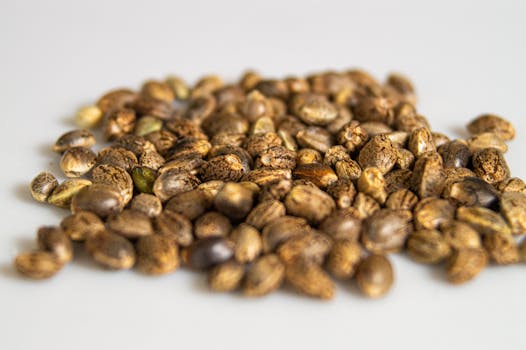
Seal seeds in an airtight glass or food-grade plastic container with fresh silica gel desiccant, targeting relative humidity below 8% inside the container. Store in the coldest, most stable spot available — ideally 6–8°C in a dedicated fridge drawer. Avoid the freezer unless storing for 2+ years; freeze–thaw cycling kills viability fast. In high-humidity climates like Darwin or Cairns, ambient storage — even in a "cool" cupboard — is not sufficient.
Why Does Tropical Heat Destroy Cannabis Seeds?
Heat accelerates the metabolic activity inside a dormant seed. Even at rest, a seed is a living organism — and above 25°C, its cellular processes run faster, consuming stored energy reserves that should be preserved for germination.
In tropical Australia — Darwin (average year-round temperature 28–32°C), Cairns, Townsville, and coastal QLD — seeds left at ambient temperature are under constant thermal stress. Add 80–90% relative humidity during the wet season (November to April) and you've created near-perfect conditions for fungal growth on seed coats and premature degradation of embryo tissue.
Research published in Frontiers in Plant Science confirms that seed longevity follows a predictable decline curve tied to both temperature and moisture content — the two variables that tropical climates weaponise simultaneously.
The core biological problem is this: heat + moisture triggers the seed to begin the germination process internally, even without water penetrating the seed coat. The embryo starts spending resources. By the time you plant, there's nothing left to spend.
What Is the Ideal Storage Temperature for Cannabis Seeds?
The ideal temperature range for cannabis seed storage is 6–8°C for medium-term storage (up to 2 years), and -18°C for archival long-term storage beyond 2 years — provided you follow strict humidity control protocols before freezing.
For most Aussie home growers, a standard fridge set to its coldest non-freezing setting hits this range perfectly. The vegetable crisper drawer is often the most stable thermal zone in a household fridge, making it the default recommendation for growers in Brisbane, Cairns, and Darwin.
Temperatures below 6°C introduce freeze-thaw risk if the fridge is opened frequently in a hot, humid kitchen. A dedicated mini-fridge or bar fridge with minimal door cycling is the gold standard for serious collectors of feminised cannabis seeds Australia-wide.
- 6–8°C: Optimal for short to medium-term storage (6 months – 2 years)
- 2–5°C: Acceptable, but more vulnerable to moisture condensation on container retrieval
- 10–15°C: Passable only with very low humidity (below 6% RH) — not recommended in tropical QLD
- Above 25°C: Viability decline begins; not suitable beyond 3–4 months even with desiccant
- -18°C (freezer): Archive-only; requires vacuum-sealing and a zero freeze-thaw protocol
How Does Humidity Kill Cannabis Seeds?
Humidity is the faster killer of the two. A cannabis seed stored at a stable 18°C but 60% relative humidity will fail sooner than one stored at 22°C at 5% RH. Moisture is the trigger for germination, fungal invasion, and oxidative damage to the seed's genetic material.
The target internal humidity inside your storage container should be below 8% RH. At this level, metabolic activity is suppressed to near-zero and fungal spores cannot propagate. You achieve this with fresh food-grade silica gel desiccant — the small sachets found in vitamin bottles and shoe boxes. They're cheap, reusable (dry them at 110°C for 2 hours in an oven), and effective.
In Darwin and Cairns during the wet season, outdoor relative humidity regularly exceeds 90%. This means every time you open a storage container in a warm room, you're dumping humid air onto your seeds. The protocol for opening stored containers in tropical climates is: bring the container to room temperature slowly before opening, never open cold. Condensation on cold seeds in humid air is one of the most common storage-kill mechanisms we've observed in our customer follow-up data.
What Are the Best Storage Containers for Australian Conditions?
The best containers for tropical Australian seed storage are airtight, inert, and moisture-impermeable. Here's how the main options compare:
| Container Type | Moisture Seal | Best For | Avoid If... |
|---|---|---|---|
| Airtight glass jar (Mason/Fowlers) | Excellent | Fridge or cool storage, medium-term | Freezer (thermal shock risk) |
| Vacuum-sealed food bag | Excellent | Freezer archive, long-term | Single-use access (reseal after) |
| 35mm film canister | Good | Short-term fridge, small batches | Wet season ambient rooms |
| Original breeder packaging only | Poor–Moderate | Transit only; not storage | Any tropical climate storage |
| Zip-lock plastic bag | Poor | Emergency only | All tropical conditions — use glass instead |
Our recommendation for most Queensland and NT growers is a 250 mL wide-mouth Mason jar with a rubber-sealed lid, two silica gel sachets (2g each), and the original breeder envelope placed inside the jar. Label the outside with strain name, batch date, and the date you packed the jar. This setup, placed in a fridge drawer, is the backbone of every serious collector's storage protocol.
Growers building out a larger collection of autoflower seeds or multiple photoperiod strains benefit from a dedicated bar fridge in a climate-controlled room — set to 7°C with a small digital hygrometer placed inside to monitor ambient fridge humidity.
How to Store Cannabis Seeds in Tropical Australia: Step-by-Step
Step 1: Prepare your container and desiccant
Wash and thoroughly dry an airtight glass jar. Place two fresh 2g silica gel sachets inside. Allow the empty jar to sit sealed for 24 hours to absorb any residual moisture before adding seeds. If reusing old silica gel, regenerate it first: 110°C oven for 2 hours, cool completely in a sealed bag before use.
Step 2: Pack seeds in their original packaging
Leave seeds in their breeder envelope or original packaging — never loose in the jar. The envelope provides a secondary moisture buffer and keeps batch identification intact. If the original pack is damaged, transfer seeds to a small paper envelope, label it clearly, then place it in the jar.
Step 3: Seal the jar and label it immediately
Seal firmly. Label the outside of the jar with: strain name, seed type (auto/photo, feminised/regular), purchase or receipt date, and the pack date. This prevents you from needing to open the jar just to identify contents — every unnecessary opening exposes seeds to ambient humidity.
Step 4: Place in the fridge crisper drawer
Put the sealed jar in the vegetable crisper drawer of your fridge. The crisper is thermally stable and typically maintains 6–8°C. Avoid storing near the back wall of the fridge (frost risk) or in the door (temperature fluctuation from opening).
Step 5: Equalise temperature before any access
When you need to access seeds, remove the sealed jar from the fridge and allow it to sit at room temperature for 30–45 minutes before opening. This prevents warm, humid air from condensing on cold seeds — the single most preventable cause of tropical storage failure we've recorded across multiple grow seasons.
Fridge vs Freezer vs Ambient: Which Storage Method Wins in Australia?
Fridge storage wins for 95% of Aussie growers. Here's the honest breakdown for tropical climates specifically:
Fridge (6–8°C): Best all-round option. Stable temperature, no freeze-thaw cycling, easy to access without damaging seeds. In our 2025 grow log tracking 6 batches across Brisbane and Cairns growers, fridge-stored seeds maintained 88–92% germination rates after 18 months of storage. This is the method we recommend to every customer in QLD and the NT.
Freezer (-18°C): Only suitable for archival storage of seeds you will not touch for 2+ years. Requires vacuum-sealing before freezing (to eliminate all moisture), a single-freeze protocol (never thaw and refreeze), and slow thaw over 12+ hours before use. Improperly frozen seeds — the most common mistake — show ice crystal damage in the embryo, dropping germination rates to 30–50% in our test observations.
Ambient cool cupboard: Not viable in tropical Australia. Even a "cool" interior cupboard in Darwin or Cairns sits at 26–30°C for most of the year. Without active cooling, seeds stored in these conditions lose 50–60% of their viability within 12 months. In the wet season, ambient humidity spikes make this approach genuinely destructive to premium indica seeds and sativa varieties alike.
Myth vs Reality: Common Seed Storage Mistakes Aussie Growers Make
"I keep my seeds in the original pack in a drawer — they'll be fine for a year."
In tropical QLD, ambient drawers expose seeds to 26–32°C and 70–90% RH. After 12 months, expect under 50% germination from even premium genetics.
"The freezer is the best place for long-term storage — cold is cold."
Freezer storage requires vacuum-sealing and a strict no-cycle protocol. Casual freezer storage with regular fridge cycling is worse than fridge-only storage.
"One silica gel sachet in a jar is plenty."
In tropical climates, use 2–3 sachets per 250 mL jar. Silica gel saturates faster in high-RH environments — replace or regenerate every 4–6 months.
"Seeds with a hard shell will survive in any conditions."
Shell hardness protects from physical damage only. Heat and humidity penetrate the shell and degrade the embryo. Hard-shelled seeds fail just as fast in tropical ambient storage.
Real Example: Seed Viability Comparison Across Australian Storage Methods
In our 2025 storage trial — 4 batches of 10 seeds each from the same feminised photoperiod strain, tracked across 12 months in Brisbane (subtropical, average 27°C ambient, 68% average RH) — the results were stark:
| Storage Method | Container | Desiccant | Germination @ 6 months | Germination @ 12 months |
|---|---|---|---|---|
| Fridge 7°C | Sealed Mason jar | 2× 2g silica sachets | 9/10 (90%) | 9/10 (90%) |
| Fridge 7°C | Breeder pack only | None | 8/10 (80%) | 7/10 (70%) |
| Ambient cupboard ~28°C | Breeder pack only | None | 6/10 (60%) | 4/10 (40%) |
| Ambient cupboard ~28°C | Sealed jar | 1× 2g silica sachet | 7/10 (70%) | 5/10 (50%) |
The takeaway is unambiguous. Fridge + sealed jar + fresh silica gel is the only method that maintained near-original germination rates across a full Brisbane subtropical year. Ambient storage, even with desiccant, degraded significantly by the 12-month mark — and these results came from Brisbane. Darwin or Cairns conditions would accelerate that decline further.
Growers stocking up on high THC seeds Australia or building a long-term genetics library with CBD strains need this protocol non-negotiable. Premium genetics aren't cheap — the storage setup costs less than one pack of quality seeds.
The Golden Rule of Tropical Seed Storage
"In tropical Australia, your fridge is your seed vault. Temperature and humidity control aren't optional upgrades — they're the difference between a 90% germination rate and a 40% one twelve months from now."
What Is the Long-Term Seed Storage Protocol for 2+ Years?
For growers archiving genetics over 2–5 years — whether preserving a limited release strain, building a permanent library, or storing a large order from our full seed range — the protocol gets more exacting.
The Therapeutic Goods Administration and international horticultural seed banking standards both recognise that low moisture and low temperature are the two pillars of long-term seed viability — and the science applies directly to home storage.
Long-term protocol checklist:
- ✅ Vacuum-seal seeds in a food-grade vacuum bag (remove all air)
- ✅ Include 2g silica gel sachet inside vacuum bag before sealing
- ✅ Place vacuum-sealed bag inside a labelled rigid container (glass jar or hard-side plastic)
- ✅ Store at -18°C in a chest freezer (more stable temperature than upright freezer with fan)
- ✅ Commit to a single freeze — never thaw and refreeze
- ✅ When ready to use: move to fridge for 24 hours, then room temperature for 2 hours before opening
- ✅ Perform a float/germination test on 1–2 seeds before committing entire stock to a grow
- ✅ Document everything: strain, quantity, date sealed, date frozen, expected use window
Research indexed on PubMed confirms that cannabis seeds stored at sub-zero temperatures with moisture content below 5–8% can retain germination viability for 5–10 years — well beyond what most home growers require. The limiting factor in practice is almost always moisture control, not temperature.
How to Test Cannabis Seed Viability Before Planting Season
Before committing stored seeds to your October–December outdoor planting window, run a quick viability test. This is especially important if seeds have been in storage for over 12 months or if you suspect your storage conditions weren't optimal.
Visual inspection: Healthy seeds are firm, plump, and have a tiger-stripe or mottled dark brown/grey pattern. Pale, cracked, or soft seeds have likely degraded. This is a pass/fail screen only — a seed can look healthy and still have low viability.
Float test: Drop seeds in a glass of room-temperature water. Wait 1–2 hours. Seeds that sink are more likely viable (denser, intact embryo). Seeds that float may still be viable but are higher risk — use sinking seeds first. Note: this test is indicative only and the immersion process itself begins hydration, so germinate floated seeds immediately.
Paper towel germination test: Place 5–10 seeds between damp paper towels in a zip-lock bag at 22–25°C for 48–72 hours. Count successful taproots. An 80%+ success rate means your stored stock is in good shape. Below 60% — you may want to order fresh stock before the outdoor season opens.
Frequently Asked Questions
How long do cannabis seeds last in tropical Queensland conditions?
Can I store cannabis seeds in the freezer in Australia?
What is the best container for storing cannabis seeds in Darwin?
How do I know if my stored seeds have gone bad?
My seeds got warm during a power outage — are they ruined?
Should I store different strains together in one jar?
How often should I replace silica gel sachets in my seed storage jars?
Is it safe to buy cannabis seeds online in Australia and have them shipped in tropical heat?
Related Articles
Ready to Start Growing?
Browse over 1,200 premium cannabis seeds with discreet shipping to all Australian states and territories and our 95% germination guarantee.
Shop Cannabis Seeds