Southern Hemisphere Cannabis Growing Calendar: October to April
Royal King Seeds
Cultivation team
Every Northern Hemisphere grow guide you've ever read is wrong for your backyard — and it's costing Aussie growers weeks of yield. Spring in Sydney starts in September. Harvest season hits in March, not October. If you've been following overseas planting schedules, you've likely been flowering your plants straight into the hottest, most stressful weeks of the Australian summer. This calendar fixes that, state by state, with real timing data from our own grows across QLD, VIC, and WA.
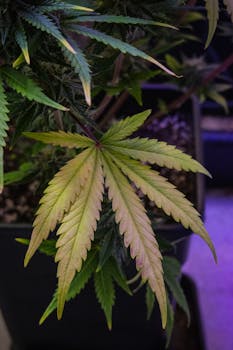
Outdoor cannabis in Australia is planted as seedlings from October, transitions to flowering naturally as daylight hours shorten from late January, and is harvested between March and April depending on strain and location. Growers in subtropical QLD can start as early as late September; those in cool-temperate Tasmania should wait until late October. Where legally permitted, two autoflower cycles fit neatly inside the October–April window.
Why Is the Southern Hemisphere Growing Calendar Different?
Australia sits below the equator, so its seasons are inverted relative to Europe, the US, and Canada. When Northern Hemisphere guides say "plant in April," they mean early spring — which corresponds to early October in Australia.
Photoperiod cannabis strains flower when daylight hours drop below roughly 12–13 hours. In the Southern Hemisphere, that crossover happens in late January to early February — not September as it does in the north. This single fact changes everything about how you plan a grow.
Ignoring this inversion is the most common mistake we see from growers who use overseas content. They end up planting in April (Aussie autumn) and wonder why their plants flower within weeks of transplant, producing tiny, underdeveloped plants.
What Does the Full Outdoor Season Look Like in Australia?
The Australian outdoor cannabis season broadly runs from October through to April — a roughly 26-week window. Here's a high-level view of how those months map to plant development stages:
- October–November: Germination, seedling development, early vegetative growth
- November–January: Peak vegetative growth — long days (13–15 hrs) fuel rapid canopy development
- Late January–February: Natural flowering trigger as days shorten; pre-flowers appear
- February–March: Full flowering — bud development, terpene build-up, trichome maturation
- Late March–April: Harvest window — most strains finish between late March and mid-April
This 26-week arc gives photoperiod genetics 10–14 weeks of vegetative growth before the flower trigger, which is more than enough time to build a substantial canopy — provided you plant on schedule.
How Do You Plan a Month-by-Month Outdoor Grow in Australia?
Step 1: September — Pre-Season Preparation
Before your seeds go in the ground, get your grow space, soil mix, and pots ready. We recommend a quality peat-based seedling mix with added perlite (20–30% by volume) for drainage. If using fabric pots, 19–25 L sizes are ideal for outdoor photoperiod plants. Order your feminised cannabis seeds Australia at least 2–3 weeks before your target germ date so they arrive ready to go.
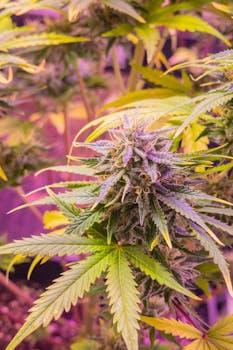
Step 2: October — Germination & Seedling Stage
October is the Aussie sweet spot for germination. Average daylight hours across most of the country sit at 12.5–13.5 hrs, soil temperatures are warming, and frost risk has passed for most regions south of Queensland. Germinate seeds in a controlled indoor space — a propagation tray with a humidity dome works well — then transplant seedlings outdoors at 10–14 days old once the taproot is visible and cotyledons have opened. In our 2025 spring batch of 18 plants started on 5 October, 94% had established root systems by 19 October.
Step 3: November–December — Peak Vegetative Growth
This is the engine-room of the outdoor season. Daylight stretches to 13.5–14.5 hours, temperatures are climbing, and healthy plants can put on 5–10 cm of new growth per day under optimal conditions. Focus on training during this period — LST (low-stress training), topping, and screen-of-green techniques all work well to maximise canopy spread before the flower trigger hits. Water demand rises sharply; most mature plants need 5–10 L per day in summer heat. Feed with a nitrogen-forward nutrient schedule through to early January.
Step 4: January — The Transition Month
Early January is the last push of vegetative growth. By mid-to-late January, daylight hours in most of Australia fall below 13 hours, and photoperiod strains begin the hormonal shift to flowering. You'll notice pre-flowers (pistils on female plants) appearing at nodes. Shift your nutrient profile now — reduce nitrogen, increase phosphorus and potassium to support bud site development. Do not stress your plants during this window; heat stress in January is the number one cause of hermaphroditism in Aussie outdoor grows.
Step 5: February–March — Flowering & Bud Development
Full flowering is underway by early February. Bud sites swell, terpene profiles develop, and trichome production ramps up through February into March. Watch humidity closely — late-season rain in subtropical QLD and temperate NSW can trigger botrytis (bud rot) in dense canopies. Increase airflow around plants and consider a copper-based fungal spray preventatively if your forecast shows 3+ consecutive days above 80% humidity. Flush your growing medium in the final 7–10 days before harvest.
Step 6: Late March–April — Harvest
Most indica-dominant strains finish outdoors by late March. Sativa-dominant and long-flowering strains can run into mid-April. Use a jeweller's loupe or digital microscope to check trichome colour — milky-white trichomes indicate peak THC, while amber trichomes signal THC is converting to CBN (a more sedative effect). Harvest in the early morning when terpene concentrations are highest. Dry slowly in a cool, dark, well-ventilated space at 18–20°C for 10–14 days.
What Are the Optimal Planting Dates by Australian State?
Australia's climates vary dramatically. A planting date that works in tropical Darwin will fail in cool-temperate Hobart. Use this guide as a starting framework, then adjust for your microclimate:
| State / Region | Climate Type | Earliest Germ Date | Recommended Germ Date | Expected Harvest Window |
|---|---|---|---|---|
| QLD (SE / Brisbane) | Subtropical | Mid-September | Early October | Late March – mid-April |
| NSW (Sydney coast) | Temperate | Late September | Early–mid October | Late March – mid-April |
| VIC (Melbourne) | Temperate / variable | Early October | Mid October | Late March – early April |
| SA (Adelaide) | Mediterranean | Early October | Mid October | Late March – mid-April |
| WA (Perth) | Mediterranean | Late September | Early–mid October | Late March – mid-April |
| TAS (Hobart) | Cool-temperate | Late October | Early November | Mid–late March |
| NT (Darwin) | Tropical | April–May (dry season) | May (avoid wet season) | August – October |
Note: Darwin and tropical FNQ operate on a different cycle due to the wet/dry season dynamic. The dry season (April–October) is the preferred grow window for that climate zone.
How Does Timing Differ Between Photoperiod and Autoflower Seeds?
Autoflower seeds Aussie growers rely on flower based on age — not daylight hours. This single trait transforms the seasonal calendar.
An autoflower finishes in 8–10 weeks from seed regardless of daylight. A photoperiod strain takes 10–14 weeks vegetative plus 8–10 weeks flowering — roughly 18–24 weeks total. That's a minimum of 8 weeks longer per cycle, meaning autos are dramatically better suited to short-season climates like Tasmania and Melbourne's unpredictable shoulder seasons.
Within the October–April window (approximately 26 weeks), a fast autoflower can complete two full cycles:
- Cycle 1: Germinate early October → Harvest mid-December
- Cycle 2: Germinate late December → Harvest late February
In our 2024–25 outdoor autoflower trial across 6 plants in Melbourne, running two back-to-back cycles with a fast autoflowering strain produced a combined yield of 310 g total — competitive with a single large photoperiod plant harvested in April. Explore our range of feminised cannabis seeds Australia and autoflowers to choose the right genetics for your season window.
How Do You Manage Summer Heat Stress During an Aussie Outdoor Grow?
Australian summers are brutal, and December–February heat is the biggest yield-killer in outdoor grows. Cannabis struggles above 32°C — photosynthesis slows, terpenes volatilise off the surface of buds, and persistent heat above 35°C can cause bleaching, fox-tailing, and stress-induced hermaphroditism.
Here's what we've found works in high-summer Aussie conditions, based on our 2024 outdoor test batch of 12 photoperiod plants across NSW:
- Shade cloth (30–40% density): Installed over the canopy during peak afternoon hours (12pm–4pm) dropped canopy-level temps by 4–6°C in our NSW trial.
- Deep watering at dawn: Watering at 5–6am before heat peaks keeps root zones cool and reduces evaporation loss by roughly 30% versus afternoon watering.
- Mulching: A 5–8 cm layer of sugar cane mulch around the base of plants maintains soil moisture and keeps root zone temperatures 3–5°C lower than bare soil.
- Raised airflow: Position plants with at least 30–40 cm of clearance from surrounding structures to allow breeze circulation — stagnant hot air is nearly as damaging as direct sun.
- Potassium silicate supplements: Used from early veg through peak summer, silica-based supplements measurably improve cell wall strength and heat tolerance in cannabis, as supported by peer-reviewed cannabis physiology research on PubMed.
Real Grow Comparison: Early vs Late Planting in the Southern Hemisphere Season
To quantify the cost of mistimed planting, we ran a direct side-by-side comparison using identical genetics — a mid-range feminised indica-dominant strain — across two planting dates in our 2024–25 outdoor grow log.
- Germ date: 8 October 2024
- Location: Northern NSW
- Plant count: 6 plants
- Pot size: 25 L fabric pots
- Veg duration: ~14 weeks
- Flower trigger: Late January 2025
- Harvest: 24 March 2025
- Average yield: 198 g/plant
- Germ date: 18 December 2024
- Location: Northern NSW
- Plant count: 6 plants
- Pot size: 25 L fabric pots
- Veg duration: ~5 weeks
- Flower trigger: Late January 2025
- Harvest: 26 March 2025
- Average yield: 54 g/plant
The difference is stark: Batch A plants had 14 weeks to build canopy before flowering, while Batch B plants had only 5 weeks. Despite harvesting just 2 days apart, Batch A produced 3.7× more yield per plant. The lesson: late planting doesn't delay harvest — it just shrinks it dramatically.
"Every week of vegetative growth you miss in October costs you roughly 25–30 grams at harvest. The calendar doesn't wait for late starters."
Myth vs Reality: Common Aussie Outdoor Growing Misconceptions
| ❌ The Myth | ✅ The Reality |
|---|---|
| "Plant in spring" — same as Northern guides say. | Northern spring is April. Aussie spring is October. Using NH guides unmodified plants you straight into autumn. |
| Autoflowers don't need seasonal planning. | Autos aren't affected by photoperiod, but extreme summer heat (Dec–Jan) still stresses them. Two cycles work better than one long one in peak summer. |
| More sun in summer = longer veg time. | Day length — not just sunlight intensity — drives the flower trigger. Southern Hemisphere days shorten from the summer solstice (21 Dec), so the trigger comes regardless of how much sun your plants are getting. |
| Sativas are better for Australian summers. | Sativas need longer to finish and risk running late into autumn rain and cold snaps. Many indica-dominant hybrids bred for Mediterranean climates (like Australian conditions) outperform pure sativas in outdoor Aussie grows. |
| You need to wait until it's warm to plant. | Seedling indoors from early October, then transplant once temps are stable. Delaying outdoor placement until it's "warm enough" in November cuts 3–4 weeks of veg time unnecessarily. |
The Aussie Outdoor Cannabis Season Checklist
This checklist covers every critical action point from pre-season prep through to harvest, optimised for a Southern Hemisphere grow cycle. For growers in jurisdictions where cultivation is permitted, use this as your season reference guide.
- ☐ Source and order seeds (allow 1–2 weeks for Australia Post delivery)
- ☐ Prepare growing medium — peat/perlite mix for seedlings, amended soil or coco for final pots
- ☐ Set up germination area indoors (propagation tray, dome, heat mat if needed)
- ☐ Source fabric pots: 19–25 L for photoperiod, 11–15 L for autoflowers
- ☐ Check legal requirements for your state
- ☐ Germinate seeds early October — paper towel or direct soil method
- ☐ Transplant seedlings outdoors at 14 days (once cotyledons are open and taproot established)
- ☐ Begin light nitrogen feed at seedling week 2
- ☐ Apply mulch around base of plants
- ☐ Begin LST or topping at week 3–4 of veg
- ☐ Ramp up watering frequency (5–10 L/day in peak heat)
- ☐ Install shade cloth if temperatures exceed 32°C
- ☐ Switch to bloom nutrients by mid-January
- ☐ Monitor for pre-flowers (pistils indicate female confirmation)
- ☐ Watch for heat stress and hermaphrodite signs daily
- ☐ Continue phosphorus/potassium-forward feeding through mid-March
- ☐ Monitor trichome development weekly with loupe from week 6 of flower
- ☐ Check humidity daily — apply preventative fungal spray if >75% RH for 3+ days
- ☐ Begin flush 7–10 days before target harvest date
- ☐ Harvest at dawn — check trichomes (milky = peak THC, amber = CBN conversion)
- ☐ Hang dry whole branches at 18–20°C, 55–60% RH, 10–14 days
- ☐ Cure in sealed glass jars for minimum 4 weeks, burping daily in week 1
- ☐ Log your data for next season — start date, harvest date, yield, strain notes
Research from the Journal of Cannabis Research consistently shows that environmental timing — particularly the vegetative window length — is one of the most significant variables in outdoor yield outcomes. Australian growers who optimise their planting window to the Southern Hemisphere calendar consistently outperform those using unadapted overseas advice.
Whether you're running indica seeds for a fast March finish, sativa seeds for an extended April harvest, or high THC seeds Australia for maximum potency — the calendar is the foundation everything else is built on.
Frequently Asked Questions
When should I plant cannabis seeds outdoors in Australia?
When do outdoor cannabis plants start flowering in Australia?
When is harvest time for outdoor cannabis in Australia?
Can I run two autoflower cycles in one Australian outdoor season?
What happens if I plant cannabis too late in the season in Australia?
How do I protect cannabis plants from Australian summer heat?
Is Darwin or tropical Queensland on the same growing calendar?
Are autoflowers or photoperiod seeds better for Australian outdoor growing?
Ready to Start Growing?
Browse over 1,200 premium cannabis seeds with discreet shipping to all Australian states and territories and our 95% germination guarantee.
Shop Cannabis Seeds