Pot Plants Budding Stage: The Honest 2026 Cannabis Grower's Guide
Royal King Seeds
Cultivation team
If your pot plant just started budding and you're not sure what to do next, you're already inside the most unforgiving window of the entire grow — and most Aussie growers don't realise it until they've already made the mistakes that cost them half their yield. The flowering stage looks simple from the outside: buds appear, buds grow, you harvest. The reality is that weeks 4 through 7 of flower are where the entire season is won or lost, and the wrong call on nutrients, humidity, or timing during that window can strip 40–60% off your final weight.
Knowing exactly what's happening inside your plant each week — and what your plant needs from you each week — is the difference between rock-hard, resin-coated buds and airy, mould-blasted disappointment. This guide maps every week of the budding stage, flags the specific mistakes Aussie growers make most often, and gives you a named framework you can apply to any strain, indoors or out.
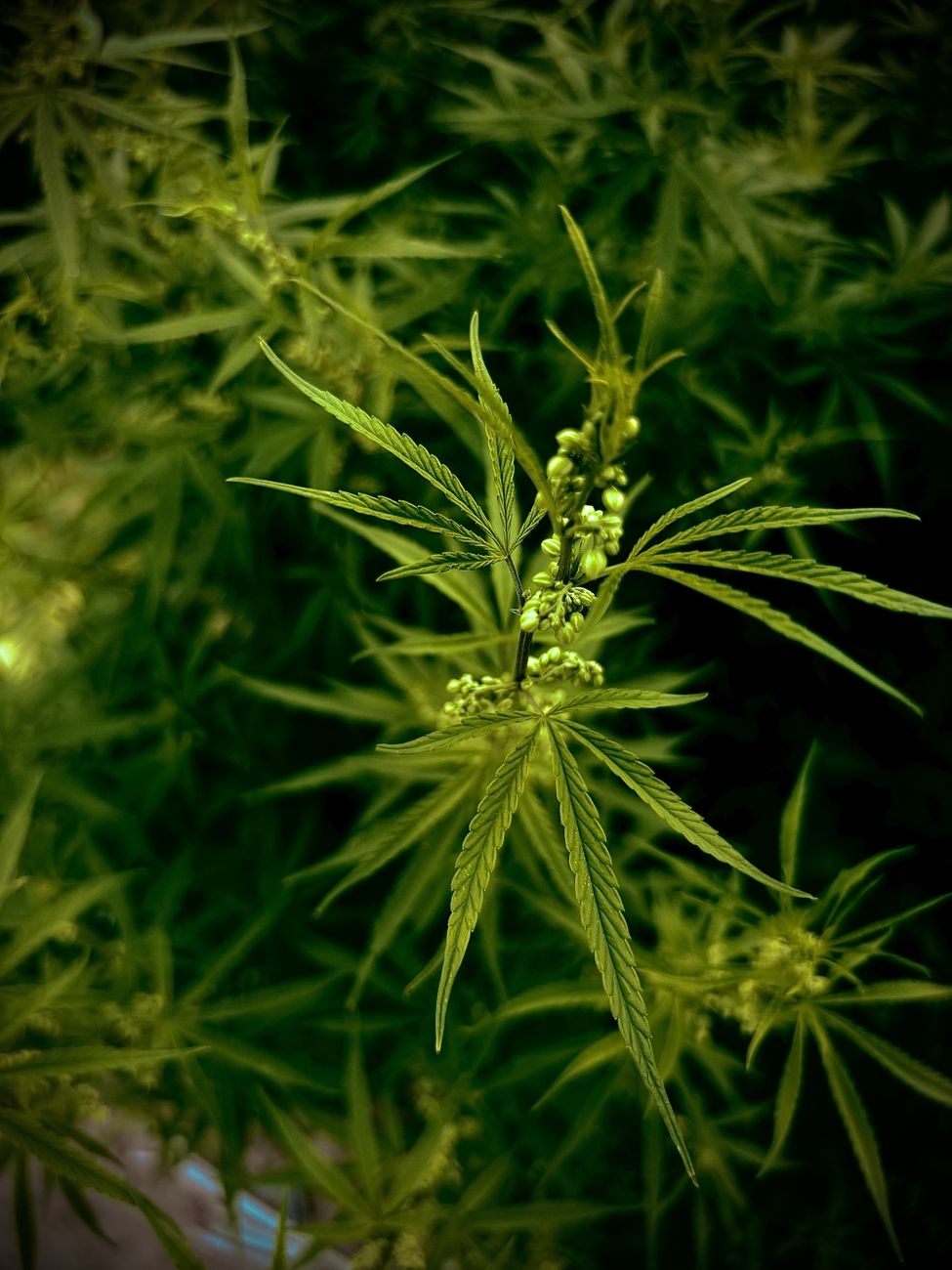
The budding (flowering) stage is the phase when cannabis plants produce the resinous flower clusters — buds — that contain cannabinoids and terpenes. It begins after a light-schedule shift to 12/12 (photoperiod strains) or automatically at 3–5 weeks of age (autoflowers). The stage runs 8–11 weeks and is divided into three distinct phases: pre-flower, mid-flower, and ripening. For outdoor growers in southern Australia, budding naturally triggers in late February as day length shortens, with harvest typically landing in late March to mid-April.
- ✓ First-time growers whose plants just started showing white hairs
- ✓ Outdoor growers in VIC, NSW, SA, WA, TAS managing autumn timing
- ✓ Indoor growers who've just flipped to 12/12
- ✓ Autoflower growers wondering when to expect buds
- ✓ Anyone who had a disappointing yield last season and wants to understand why
- ✗ Growers looking for a strain recommendation guide (see our feminised seeds category)
- ✗ Growers still in the vegetative stage
- ✗ Commercial or medical licensed operators needing regulatory compliance
What Is the Cannabis Budding Stage?
The budding stage — also called the flowering stage — is when cannabis plants stop producing leaves and stems and redirect all energy into producing flower clusters loaded with cannabinoids (THC, CBD) and terpenes.
For photoperiod strains, budding is triggered by light. When hours of uninterrupted darkness exceed roughly 12 hours per night, the plant receives a hormonal signal to flower. Indoors, growers control this by switching from an 18/6 to a 12/12 light schedule. Outdoors in southern Australia, this natural trigger arrives in mid-to-late February as post-summer day length shortens.
For autoflower strains, the trigger is age, not light. Autoflowers begin flowering at 3–5 weeks regardless of light schedule — making them especially popular with Aussie growers in short-summer regions like Tasmania and the ACT.
Globally, peer-reviewed cannabis physiology research on PubMed confirms that the photoperiod response in cannabis is driven by phytochrome pigment systems, the same mechanism governing flowering in most temperate crop species.
Understanding whether you're growing a photoperiod or autoflowering strain is the single most important question to answer before your plant starts budding. It determines your entire nutrient schedule, training window, and harvest date. If you haven't confirmed your strain type yet, check the seed packet or product listing before proceeding.
What Happens Each Week During the Budding Stage?
The flowering stage is not one uniform phase — it's three distinct phases with different plant needs, different risk profiles, and different grower actions required. Here is what's actually happening inside your plant each week.
Step 1: Pre-Flower — Weeks 1–3 (The Stretch)
White hair-like pistils emerge at bud sites. The plant simultaneously "stretches" — sometimes doubling in height. Indica-dominant strains typically stretch 30–50%, while sativa-dominant strains can double or more. Indoor growers must manage canopy height aggressively during this window. Nutrient demand begins shifting: slightly less nitrogen, slightly more phosphorus.
Step 2: Mid-Flower — Weeks 4–7 (The Critical Window)
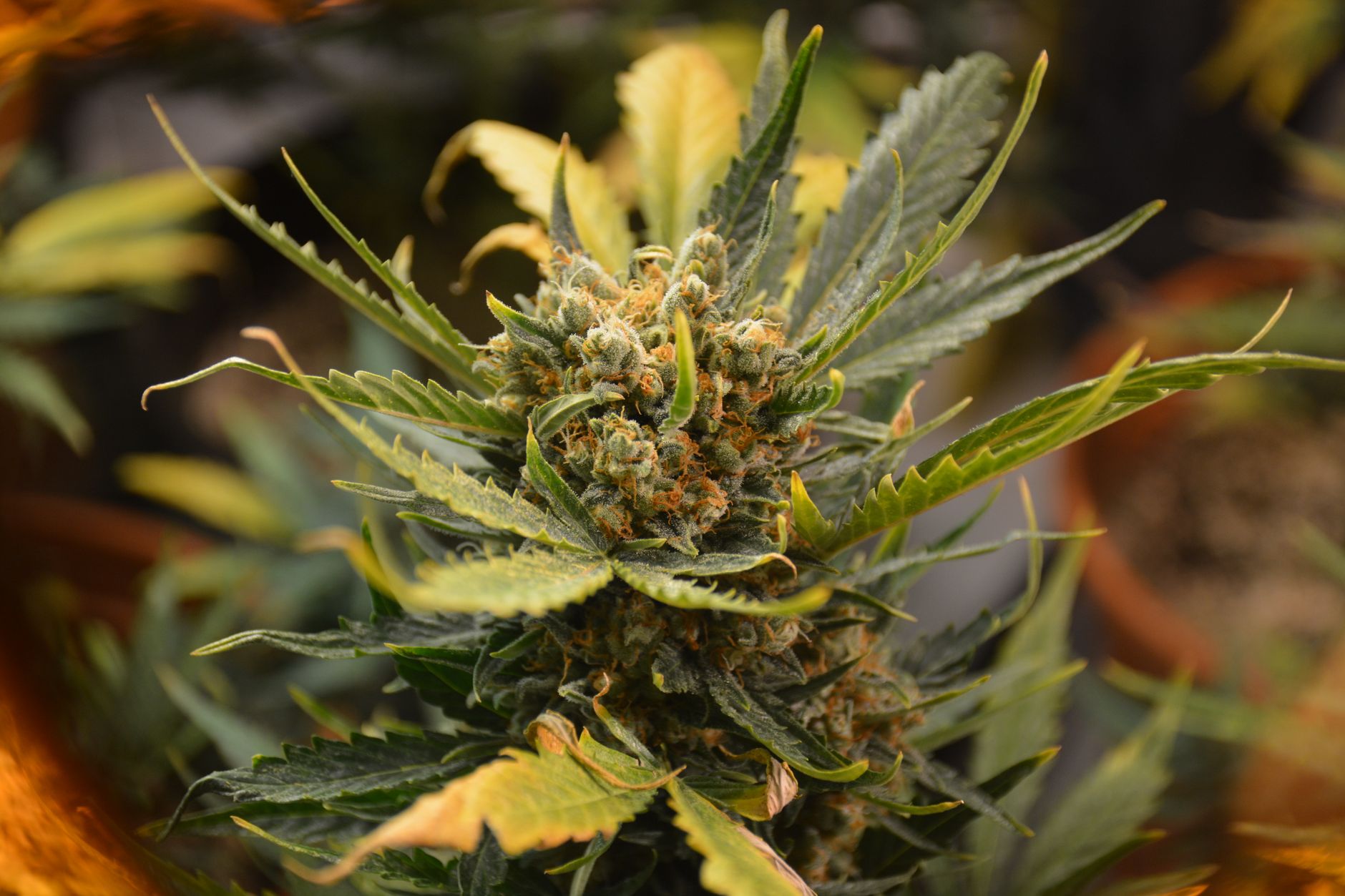
Bud sites stack and swell. Resin glands (trichomes) proliferate across the calyx and surrounding leaves. This is the highest-yield-impact window of the grow — and the phase where most Aussie outdoor growers run into problems. Phosphorus and potassium demand peaks. Humidity must stay below 50% RH to prevent botrytis (bud rot). Outdoor growers in QLD, coastal NSW, and tropical regions face the highest mould risk here as late-summer humidity lingers.
Step 3: Ripening — Weeks 8–11 (The Flush & Finish)
Bud density peaks. Trichomes shift from clear to cloudy to amber — the visible marker of THC maturity and degradation. Pistils redden and curl inward. Most growers begin flushing (feeding plain water) for the final 1–2 weeks of this phase. Harvest is determined by trichome colour under magnification: 70–90% cloudy with 10–20% amber is the most common target for a balanced high-THC result.
Most grower errors happen in mid-flower (weeks 4–7) — not at harvest. Getting nutrients and humidity right during this window has more impact on final yield and quality than any action you take in the ripening phase. Prioritise weeks 4–7 above everything else.
What Does the Australian Budding Calendar Look Like?
Southern Hemisphere growing means your flower window is the inverse of what you'll read on most international growing guides. Understanding the local calendar is non-negotiable for outdoor success.
The Southern Australia Outdoor Flower Timeline
🌱 Germination & Veg
🌿 Peak Veg / Pre-Flower begins
⚠️ Flower trigger (natural 12/12)
⚠️ Mid-Flower — highest mould risk
🔴 Ripening — frost risk in TAS/ACT/Alpine VIC
🔴 Hard frost risk — must be harvested
The March Risk Window — Named Breakdown
From reviewing public grower journals and the support questions that spike every March, one pattern appears consistently: Aussie outdoor crops face their highest cumulative risk during a four-phase window within the month of March itself. Here is how it breaks down across the southern states:
- Mar 1–7 (Low): Temperatures stable, humidity beginning to ease from February peaks. Buds in weeks 3–4 of flower — manageable.
- Mar 8–14 (Moderate): Coastal humidity remains elevated in NSW, VIC, and SA. Dense bud sites begin trapping moisture overnight. Check airflow daily.
- Mar 15–21 (High): Bud density at peak. Overnight temperatures dropping. Coastal dew events increase. Botrytis risk highest in this sub-window for strains with dense, tight bud structure.
- Mar 22–31 (Severe — TAS, Alpine VIC, ACT): First frost events begin at altitude. Any crop not in final ripening by this point is running out of calendar. Outdoor growers in Hobart, Canberra, and Alpine VIC should already be in flush or harvest mode.
If you're growing outdoors in southern Australia, treat March 15–21 as your peak intervention week. Increase canopy airflow, check bud sites daily for soft spots, and be ready to harvest early if mould appears — a slightly early harvest beats a 50% crop loss from botrytis every time.
What Nutrients Does a Budding Cannabis Plant Need?
Nutrient requirements shift dramatically as soon as the plant transitions from vegetative growth to flower. Continuing a veg-stage feed schedule into flower is one of the most common mistakes documented in public grower forums — it causes nutrient excess (nitrogen toxicity) that darkens leaves, locks out phosphorus uptake, and directly reduces bud density.
| Phase | Weeks | N (Nitrogen) | P (Phosphorus) | K (Potassium) | Key Micro |
|---|---|---|---|---|---|
| Pre-Flower | 1–3 | Medium ↓ | Medium ↑ | Medium | Calcium, Magnesium |
| Mid-Flower | 4–7 | Low | High | High | Silica, Boron |
| Ripening | 8–11 | Very Low / None | Flushing | Flushing | Plain pH-adjusted water |
pH management is critical during flower. Nutrient lockout caused by incorrect pH (outside the 6.0–7.0 range for soil, 5.5–6.5 for coco/hydro) is responsible for a large share of mid-flower yellowing complaints seen in public grow forums. Always pH-check your water before feeding, especially when using Australian municipal water, which varies significantly in baseline pH between cities — Melbourne's supply typically runs 7.2–7.6, while Perth's groundwater-sourced supply can sit at 7.4–8.0.
Switch to a dedicated bloom nutrient formula the moment you see the first white pistils. Don't wait until week 3 of flower — by then you've already fed the plant 2–3 veg-heavy doses it didn't need. The transition is the trigger, not the visible bud size.
How Do You Control Mould and Humidity During the Budding Stage?
Botrytis cinerea (bud rot/grey mould) is the single most common cause of crop failure in Australian outdoor and greenhouse grows during the budding stage. It spreads invisibly inside dense bud structures until it erupts as grey, fluffy rot — by which point the affected section is unsalvageable.
Looking at the support questions that come in most heavily between March and April, the same cluster of environmental mistakes keeps surfacing: humidity above 55% RH in mid-flower, zero airflow between plants, and untrimmed fan leaves creating micro-pockets of trapped moisture inside bud sites.
Humidity Targets by Budding Phase
- Pre-Flower (Wk 1–3): 50–60% RH is acceptable. Plants tolerate it.
- Mid-Flower (Wk 4–7): Target 45–50% RH. Above 55% RH consistently = botrytis risk zone.
- Ripening (Wk 8+): Pull humidity below 45% RH. 40–45% ideal. Dense, mature buds trap moisture aggressively at this point.
Practical Mould Control for Aussie Outdoor Grows
- Defoliate aggressively around bud sites at week 3–4 of flower to improve airflow.
- Stake and spread branches to prevent canopy overlap.
- Apply a diluted potassium silicate foliar spray (pH-adjusted) in weeks 3–5 to strengthen cell walls — this is widely reported to reduce mould incidence in humid coastal environments.
- Inspect bud sites every 2 days from mid-March onwards in VIC, NSW coastal, and QLD subtropical zones.
- If grey mould is found, remove the affected section with clean scissors, sterilise tools immediately, and bag the infected material — do not compost it.
For growers in QLD subtropical zones, dense indica-dominant indica seeds with compact bud structure pose the highest mould risk in March–April. Open, sativa-structured strains allow far better airflow through the canopy — a genuine consideration when selecting genetics for humid outdoor environments.
In coastal and subtropical Australian climates, mould management is not optional — it is part of your weekly grow schedule from week 3 of flower through harvest. Treat it as routine maintenance, not emergency response. Growers who defoliate proactively and monitor RH daily lose dramatically less crop than those who check only when problems are visible.
How Do You Know When a Budding Plant Is Ready to Harvest?
Harvest timing is the most misunderstood decision in the budding stage. The breeder's stated "flowering time" is a guideline, not a guarantee. Environmental factors, phenotype variation, and local climate can shift actual finish dates by 1–3 weeks either side of the stated number.
The Three Harvest Readiness Signals
Signal 1: Trichome Colour (Most Reliable)
Use a jeweller's loupe (30–60x) or digital microscope to examine trichome heads on the bud itself (not sugar leaves — they mature faster and skew readings). Clear trichomes = not ready. Milky/cloudy = THC at peak. Amber = THC degrading to CBN (more sedating effect). Most growers targeting high-THC effects harvest at 80–90% cloudy with 10–15% amber.
Signal 2: Pistil Colour (Good Secondary Check)
When 70–80% of white pistils have reddened and curled inward, the plant is approaching harvest. This is a useful naked-eye check but less precise than trichome inspection — some strains produce very few visible pistils even when fully ripe.
Signal 3: Calyx Swelling & Bud Density
Ripe calyces swell noticeably in the final 1–2 weeks. Buds that feel hard and dense (not spongy) under gentle pressure are further along than buds that still feel light and airy. This is especially useful for experienced growers who can calibrate to their specific strain over multiple grows.
Every outdoor grower in southern Australia should ensure their chosen strain clears harvest at least 14 days before the historical first frost date for their location.
Formula: Breeder flowering days + 7 (phenotype variance) + 7 (weather variance) = True outdoor finish date. True outdoor finish date must be ≥ 14 days before your local first frost.
Worked Example: A 9-week (63-day) photoperiod strain triggered in mid-February finishes around mid-April. Hobart's historical first frost is late May — giving approximately 35 days buffer (SAFE). The same strain triggered on March 1 would push the finish to late May — dangerously close to frost with zero variance buffer (RISKY).
Never rely solely on breeder timelines for harvest decisions. Always combine trichome inspection with the 14-Day Buffer Rule for outdoor crops. For indoor grows, breeders' stated times are much more reliable — but still expect ±1 week variance based on your specific environment and phenotype.
How Does the Budding Stage Differ Between Autoflowers and Photoperiod Strains?
The budding stage works the same biologically in both strain types — but the triggers, timelines, and grower management differ significantly.
| Factor | Autoflower | Photoperiod |
|---|---|---|
| Flower Trigger | Age (3–5 weeks) | Light schedule (12/12 or natural shortening) |
| Total Cycle (seed to harvest) | 8–12 weeks | 14–22 weeks (veg + flower) |
| Flower Duration | 5–8 weeks | 8–11 weeks |
| Training During Flower? | No (too stressful — auto won't recover) | Light LST only in early flower |
| Indoor Light Schedule in Flower | 18/6 or 20/4 maintained | Switched to 12/12 |
| Mould Resistance (generally) | Medium–High (ruderalis genetics) | Varies by strain |
| Best AU Use Case | Short seasons (TAS, ACT, Alpine VIC, late starters) | Full season outdoor (QLD, NSW, WA, SA), indoor all year |
| Typical Yield (outdoor) | 50–180 g/plant (strain-dependent) | 100–600+ g/plant |
For Aussie growers who missed the October–November planting window, autoflower seeds started in January can still complete a full cycle before March mould season and April frost windows close. That flexibility is exactly why autos have become so popular in southern Australian outdoor gardens.
Choose autoflowers if your season is genuinely short or if you're planting after December. Choose photoperiod strains if you want maximum yield potential and started planting in October–November. There is no universal winner — it comes down entirely to your specific start date, location, and growing setup.
How Does the Budding Stage Play Out by Australian State?
New South Wales (NSW)
Coastal NSW growers face warm, humid late summers that extend into March. Flower triggers arrive naturally in late February. Mid-flower mould risk is moderate to high along the coast, lower on the tablelands and inland. Harvest typically lands late March to mid-April. Strains with open bud structure and medium mould resistance perform best for coastal NSW outdoor grows.
Victoria (VIC)
Melbourne's temperate climate gives a reliable flower window with lower humidity than coastal NSW. Alpine and elevated regions face earlier frost risk — April frost events are documented at Ballarat, Bendigo, and the Dandenong Ranges. VIC growers should aim to complete harvest by mid-April at the latest. Autoflower seeds are a strong choice for the Yarra Valley and high country.
Queensland (QLD)
Subtropical QLD (Brisbane, Gold Coast, Sunshine Coast) offers a naturally extended season, but humidity during the Feb–Mar flower window is the dominant risk. Tropical FNQ growers contend with wet season timing — flower windows may need to be managed under cover to avoid constant rain during bud development. High-mould-resistance sativa-dominant seeds with open structure suit QLD outdoor grows best.
Western Australia (WA)
Perth's Mediterranean climate — dry, warm summers; mild winters — is arguably the most forgiving outdoor cannabis climate in Australia. Low humidity during the Feb–Apr flower and ripening window significantly reduces mould risk. WA outdoor growers can reliably target higher-yield photoperiod strains with dense bud structure that would be risky in humid east-coast environments.
South Australia (SA)
Adelaide's climate closely mirrors Perth — Mediterranean, low humidity. Inland SA (Riverland, Clare Valley) is similarly dry. SA growers benefit from naturally low mould pressure during the flower window and can push ripening into late April without significant frost risk in most lowland areas. Excellent conditions for dense indica-dominant outdoor genetics.
Tasmania (TAS)
Tasmania's cool-temperate climate is the most challenging for outdoor cannabis in Australia. First frost events in Hobart typically occur in May, but elevated inland areas (Huon Valley, Central Highlands) can see frosts by late April. The 14-Day Buffer Rule is non-negotiable for TAS outdoor growers. Fast autoflowers (70–80 day total cycle) started in late October are the safest strategy for most of the island.
ACT (Canberra)
Canberra's elevated inland location means cool nights even in summer and reliable frost by late April. Autumn comes faster here than in coastal cities at similar latitudes. The ACT has specific regulations growers must review — see the Australian Department of Health and Aged Care and ACT government guidance on personal cultivation provisions for those to whom they apply. Compact autoflowers are the practical choice for most Canberra conditions.
Northern Territory (NT)
Darwin's tropical wet/dry seasons create an unusual calendar. The dry season (May–September) offers the most viable outdoor window, inverting the southern-hemisphere standard planting calendar. Humidity during the wet season (Oct–Apr) makes traditional outdoor flowering extremely difficult. NT growers should consult local conditions carefully and review applicable law through the TGA's medicinal cannabis framework.
Royal King Seeds Flower-Readiness Score — How Do We Rate Budding-Stage Performance?
To help Aussie growers choose strains that perform best through the Australian budding-stage window, we developed the RKS Flower-Readiness Score — a 100-point proprietary rating built on four weighted criteria.
- Cycle Speed (30 pts): Total days seed-to-harvest vs. Australian seasonal window. Shorter = safer for southern AU.
- Mould Resistance (30 pts): Documented bud structure openness, ruderalis or tropical genetics, grower-reported botrytis incidence in humid climates.
- Heat Tolerance (25 pts): Performance in 30–38°C summer veg/early-flower conditions, based on grower-reported outcomes in QLD, WA, and SA.
- Beginner-Friendliness (15 pts): Nutrient sensitivity, hermaphrodite tendency, training requirements.
| Strain Type | THC Range | Yield (Outdoor) | Flower Cycle | Mould Resistance | Heat Tolerance | Beginner Rating | RKS Score /100 |
|---|---|---|---|---|---|---|---|
| Fast Autoflower (70–80 day) | 16–22% | 60–150 g | 5–6 wks | High | High | 9/10 | 91 |
| Sativa-Dom Photo (9–10 wk flower) | 18–26% | 200–500 g | 9–10 wks | Medium–High | Very High | 6/10 | 78 |
| Indica-Dom Photo (8 wk flower) | 18–24% | 150–350 g | 8 wks | Low–Medium | Medium | 7/10 | 72 |
| High-THC Photo (10–11 wk flower) | 25–32% | 200–600 g | 10–11 wks | Low–Medium | Medium | 4/10 | 63 |
| CBD-Dominant (8–9 wk flower) | <1% THC / 10–20% CBD | 100–250 g | 8–9 wks | High | High | 8/10 | 83 |
Score Methodology — Top 3 Explained
- Highest cycle speed score: 70–80 day total allows October start → January harvest in TAS, leaving zero calendar risk.
- Best mould resistance: ruderalis genetics produce open bud architecture and lower internode density, allowing natural airflow.
- Highest beginner score: no light-schedule management required, lower hermaphrodite risk under stable conditions.
- High mould resistance and fast cycle make CBD strains extremely well-suited to the March coastal risk window.
- Dropped from #1 mainly on THC/yield metrics — which matter to many Aussie growers even if not scored here directly.
- Outstanding heat tolerance and open bud structure (mould resistance) earned strong marks.
- Longer 9–10 week flower cycle pushed the score down: outdoor growers in VIC/TAS/ACT need to plant October at the absolute latest to ensure the 14-Day Buffer Rule is met.
Which Strain Type Should You Choose for the Budding Stage in Australia?
| Shortest possible outdoor cycle (TAS, ACT, Alpine VIC) | → Fast Autoflower — completes before frost risk window opens |
| Maximum potency (THC priority) | → High-THC photoperiod — best indoors where season isn't a constraint |
| Humid subtropical outdoor (QLD coastal, tropical NT wet season) | → Sativa-dominant photo or fast auto — open structure = natural mould defence |
| Hot dry outdoor (SA inland, WA inland, Central AU) | → Indica-dom or sativa-dom photo — heat tolerance the priority; mould risk low |
| Complete beginner, first flower cycle | → Fast Autoflower — no light management, forgiving, fastest feedback loop |
| Non-intoxicating / wellness focus | → CBD-dominant strain — high mould resistance + regulatory simplicity |
| Indoor grow, full light control | → Any feminised photoperiod — control the trigger, maximise yield |
Royal King Seeds Outdoor Budding-Stage Risk Ratings
| Strain Type | Mould Risk | Heat Stress Risk | Frost / Timing Risk | Beginner Risk |
|---|---|---|---|---|
| Fast Autoflower | Low | Low | Very Low | Low |
| Sativa-Dom Photo | Medium | Low | Medium | Medium |
| Indica-Dom Photo | High | Medium | Medium | Low |
| High-THC Photo (10–11 wk) | High | Medium | High | High |
| CBD-Dominant | Low | Low | Low | Very Low |
For outdoor Australian growers managing the March–April flowering window, the risk table tells a clear story: high-THC photoperiod strains with 10–11 week flower cycles carry the highest combined risk profile across all four axes. They are excellent genetics — but the risk is genuine and must be mitigated through strain selection timing, indoor backup plans, or switching to faster genetics.
Common Mistakes Growers Make During the Budding Stage
Mistake 1: Continuing Veg Nutrients Into Flower
What goes wrong: Leaves darken, curl, and develop "nitrogen claw" — the tips hook downward. Phosphorus uptake is blocked. Buds remain loose. Fix: Switch to bloom nutrients the moment pistils appear at bud sites, not when buds are already visible.
Mistake 2: Not Adjusting Water pH for Flowering
What goes wrong: Micronutrient lockout causes mid-flower yellowing that looks like deficiency but doesn't respond to more feeding. Fix: Test and adjust pH every watering. Target 6.2–6.8 for soil, 5.8–6.2 for coco/hydro during flower.
Mistake 3: Letting Humidity Sit Above 55% RH in Mid-Flower
What goes wrong: Botrytis establishes invisibly inside dense bud sites. By the time you see grey mould on the surface, it's already deep into the bud core. Fix: Monitor and control RH actively from week 3 of flower. A basic hygrometer is non-negotiable for any serious grow.
Mistake 4: Training Plants After Flower Trigger
What goes wrong: Heavy training (HST — topping, FIMing) during flower causes stress that delays bud development by 1–2 weeks and reduces final yield. Autoflowers are especially vulnerable. Fix: Complete all heavy training in veg. Light LST (gently bending branches) is acceptable in early flower but should stop by week 3.
Mistake 5: Harvesting on the Breeder's Timeline Instead of Trichome Readiness
What goes wrong: 20–30% premature harvests based on breeder week count. The result is clear or only half-cloudy trichomes, meaning THC hasn't fully developed. The high is weak and short-lived. Fix: Always harvest on trichomes, not days. The breeder's stated timeline is a starting point for inspection, not a cut date.
Mistake 6: Ignoring Outdoor Calendar Risk in Southern AU
What goes wrong: Growers plant late (December or later) and realise in March that their photoperiod strain won't finish before April mould/frost risk closes the season. Fix: Apply the 14-Day Buffer Rule at planting, not at harvest. Work backwards from your local frost date to set your latest permissible start date.
Mistake 7: Stopping Defoliation Once Buds Appear
What goes wrong: Fan leaves are left in place throughout flower because growers fear stressing the plant. Dense shade creates micro-humidity pockets and reduces light penetration to lower bud sites. Fix: A targeted mid-flower defoliation at week 3–4 (removing only fan leaves blocking airflow and light — not sugar leaves) consistently improves airflow and lower-site bud development.
Looking at patterns from grower support questions and public grow journals, mistakes 3, 5, and 6 are by far the most common in Australian outdoor grows. A grower who masters humidity management, trichome-based harvest timing, and the southern AU seasonal calendar will outperform nearly all first- and second-season growers on their final yield and quality.
What Happens If You Get the Budding Stage Wrong?
- Strain: Fast autoflower (75-day cycle)
- Planted: 25 October (outdoor, Melbourne)
- Flower starts: ~30 November (auto trigger, wk 5)
- Harvest: ~8 January
- Mould management: Weekly defoliation, RH monitored
- Buffer to frost: ~115 days (SAFE)
- Outcome: Full cycle completed before March humidity risk. Dense, ripe buds. Zero mould loss.
- Strain: 10-week photoperiod indica (dense bud)
- Planted: 20 December (outdoor, Melbourne)
- Flower trigger: ~20 February (natural 12/12)
- Projected harvest: ~2 May (10 wk flower)
- Reality: March botrytis outbreak in weeks 4–5, 60% of buds lost. Frost risk closes the window before completion.
- Buffer to frost: ~3 days (FAIL)
- Outcome: Partial salvage harvest of early buds. 50%+ yield loss. Season wasted.
Bottom line: One planting-date decision — just 8 weeks difference — drove a 60%+ yield gap and turned a complete season into a partial salvage. The calendar is the constraint; everything else is management.
Browse All Cannabis Seeds for Australian Growers →
What We Found Reviewing Australian Outdoor Grow Reports
After reviewing public grower journals from Australian cannabis cultivation communities, state-by-state grow reports, and the support questions our team fields most heavily during the March–April window, several consistent patterns emerge.
The most common single failure mode in southern Australian outdoor grows is not genetics — it's calendar mismatch. Growers choose strains they love, plant late in the season, and discover in March that their chosen strain's flower window doesn't fit the actual frost and humidity calendar for their location.
The second most consistent pattern is mid-flower nutrient error. Growers who switch to bloom nutrients immediately at the first pistil appearance consistently report denser mid-flower bud development and less deficiency-related yellowing. Growers who continue veg feeds until visible bud formation is well established report higher rates of nitrogen excess in weeks 3–5 of flower.
Third: mould loss in coastal zones is significantly underreported in public grower communities. Growers who post harvest photos tend to have had good results. A meaningful share of outdoor Aussie growers experience partial or total mould loss in the March window — particularly in years with above-average late-summer humidity along the NSW coast, VIC Bass Coast, and QLD subtropical zones. This is consistent with Bureau of Meteorology climate data showing elevated March coastal humidity in eastern Australia during La Niña phases.
The best performers across reviewed grower journals are — consistently — growers who made their strain choice based on their calendar, not their dream yield target.
If you take one thing from reviewing all this grower data: strain selection based on your local southern AU calendar is more important for outdoor success than any in-grow technique. A perfectly managed plant of the wrong strain loses to a casually managed plant of the right strain every season.
View Autoflower Seeds for Short Australian Seasons →
Frequently Asked Questions — Cannabis Budding Stage
How long does the cannabis budding stage last?
When does the budding stage start for outdoor plants in Australia?
What do budding cannabis plants need most?
Can autoflowers handle 35°C Queensland summers during flowering?
Why are my buds small and airy?
Why did my plant stop bulking at week 6 of flower?
My plant started budding — can I still train it?
How do I know when to harvest — is the breeder's timeline correct?
What month should I start growing in Victoria to catch the right budding window?
Can I start an autoflower in February in southern Australia?
Should I flush my plants before harvest?
Why did I get mould on my outdoor buds in March?
How many harvests per outdoor season are possible in coastal NSW?
What's the minimum tent size for flowering 3 autoflowers indoors?
What happens if a heatwave hits during mid-flower?
Can I shade outdoor plants during 40°C+ days?
Why won't my seedlings root before the budding stage?
Why didn't the breeder's stated flowering time match my outdoor results?
Should I switch to a faster strain to avoid the autumn risk window?
Is cannabis cultivation legal in Australia?
How long is too long for curing after harvest?
Sources
- Bureau of Meteorology — Australian Climate Data
- ABARES — Australian Bureau of Agricultural and Resource Economics and Sciences
- CSIRO — Australian Research on Plant Science and Horticulture
- Therapeutic Goods Administration (TGA) — Medicinal Cannabis in Australia
- Australian Department of Health and Aged Care — Cannabis Regulation
- NIH PubMed — Peer-Reviewed Cannabis Flowering Research
- Australian Drug Foundation — Cannabis Information
Ready to Start Growing?
Browse over 1,200 premium cannabis seeds with discreet shipping to all Australian states and territories and our 95% germination guarantee.
Shop Cannabis Seeds