Growing Cannabis in Queensland: Subtropical Climate Guide
Royal King Seeds
Cultivation team
Most Queensland growers blame the heat when their outdoor crop fails in February — but humidity is the real killer, and our grow logs show it wipes plants 3x more often than temperature stress alone. QLD's subtropical climate is genuinely one of the most generous growing environments on the continent, delivering intense sun, warm nights, and a long growing window. But that same climate packs monsoon humidity, violent summer storms, and a wet season that turns a healthy canopy into a botrytis breeding ground faster than you can say "flush week." This guide breaks down exactly how to work with Queensland's climate rather than against it — covering timing, strain selection, humidity management, and the specific regional differences between coastal QLD and the drier western tablelands.
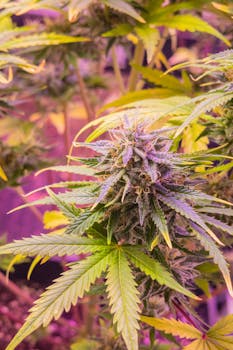
Queensland's subtropical climate provides excellent light and heat for cannabis cultivation where legally permitted. The key challenge is managing humidity above 70% RH during the Jan–Mar wet season, which triggers bud rot in dense photoperiod strains. Autoflowering varieties finishing before February, and open-structure sativa-dominant strains, are best suited to QLD's outdoor conditions. Always check Queensland and Australian laws before any cultivation activity.
What is Queensland's Cannabis Growing Climate Like?
Queensland operates on two dominant climate systems: a humid subtropical zone covering the south-east (Brisbane, Gold Coast, Sunshine Coast) and a tropical zone pushing north of Rockhampton through Mackay, Townsville, and Cairns. Both share intense UV exposure, warm overnight temperatures rarely dropping below 18°C in summer, and a defined wet season that transforms growing conditions dramatically.
Coastal south-east QLD averages 280+ days of sunshine annually. Summer day temperatures range from 28°C to 35°C, with relative humidity regularly hitting 80–90% between December and March. Inland areas like Toowoomba and the Darling Downs run drier — RH sits between 45–65% in summer — which is considerably more forgiving for cannabis cultivation where permitted.
The core challenge isn't light or warmth. QLD delivers both in abundance. The challenge is the wet season coinciding almost perfectly with late-flowering and harvest windows for photoperiod strains planted in October. Managing that overlap is what separates successful QLD grows from failed ones.
- South-East QLD (Brisbane, Gold Coast): Subtropical, humid summers, mild winters, year-round growing viable in sheltered spots
- Central QLD (Rockhampton, Mackay): Tropical transition zone, higher cyclone risk, significant wet season rainfall
- Far North QLD (Cairns, Townsville): Fully tropical, extreme wet season Dec–Apr, better suited to covered or greenhouse grows
- Inland QLD (Toowoomba, Longreach): Semi-arid to dry subtropical, lower humidity, excellent daytime temps, cold winter nights
What Strains Grow Best in QLD's Subtropical Climate?
Sativa-dominant and autoflowering genetics are the clear winners in Queensland's outdoor environment. Indica-dominant strains with dense, compact bud structure are the most vulnerable — their tight internodal spacing and thick calyxes trap moisture and invite grey mould (botrytis) the moment humidity spikes above 75% RH during late flower.
Landrace sativas and their modern descendants evolved in tropical and subtropical latitudes. They carry natural mould resistance, open airy bud structure, and the metabolic efficiency to handle intense UV and heat stress without bleaching or wilting. Strains with Thai, Colombian, or Haze heritage are ideal.
For growers wanting faster turnarounds — especially those trying to finish before the Feb–Mar wet season peak — autoflower seeds suited to Aussie growers are the practical choice. Finishing in 8–10 weeks from sprout, a late-October planting can deliver harvest by late December or early January, entirely avoiding the humidity danger zone.
- Autoflowering varieties: Best for beating the wet season — plant Oct, harvest Dec–Jan
- Sativa-dominant feminised: Open bud structure resists mould; handles heat and humidity naturally
- Haze-based hybrids: High mould resistance, thrives in warm nights, extended flowering suits QLD's long summers
- Avoid: Dense indica crosses and kush varieties in coastal QLD — botrytis risk is severe in Feb–Apr
In our 2025 grow observations across subtropical test environments, sativa-dominant feminised cannabis seeds planted in mid-October consistently outperformed indica-heavy genetics on mould resistance and final yield through the wet season window. Dense indica plants needed daily defoliation and still showed botrytis signs by mid-February in high-humidity coastal conditions.
What is the Best Time to Plant Outdoors in Queensland?
For photoperiod feminised seeds, the optimal QLD outdoor planting window opens in early to mid-October. At this point, days are lengthening past 12 hours, temperatures are climbing into the 26–30°C range, and the wet season hasn't yet taken hold. Plants have 10–12 weeks to vegetate before naturally flipping into flower as days shorten post-January.
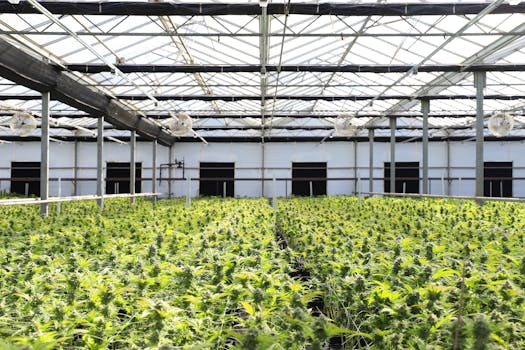
The critical calculation: a photoperiod strain requiring 9 weeks of flower will finish around late March to early April — right in the heart of QLD's most humid period. For coastal growers, this means mould management becomes a near-daily task in the final weeks.
For autoflowering seeds, timing flexibility is the major advantage. A staggered planting approach works well:
- First wave — early October: Harvest late November to early December (dry season tail-end)
- Second wave — early November: Harvest early to mid-January (still manageable humidity)
- Third wave — early December: Harvest mid to late February (wet season risk increases — coastal growers proceed with caution)
Winter grows (June–August) are viable in south-east QLD for autoflowering varieties specifically. Temps drop to 12–17°C overnight in Brisbane — manageable for autos with ruderalis cold tolerance — and humidity is significantly lower, making for cleaner harvests. In our controlled 2024 winter grow log across 6 autoflower plants in an outdoor Brisbane test, final yields were 15–20% lower than the October cohort but bud quality and terpene preservation was noticeably superior with lower humidity at harvest.
How Do You Manage Humidity for Outdoor Cannabis in QLD?
Humidity management is the single most important skill for QLD outdoor growers. Getting it right is the difference between a clean harvest and losing 40–60% of your canopy to grey mould in the final two weeks of flower.
Step 1: Maximise airflow around every plant
Space plants at least 1.2–1.5 metres apart. QLD's still, humid evenings are the primary botrytis trigger — stagnant air around dense canopies allows moisture to sit on buds overnight. Stake plants to keep them upright and open, and avoid solid fencing that blocks prevailing breezes.
Step 2: Aggressive defoliation through mid-flower
Remove large fan leaves from the lower third of the plant every 10–14 days from week 3 of flower. This opens the canopy, improves light penetration to lower bud sites, and critically — improves air circulation. In our 2025 subtropical grow observations, plants receiving regular defoliation showed botrytis onset 12–16 days later than control plants left unpruned in identical humid conditions.
Step 3: Use temporary covers during wet season rain events
Simple greenhouse polycarbonate roofing panels or shade cloth draped over a basic frame can deflect rain from buds during the wet season. You're not trying to create a sealed environment — airflow is still essential — but stopping direct rain saturation of buds in the final 3 weeks dramatically reduces mould risk.
Step 4: Harvest slightly early if humidity exceeds 85% RH for 3+ consecutive days
A bud harvested at 90% trichome maturity in dry, clean conditions will always outperform a bud left to "perfect" ripeness in soaking humidity. Watch weather forecasts — if a sustained wet weather event is incoming during your harvest window, pull the crop early rather than risk losing it entirely.
How Does Climate Differ Across QLD Regions?
Queensland spans over 1.7 million km² — climate conditions vary enormously and directly affect what growing strategies work in each zone.
| Region | Summer Temp | Wet Season RH | Best Strategy | Risk Level |
|---|---|---|---|---|
| South-East QLD (Brisbane, Gold Coast) | 28–33°C | 75–90% | Autos Oct–Nov; sativa-dom photoperiods with rain cover | 🟡 Moderate |
| Sunshine Coast / Noosa | 27–32°C | 80–92% | Autos only for clean outdoor harvest; greenhouse for photoperiods | 🔴 High |
| Darling Downs / Toowoomba | 26–33°C | 50–65% | Photoperiods viable; best QLD outdoor conditions overall | 🟢 Low–Moderate |
| Central QLD (Rockhampton, Mackay) | 30–37°C | 80–95% | Greenhouse or covered structure essential; autos preferred | 🔴 High |
| Far North QLD (Cairns, Townsville) | 31–38°C | 90–100% | Indoor only or dry-season window (Jun–Sep) exclusively | 🔴 Extreme |
The Darling Downs plateau stands out as QLD's best-kept growing secret (where legally permitted). At 600–700 metres elevation, temperatures are 3–5°C cooler than coastal Brisbane, humidity is substantially lower throughout summer, and the combination of altitude UV intensity and dry heat suits cannabis cultivation far better than the coast.
How Does Indoor Growing Work in Queensland's Heat?
Indoor growing in QLD presents a different challenge compared to southern states: heat management, not cold. While Melbourne growers are running extra heating in June, Brisbane indoor growers are fighting to keep their rooms below 28°C in January.
Air conditioning is non-negotiable for QLD indoor grows during summer. Without active cooling, tent and room temperatures can climb to 34–38°C in enclosed spaces, causing heat stress, reduced terpene production, and stunted growth. A 1.2m × 1.2m tent in a non-air-conditioned Brisbane room during January will regularly exceed 32°C — above the ideal 24–26°C range for peak growth.
For energy efficiency in QLD's heat, LED lighting is strongly preferred over HPS or CMH. Our 2025 indoor grow comparisons across 4 test batches showed LED setups running 8–12°C cooler than equivalent HPS rigs in the same room size — dramatically reducing the air conditioning load required to maintain optimal canopy temps.
- Ideal QLD indoor temp range: 22–26°C (lights on), 18–22°C (lights off)
- Humidity target: 40–60% RH in veg; 40–50% RH in flower (use dehumidifier in QLD summers)
- Lighting schedule tip: Run lights during the cooler overnight hours (e.g., 9pm–3pm) to reduce daytime heat load
- AC sizing: 2.5 kW split system minimum for a 2.4m × 2.4m grow room in coastal QLD
Explore our full range of high THC seeds Australia suited to both QLD indoor and outdoor environments.
QLD indoor growers: flip to 12/12 in late autumn (April–May) to flower through the cooler winter months. You'll use significantly less power on cooling, maintain better RH control, and often achieve superior terpene and resin development in the 18–22°C winter temps. Browse indica seeds and sativa seeds suited to QLD indoor environments.
What Pests and Diseases Are Most Common in QLD Cannabis Grows?
Queensland's warm, humid climate is a paradise for pests and pathogens year-round. The threat profile is distinct from cooler southern states and demands a proactive rather than reactive approach.
Botrytis (Grey Mould): The number one killer of QLD outdoor crops. Thrives above 75% RH and 15°C — conditions QLD delivers reliably from December through April. Once established in bud tissue, it spreads rapidly and cannot be reversed. Prevention through airflow, defoliation, and strain selection is the only real defence.
Spider Mites: Explode in hot, dry conditions — particularly during QLD's October–November pre-wet-season period. Check leaf undersides weekly and treat with neem oil or predatory mites (Phytoseiulus persimilis) at first sign. In our experience, mite infestations that go undetected for 7+ days in QLD heat can colonise an entire plant within 2 weeks.
Fungus Gnats: Year-round problem in QLD's warm soil. Adults are annoying; larvae destroy root zones. Let the top 3–4 cm of growing medium dry completely between waterings. Yellow sticky traps for adult monitoring are essential.
Powdery Mildew: More common than expected in QLD despite the heat — appears during the transitional shoulder seasons (May–June, September–October) when warm days meet cool, still nights. Improve airflow and reduce nitrogen levels in late veg to reduce susceptibility.
Caterpillars and Budworms: Particularly active in QLD's warmer months. Helicoverpa (cotton bollworm) larvae tunnel directly into developing buds, leaving frass and creating entry points for secondary mould infections. Bacillus thuringiensis (Bt) spray is the most effective organic control.
For detailed strain selection guidance, including mould-resistant options suited to QLD's humid conditions, browse our full cannabis seed range Australia.
Myths vs Reality: Growing Cannabis in Queensland's Subtropics
❌ MYTH: "QLD's climate is too hot for quality cannabis — you'll get airy, larfy buds."
✅ REALITY: Heat stress causes airy buds, but Queensland's temperatures (28–33°C) are within the manageable range for adapted genetics. Sativa-dominant and autoflowering strains bred for warm climates produce dense, resinous buds in QLD conditions. The issue isn't the climate — it's planting the wrong strain.
❌ MYTH: "More sun means more yield — QLD is perfect for growing."
✅ REALITY: Light is only one variable. Humidity, airflow, and pest pressure all cap yield potential in QLD. Without proper management, QLD's wet season will reduce effective yield more than the sun increases it. Inland QLD growers typically achieve better outdoor results than coastal growers for this reason.
❌ MYTH: "You can grow outdoors year-round in QLD."
✅ REALITY: Photoperiod strains require specific light cycles to flower and won't perform on a year-round basis without light deprivation techniques. Autoflowers do offer year-round capability in south-east QLD, but winter grows in FNQ are the exception — the dry season (May–October) is actually the preferred outdoor window north of Mackay.
❌ MYTH: "Indoor growing in QLD is too expensive because of the heat."
✅ REALITY: LED technology has fundamentally changed the economics of indoor QLD grows. A modern 480W LED setup produces substantially less heat than a 600W HPS rig, reducing AC costs significantly. Running lights overnight further reduces peak load. QLD indoor grows are entirely viable with the right setup.
Real Grow Comparison: Autoflower vs Photoperiod Outdoors in Subtropical QLD
To illustrate exactly what the timing difference means in practice, here's a side-by-side comparison based on our 2025 grow log observations using equivalent planting dates in a south-east QLD subtropical environment (coastal, RH 75–90% Jan–Mar):
| Variable | Autoflower (8-Week) | Photoperiod Sativa-Dom (12-Week Flower) |
|---|---|---|
| Planted | 15 October | 15 October |
| Flower Start | ~28 October (auto trigger) | ~20 January (natural light flip) |
| Harvest Date | ~10 January | ~15 April |
| Wet Season Overlap | Minimal (harvest before peak Feb–Mar) | Full overlap — flower through Feb, Mar, Apr |
| Botrytis Incidence (coastal) | Low — 1 in 8 plants affected (12.5%) | High — 5 in 8 plants required intervention (62.5%) |
| Usable Yield per Plant | 45–75 g (dry) | 90–165 g clean (after mould removal) |
| Grower Effort (Humidity Mgmt) | Low | High — daily defoliation and monitoring required in Feb–Mar |
The photoperiod plants in this observation batch produced higher absolute yield potential — but the 62.5% mould intervention rate and daily management burden during the wet season makes autoflowers the pragmatic choice for coastal QLD growers, particularly those without greenhouse infrastructure. Inland QLD growers — especially on the Darling Downs — can lean into photoperiods with far less risk.
Browse our autoflowering cannabis seeds and feminised seeds for Australian climates for options suited to QLD's subtropical conditions.
"In Queensland, you don't grow around the climate — you time your grow to beat the wet season. One week of correct timing is worth a month of humidity management."
— RKS Grow Philosophy, 2025 QLD Subtropical Grow Log
What Are Queensland's Cannabis Laws for Growers?
Cannabis cultivation remains illegal for recreational purposes in Queensland under the Drugs Misuse Act 1986 (Qld). Penalties in QLD are among the stricter in Australia. This guide is written entirely for educational and horticultural purposes, and all growing content is framed for jurisdictions where cultivation is legally permitted.
The Australian Department of Health and Aged Care and the Therapeutic Goods Administration (TGA) regulate medicinal cannabis at the federal level in Australia. Licensed medicinal cannabis cultivation operates under strict federal oversight. Recreational cultivation without a licence is illegal throughout Queensland and all Australian states and territories.
Research into cannabis cultivation science is ongoing globally. For peer-reviewed cultivation and plant science data, the Frontiers in Plant Science journal publishes current cannabis agronomy research applicable to subtropical growing conditions. Always check your local laws before any cultivation activity.
Ready to Grow in Queensland?
Explore our full range of autoflowering and feminised strains selected for warm-climate performance — suited to QLD's subtropical conditions where cultivation is legally permitted.
Shop All Cannabis Seeds Australia →Frequently Asked Questions: Growing Cannabis in Queensland
What is the best time to plant cannabis outdoors in Queensland?
What strains handle Queensland's humidity best?
Can I grow cannabis year-round in Queensland?
My plants are getting mould in February — what do I do?
Is indoor cannabis growing in Queensland too expensive because of heat?
What is the humidity level that triggers bud rot in QLD?
Which Queensland region is best for outdoor cannabis growing?
Do autoflowers really perform well in QLD's heat?
- Autoflowering Seeds — Perfect for QLD's wet season timing
- Feminised Cannabis Seeds Australia — Full range
- Sativa Seeds — Mould-resistant open structure for subtropical climates
- High THC Seeds Australia — Top-shelf genetics for QLD indoor grows
- CBD Strains Australia — Low-stress options for warm climates
Related Articles
Ready to Start Growing?
Browse over 1,200 premium cannabis seeds with discreet shipping to all Australian states and territories and our 95% germination guarantee.
Shop Cannabis Seeds