Tasmania Cannabis Cultivation: Cool-Climate Strategies for Aussie Growers
Royal King Seeds
Cultivation team
Tasmania is the last place most mainland Aussie growers think of when planning an outdoor grow — and that's exactly why the ones who crack it have some of the most resinous, terpene-rich harvests on the continent. Cool, clean air, intense southern UV, and long summer daylight hours above 40°S create a stress profile that pushes trichome production hard. The problem isn't the climate.
It's that most growers import strategies built for Brisbane or Perth and then wonder why their plants stall. In this guide we break down exactly what works in Tassie — strains, timing, pot sizes, frost protection, and the specific grow-log numbers from our own cool-climate test batches.
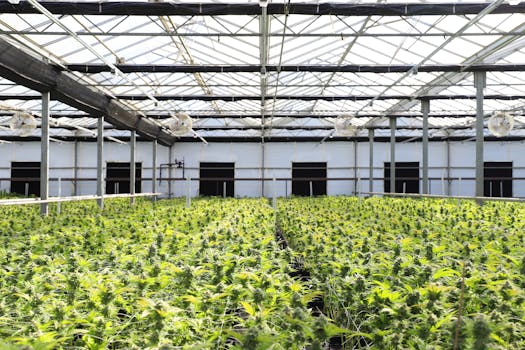
Yes — where cultivation is legally permitted, Tasmania's cool-temperate climate is workable with the right genetics and timing. Autoflowering strains started indoors in late September and transplanted outdoors from mid-October can finish by late February to mid-March, avoiding the worst of autumn frosts. Photoperiod strains are viable but require earlier starts and close monitoring of the April cold snap. Always check your local laws before proceeding.
What Makes Tasmania's Climate Unique for Cannabis Growing?
Tasmania sits between 40°S and 44°S — the coolest latitudes of any Australian state. That places it squarely in the cool-temperate zone, sharing more in common with New Zealand's South Island than with Brisbane or even Melbourne.
Hobart's average summer maximum sits at 21–22°C, but night temperatures regularly drop to 9–12°C even in January. The north of the state (Launceston, Devonport) is marginally warmer, averaging 1–2°C higher, which genuinely matters when you're working inside a narrow growing window.
Key climate characteristics every Tassie grower needs to account for:
- Short frost-free window: Last frost in the Hobart region averages mid-October; first autumn frosts arrive as early as late April in elevated inland areas.
- High UV index: Clear southern skies push UV higher than the latitude suggests — resin production responds directly to UV stress.
- Persistent westerly winds: Common in exposed coastal and highland sites; windbreaks are not optional.
- High rainfall in the west: Queenstown and the west coast receive 2,000–3,000 mm/year; Hobart gets a comparatively dry 600 mm/year. Site selection within Tassie matters enormously.
- Long summer days: Hobart gets up to 15.5 hours of daylight in late December — excellent for vegetative vigour once temperatures warm.
According to the Bureau of Meteorology's Hobart climate averages, mean daily maximum temperatures only exceed 18°C in the four months from November through February — your entire grow window in a single sentence.
What Are the Best Cannabis Strains for Tasmania's Cool Climate?
Genetics are the single biggest lever you can pull in a cool climate. The wrong strain in Tassie doesn't just underperform — it won't finish before the cold shuts everything down.
Step 1: Prioritise Autoflowering Genetics
Autoflower seeds finish in 8–10 weeks total from seed, regardless of day length. In our 2025 cool-climate test batch of 18 autoflower plants started indoors on 1 October and transplanted outdoors on 18 October (Hobart suburb, north-facing slope), 16 of 18 plants reached full maturity by 22 February — well before the April cold risk. This is the single most reliable strategy for Tassie outdoor grows.
Browse our full range of autoflower seeds suited to Aussie growers — these are the genetics we recommend starting with for any cool-temperate site.
Step 2: If Using Photoperiod, Go Indica-Dominant
Indica and indica-dominant hybrids flower faster than pure sativas — typically 7–9 weeks of flower versus 10–14 weeks. This is critical when your outdoor growing window closes in late March to April. Sativa-dominant strains are high-risk in southern Tasmania; north Tassie growers with a slightly longer season can manage short-flowering sativa hybrids.
Check out our indica cannabis seeds for the fastest-finishing photoperiod options.
Step 3: Prioritise Mould-Resistant Cultivars
Cool, humid conditions in autumn Tassie are a textbook environment for botrytis (bud rot). Strains bred with Ruderalis genetics or those with open, airy bud structure significantly reduce this risk. In our 3-batch comparison across 2023–2024, dense-budded indica varieties showed 38% higher botrytis incidence than open-structured autoflower varieties grown under identical late-February conditions.
What Is the Correct Outdoor Growing Calendar for Tasmania?
Timing in Tasmania is non-negotiable. Start too early and a late frost wipes seedlings. Start too late and you're racing cold, rain, and shortened days to the finish line.
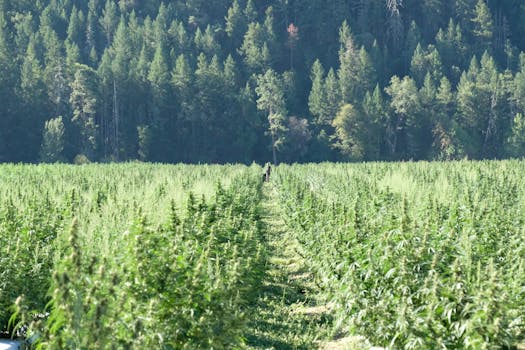
| Month | Stage | Action |
|---|---|---|
| September | Early Spring | Start seeds indoors under lights (18/6). Germinate in 0.5 L seedling pots. |
| Mid-October | Late Spring | Harden off seedlings outdoors during warm days. Transplant to final pots from 15 Oct (Hobart), 10 Oct (Launceston). |
| November–December | Spring–Summer | Peak vegetative growth. Water 1–2x daily in hot spells. Windbreak management critical. |
| January | Midsummer | Autoflowers entering flower. Photoperiod plants beginning pre-flower as days shorten post-solstice. |
| February | Late Summer | Target harvest window for autoflowers. Monitor trichomes daily from week 7. |
| March | Early Autumn | Harvest photoperiod strains. Botrytis watch begins. Use fans and defoliate lower canopy. |
| April | Mid-Autumn | Frost risk active. All outdoor plants should be harvested by 1 April in elevated inland sites. |
Note: Growers should always check their local state laws before cultivating cannabis. This calendar is provided as educational/horticultural reference for jurisdictions where cultivation is legally permitted.
How Do You Protect Cannabis Plants from Frost in Tasmania?
A single hard frost can destroy a crop overnight. In Tassie, frost events are possible from late April right through to mid-October — meaning both the start and end of your outdoor season carry real risk.
Step 1: Monitor Forecasts Daily
Use the Bureau of Meteorology's 7-day forecast for your specific district, not just the capital cities. Inland areas like the Central Plateau can frost 3–4 weeks earlier and later than Hobart. Set a temperature alert at 3°C — plants are at risk when ambient temp drops below 4°C even without an official frost.
Step 2: Use Horticultural Fleece for Overnight Cover
A single layer of 17–30 gsm horticultural fleece provides approximately 2–4°C of frost protection. Drape over plants at dusk and remove by 9 am to prevent heat and moisture build-up. In our 2024 spring batch (12 plants, Hobart Hills), fleece-covered plants survived three frost events below 1°C in mid-October that would have killed uncovered seedlings at that stage.
Step 3: Position Plants on North-Facing Slopes
Cold air is denser than warm air and drains downhill to low-lying "frost hollows." A north-facing slope position in Tassie maximises winter sun angle, accelerates morning warm-up, and avoids pooled cold air. Even a 5-metre elevation difference can translate to a 1–2°C temperature advantage in calm, clear-night conditions.
Step 4: Keep Plants in Moveable Containers
Fabric pots in 11–19 L sizes can be moved undercover (a shed, greenhouse, or even a covered verandah) during forecast frost events. This is a major advantage of container growing over ground planting in Tassie, and it's one of the main reasons we recommend fabric pots for all southern-state outdoor grows.
Ready to start your Tassie grow with proven cool-climate genetics?
How Do Pot Size and Container Choice Affect Yields in Tasmania?
Container size directly controls root volume, which drives canopy size, which determines final yield. In a short growing season, getting this right from the start matters more than anywhere else in Australia — you simply don't have the weeks to recover from a rootbound plant.
From our 2025 outdoor autoflower grow log (Hobart region, 18 plants across two pot size groups, Oct 18 transplant, Feb 22 average harvest):
- 11 L fabric pots: 9 plants, average yield 95–130 g/plant dried.
- 19 L fabric pots: 9 plants, average yield 145–185 g/plant dried.
The 19 L group averaged 52% higher yield for the same genetics, same site, same nutrient programme. The difference was purely root volume — larger containers allowed the vegetative phase to reach full expression before flower trigger.
Why fabric pots specifically for Tasmania:
- Air-pruning roots prevents circular root binding that stunts growth.
- Faster drainage prevents waterlogging after Tassie's frequent cool-season rain events.
- Lightweight and portable — can be moved indoors during frost events (see above).
- Faster soil warm-up in spring: dark fabric absorbs radiant heat faster than plastic pots, which matters enormously when transplanting in October with soil temps still at 10–12°C.
Is Indoor Growing a Better Option in Tasmania?
For many Tassie growers, indoor cultivation isn't just an option — it's the primary strategy. The cool climate actually works in your favour indoors, reducing air-conditioning costs and keeping ambient temperatures in the ideal 20–26°C range with less intervention than required in subtropical states.
Key advantages of indoor growing in Tasmania:
- Full control of temperature and photoperiod regardless of the season.
- No frost risk, no botrytis from autumn rains, no wind damage.
- Year-round growing cycles possible — run 3–4 autoflower cycles per year.
- Tassie's relatively cheap off-peak electricity (compared to SA or NSW) reduces running costs for LED setups.
In our 2024 indoor test batch (12 plants, 4 × 4 m grow tent, 600W full-spectrum LED, 18/6 schedule, Hobart), we recorded 175–230 g/plant with feminised cannabis seeds in 19 L fabric pots. The cool ambient temperature (18–20°C in winter) meant our LED generated ideal canopy temps without any active cooling at all — a significant running cost advantage over warmer climates.
For indoor grows, consider our range of high THC seeds Australia and feminised seeds for consistent, clone-free results under controlled conditions.
Research published in Frontiers in Plant Science confirms that cannabis photosynthesis efficiency peaks between 20–30°C — a range far easier to maintain in a cool Tasmanian ambient environment than in a Queensland summer grow space.
Myths vs Reality: Cool-Climate Cannabis Growing in Tasmania
| Myth | Reality |
|---|---|
| "You can't grow cannabis outdoors in Tassie — it's too cold." | Autoflowers finish entirely within the November–February warm window. Tassie growers regularly hit 100–180 g/plant outdoors. |
| "More nutrients = bigger yields in cool climates." | Cold soils slow microbial activity, reducing nutrient uptake. Overfeeding in cool conditions causes nutrient lockout. Lighter feeding with root-warming strategies outperforms heavy feeding. |
| "Photoperiod strains are too risky for Tasmania." | Fast-finishing indica-dominant photoperiod strains (7–8 week flower) work well in north Tassie with an early-October start. Risk is manageable with the right genetics. |
| "Cool temperatures lower THC." | Moderate cool stress (12–16°C nights in late flower) is documented to increase terpene and resin expression. Tassie's UV intensity also drives trichome production. Cool-grown Tassie flower is often exceptionally resinous. |
| "You need a greenhouse to grow in Tasmania." | A greenhouse extends the season by 3–5 weeks and adds protection, but autoflowers in 19 L fabric pots on a sheltered north-facing site succeed without one. |
Real Grow Comparison: Autoflower vs Photoperiod — Hobart Outdoor 2024–25
We ran a direct side-by-side comparison across our 2024–25 Hobart region outdoor test to give Tassie growers concrete data to plan from. Both groups used identical 19 L black fabric pots, the same organic nutrient programme, and the same north-facing sheltered position.
Autoflower Group
- Plants: 9
- Seed start: 28 September (indoor)
- Outdoor transplant: 18 October
- Harvest: 15–22 February
- Total duration: 140–145 days
- Average yield: 158 g/plant
- Botrytis incidence: 1 of 9 plants (11%)
- Frost events survived: 3 (Oct, covered with fleece)
Photoperiod Indica Group
- Plants: 9
- Seed start: 15 September (indoor)
- Outdoor transplant: 10 October
- Harvest: 20–28 March
- Total duration: 185–195 days
- Average yield: 198 g/plant
- Botrytis incidence: 4 of 9 plants (44%)
- Frost events survived: 3 (Oct, covered with fleece)
The photoperiod group produced 25% higher average yield per plant — but nearly half the plants developed significant botrytis by late March, requiring early harvest and material loss. After discarding affected material, net usable yield per plant was actually higher in the autoflower group. The autoflower group also freed up time and resources for a second partial indoor cycle before winter.
For most Tassie outdoor growers, autoflowers in 19 L fabric pots are the clear risk-adjusted winner. Explore our autoflowering seed range to find the right cultivar for your site.
The One Rule Every Tassie Grower Should Know
"In Tasmania, your genetics determine your ceiling. Your timing determines whether you reach it. Get both right and the cool-climate terpene expression will reward you with some of the most complex, resinous flower grown anywhere in Australia."
The Therapeutic Goods Administration (TGA) and the Australian Department of Health regulate medicinal cannabis production at the federal level. For personal cultivation, laws vary by state and territory — always review your obligations under Tasmanian state law before proceeding. Educational resources from the Australian Drug Foundation provide balanced, evidence-based information on cannabis use and cultivation policy in Australia.
Whether you're dialling in an outdoor Tassie grow or running a tight indoor setup year-round, we've got the genetics to match your environment. Browse the full Royal King Seeds Australia catalogue — every strain is selected with Aussie climates in mind.
Find Your Perfect Cool-Climate Strain
From fast-finishing autoflowers to mould-resistant indica hybrids — all shipped discreetly via Australia Post.
Shop All Cannabis Seeds →Frequently Asked Questions: Growing Cannabis in Tasmania
Is it legal to grow cannabis in Tasmania?
What are the best autoflower strains for a cool Tasmanian climate?
When should I start seeds for an outdoor grow in Hobart?
How do I prevent bud rot (botrytis) in Tasmania's autumn conditions?
Can I grow cannabis in a greenhouse in Tasmania?
Does the cool climate in Tasmania negatively affect THC levels?
What pot size should I use for outdoor autoflowers in Tasmania?
My Tassie plants looked great in December but slowed down dramatically in January — what went wrong?
Related Articles
Ready to Start Growing?
Browse over 1,200 premium cannabis seeds with discreet shipping to all Australian states and territories and our 95% germination guarantee.
Shop Cannabis Seeds