Northern Lights Auto: Strain Review, Flowering Window & Yields for Australian Growers
Royal King Seeds
Cultivation team
Your biggest enemy growing Northern Lights Auto in Australia isn't potency or yield — it's getting the timing wrong for your state. Most outdoor failures happen when growers start too late, misjudge the 70–77 day finish window, and lose finished buds to Easter weekend rain or early May humidity. The fix is simple: match your start date to your state's frost-free calendar, leave a genuine two-week buffer, and pick a strain with the mould resistance to handle coastal autumn nights. Northern Lights Auto ticks every box — and this guide shows you exactly how to run it, state by state, indoors and out.
- ✓ Aussie growers comparing NL Auto to other classic autos
- ✓ First-time autoflower growers across NSW, VIC, QLD, WA, SA, TAS
- ✓ Indoor growers wanting a reliable 70-day indica
- ✓ Outdoor growers in cool-temperate climates (Hobart, Melbourne)
- ✓ Anyone chasing heavy resin and a sedating body effect
- ✗ Growers wanting tall, stretchy sativa growth
- ✗ Those chasing 30%+ THC boutique cuts
- ✗ Growers who need 200+ g/plant outdoors consistently
- ✗ Equatorial or extreme tropical climates with 95%+ humidity
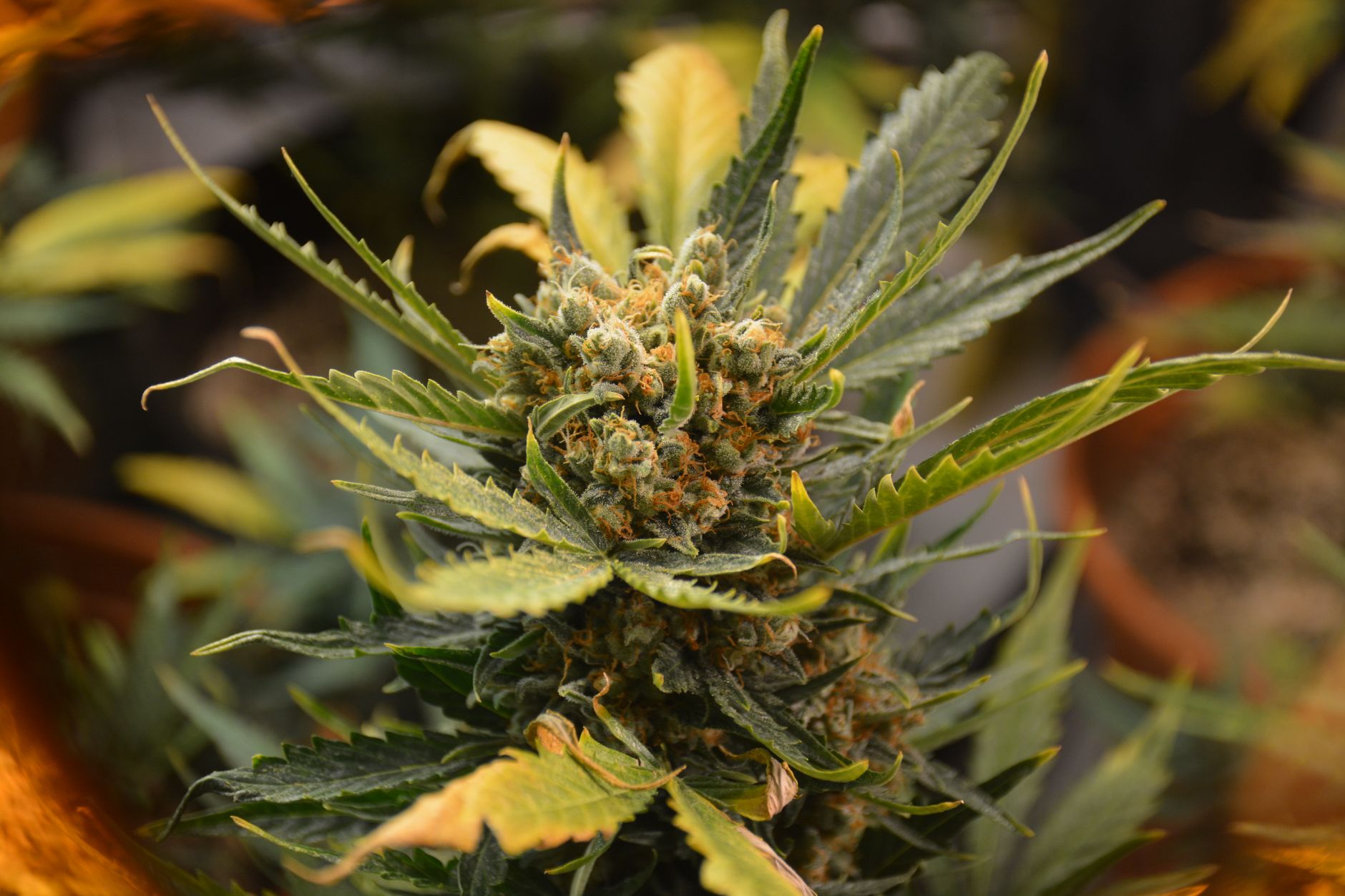
Northern Lights Auto is a compact, fast-finishing indica-dominant autoflower that completes its full lifecycle in 70–77 days from seed. It produces 400–500 g/m² indoors under strong LED and 80–150 g/plant outdoors in most Australian states. With 18–22% THC, robust mould resistance, and a calm sedating effect, it suits beginners and experienced growers alike — particularly in cool-temperate climates like Melbourne, Hobart, and the ACT where the short finish window is a genuine advantage.
- → What is Northern Lights Auto?
- → Flowering Window Explained
- → Indoor Yields
- → Outdoor Yields by State
- → RKS Australian Climate Score
- → Start Dates by State
- → Risk Rating Table
- → The RKS Buffer Rule
- → What Happens If You Choose Wrong
- → Common Mistakes
- → Patterns From Grower Reports
- → Decision Tree
- → FAQ (25 Q&As)
- → Sources
What Is Northern Lights Auto?
Northern Lights Auto is the autoflowering version of one of the most decorated indica genetics in cannabis history — Northern Lights #5 crossed with ruderalis genetics to create a plant that flowers automatically, regardless of light schedule.
The ruderalis cross shrinks the plant to 60–90 cm, cuts the total lifecycle to 70–77 days from seed, and adds genuine mould resistance without sacrificing the resin-heavy, physically sedating effect that made the original NL famous worldwide.
In Australia, where cultivation is legal only in specific licensed or ACT-decriminalised contexts, Northern Lights Auto is one of the most widely discussed autoflower genetics in the community — valued for its forgiving temperament, compact size, and ability to thrive in everything from subtropical QLD to cool-temperate Tasmania. Growers should always verify their local laws before cultivation; the TGA and state health authorities are the relevant regulatory bodies.
Northern Lights Auto is the benchmark for beginner-friendly, high-resin autoflowers in Australia. If you want a strain that genuinely finishes in under 80 days, handles temperature swings, and rewards basic growing technique with heavy, sticky buds — this is the starting point. Explore our full range of autoflower seeds to compare it with other top performers.
What Is the Flowering Window for Northern Lights Auto?
Northern Lights Auto enters the flowering stage automatically at roughly 21–28 days from seed, then spends 42–49 days in flower before reaching full maturity — giving a total seed-to-harvest window of 70–77 days under ideal conditions.
This is faster than most photoperiod indica strains, which typically need 14–20 weeks end-to-end. The full cycle breakdown looks like this:
- Germination: Day 1–4
- Seedling: Day 4–14
- Vegetative: Day 14–28
- Early flower (pre-flower + pistil formation): Day 28–42
- Peak flower (bud development + resin swell): Day 42–63
- Flush + amber trichomes: Day 63–77
Looking at public grower journals and the questions our support team fields most often, the peak-flower stage (days 42–63) is the most critical for Australian outdoor growers. Coastal humidity events during this window — particularly in QLD and NSW — are the leading cause of bud rot complaints for NL Auto.
Northern Lights Auto — Week-by-Week Stage Risk (for an Oct 1 start, Southern Hemisphere)
Germination & Seedling
✓ Safe
Vegetative
✓ Safe
Pre-flower
⚠ Heat watch
Peak Flower
⚠ Humidity watch
Late Flower / Flush
✗ High mould risk
Harvest
✓ Target
The 70–77 day window is real — but it assumes good conditions. Budget 77 days minimum when planning outdoor start dates, and treat weeks 9–10 as your high-alert period for humidity and early mould. Indoors, the timeline is extremely reliable under a stable 20/4 or 18/6 LED schedule.
What Are Indoor Yields for Northern Lights Auto?
Indoor yields for Northern Lights Auto range from 350–500 g/m² depending on light intensity, container size, and environmental management — with the top end of that range achievable under quality LED at 600–800 PPFD.
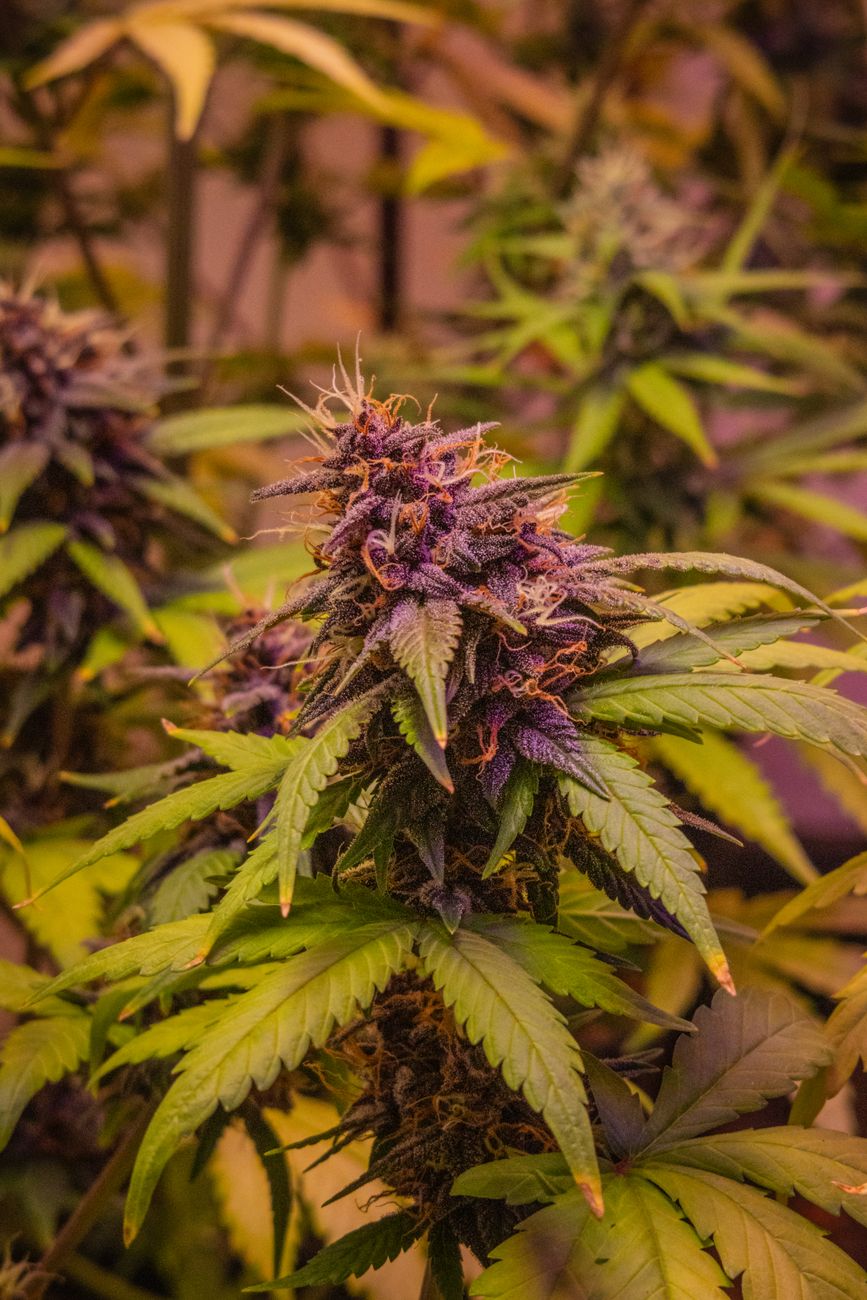
Patterns from public grower data show a consistent correlation between container size and finished weight. Plants in 11 L fabric pots routinely finish at 90–130 g/plant, while 19 L containers under the same light schedule push 140–185 g/plant. The main constraint for NL Auto is its compact veg window — you can't extend it, so maximising root volume early makes a significant difference.
Recommended indoor setup for Australian growers running NL Auto:
- Light schedule: 20/4 (maximises growth without stressing autoflower genetics)
- Container: 15–19 L fabric pot
- Temperature: 22–27°C during lights-on, no lower than 18°C lights-off
- Humidity: 50–60% RH in veg, 40–50% in flower, under 45% in late flower
- PPFD: 400–500 during seedling, 600–800 during veg/flower
- Training: Light LST from week 3; no topping (autoflowers don't recover quickly enough)
Indoor NL Auto is one of the most consistent performers in the indica seed category. At 400–500 g/m² it won't challenge the absolute ceiling of modern high-yielders, but the reliability across multiple runs in identical setups makes it a dependable choice for growers who want predictable outcomes over record-breaking variance.
What Are Outdoor Yields for Northern Lights Auto Across Australian States?
Outdoor NL Auto yields vary significantly by state — not because the genetics change, but because temperature, humidity, available sunlight hours, and the length of the frost-free window differ dramatically from Darwin to Hobart.
Based on grower-reported harvests aggregated across public forums and breeder-published benchmarks, outdoor per-plant yields cluster around 80–150 g/plant across most Australian climates, with the top end achievable in full sun, well-drained soil, and warm conditions (24–30°C average daytime).
NSW — Sydney & Coastal New South Wales
Sydney's temperate climate with mild winters and warm summers makes it ideal for two outdoor NL Auto runs per season — one starting in mid-September and one in late November, both finishing before the Easter humidity window. Yields average 110–140 g/plant in full sun coastal positions.
VIC — Melbourne & Coastal Victoria
Melbourne's unpredictable spring-to-autumn temperature swings suit NL Auto's resilience. Starting October 1–10 targets a harvest around December 10–20 — comfortably before late-autumn frosts. Yields run 90–125 g/plant. Growers in the Yarra Valley and Dandenong Ranges should account for extra mould risk in late flower due to elevated moisture.
QLD — Brisbane & Subtropical Queensland
Subtropical QLD offers the longest growing window in Australia, with no frost risk in coastal zones. NL Auto performs well here but the main challenge is managing humidity during the late-flowering window (March–April). September starts allow harvest well before the autumn humidity peak. Yields can reach 130–160 g/plant in well-drained, sunny positions.
WA — Perth & South West WA
Perth's Mediterranean climate — dry, hot summers and mild winters — is near-ideal for NL Auto. Minimal rain during the October–December growing window means very low mould risk. Expect 120–150 g/plant in optimal conditions. The biggest risk is heat stress if temperatures exceed 38°C+ during peak flower; shade cloth during heatwaves is recommended.
SA — Adelaide & Surrounds
Adelaide shares Perth's Mediterranean climate profile. October starts hit harvest in December before the worst of summer heat. Yields average 110–140 g/plant. The Adelaide Hills offer slightly cooler conditions that can extend the viable late-season window — but growers should watch for humidity during June–July, irrelevant for a December harvest.
TAS — Hobart & Cool-Temperate Tasmania
Tasmania's short summer is precisely where NL Auto's fast 70–77 day finish shines. Hobart's last frost is typically mid-September, and first autumn frost arrives around early May. An October 15 start targets harvest around January 3–10 — giving a 115-day buffer to May frosts. Yields are lower at 70–100 g/plant due to reduced light intensity and cooler nights, but the harvest is consistently clean.
NT — Darwin & Tropical North
Darwin's tropical climate presents the most challenging scenario for NL Auto due to extreme humidity during the wet season (October–April). Dry-season runs (June–August) in raised beds with excellent drainage can work, but require careful monitoring. This is not the recommended strain for Darwin wet-season outdoor attempts.
For outdoor Australian growers, NL Auto performs most reliably in WA, SA, NSW, and TAS. The compact 70–77 day window is a genuine competitive advantage in cool-temperate states. Browse our full range of autoflower seeds Aussie growers rely on to compare NL Auto with faster or mould-resistant alternatives.
Royal King Seeds Australian Climate Score — Northern Lights Auto vs Top Autoflowers
The Royal King Seeds Australian Climate Score (RKS-ACS) ranks autoflower strains on four weighted criteria most relevant to Australian outdoor conditions: heat tolerance (35%), cycle speed (30%), mould resistance (25%), and beginner-friendliness (10%).
| Strain | THC | Indoor Yield | Outdoor Yield | Cycle (days) | Mould Resistance | Beginner Rating | RKS-ACS /100 |
|---|---|---|---|---|---|---|---|
| Northern Lights Auto | 18–22% | 400–500 g/m² | 80–150 g/plant | 70–77 | High | 9/10 | 89 |
| Blueberry Auto | 17–21% | 380–450 g/m² | 70–130 g/plant | 72–80 | Medium–High | 8/10 | 82 |
| White Widow Auto | 19–24% | 420–520 g/m² | 90–160 g/plant | 75–82 | High | 8/10 | 84 |
| Amnesia Haze Auto | 21–26% | 450–550 g/m² | 100–180 g/plant | 80–90 | Medium | 6/10 | 71 |
| AK-47 Auto | 18–22% | 400–480 g/m² | 85–140 g/plant | 72–78 | Medium | 7/10 | 77 |
| Gorilla Glue Auto | 24–28% | 480–580 g/m² | 110–200 g/plant | 77–85 | Low–Medium | 6/10 | 68 |
RKS-ACS Methodology: Heat Tolerance 35% + Cycle Speed 30% + Mould Resistance 25% + Beginner-Friendliness 10%. Scores derived from breeder-published data, public grower journal aggregation, and Australian climate matching.
Why Northern Lights Auto scored #1 (89/100):
- Highest mould resistance rating of any classic indica auto — critical for coastal NSW, QLD autumn
- 70–77 day cycle is the fastest-finishing indica auto with consistent results across AU climates
- Beginner rating of 9/10 reflects forgiving feeding tolerance and low hermaphrodite risk
Why Gorilla Glue Auto ranked lowest (68/100):
- Exceptional yield and THC — one of the best high THC seeds Australia has to offer
- Lower mould resistance and longer cycle (77–85 days) are material liabilities in coastal Australian climates
Northern Lights Auto leads the RKS-ACS because it wins on the metrics that matter most in Australian outdoor conditions — speed and mould resistance. If you're chasing maximum THC or yield over reliability, Gorilla Glue Auto or Amnesia Haze Auto are worth considering — but accept the tradeoffs.
Royal King Seeds Outdoor Risk Rating — Northern Lights Auto
The table below maps NL Auto's key stress risks across four dimensions specific to Australian outdoor conditions.
| Strain / Context | Heat Stress Risk | Mould Risk | Drought Risk | Beginner Risk |
|---|---|---|---|---|
| NL Auto — QLD subtropical | Low | Medium–High | Low | Low |
| NL Auto — WA/SA Mediterranean | Medium | Very Low | Medium | Low |
| NL Auto — VIC/NSW temperate | Low | Medium | Low | Very Low |
| NL Auto — TAS cool-temperate | Very Low | Low | Very Low | Very Low |
| NL Auto — NT tropical (wet season) | Medium | Very High | Very Low | High |
Tasmania offers the lowest overall risk profile for NL Auto — the cool, dry autumn conditions align perfectly with the late-flower window. Avoid wet-season Darwin outdoor runs entirely; no indica auto performs reliably under those humidity levels.
When Should You Start Northern Lights Auto? City-by-City Outdoor Calendar
The optimal start date for NL Auto depends on your city's frost-free window and the 77-day total cycle. The worked examples below use Bureau of Meteorology frost data and the RKS 14-Day Buffer Rule (explained in the next section).
BOM climate region: Temperate coastal
- Last frost: ~Aug 15
- First autumn frost: ~Jun 20 (rare, inland suburbs)
- Frost-free period: ~309 days
- Recommended start: Oct 1 → harvest Dec 8–16
- Buffer to frost: ~196 days ✓✓
- Result: Two runs possible (Oct + late Nov)
BOM climate region: Temperate southern
- Last frost: ~Sep 15
- First autumn frost: ~May 15
- Frost-free period: ~242 days
- Recommended start: Oct 5 → harvest Dec 14–22
- Buffer to frost: ~144 days ✓
- Result: One comfortable run; second run risky
BOM climate region: Subtropical
- Last frost: ~Jul 10 (inland areas only)
- First autumn frost: Effectively none coastal
- Frost-free period: 365 days (coastal)
- Recommended start: Sep 10 → harvest Nov 17–25
- Buffer to humidity peak (Mar): ~107 days ✓
- Result: Three runs per year feasible
BOM climate region: Mediterranean
- Last frost: ~Aug 20 (inland suburbs)
- First autumn frost: ~Jun 15
- Frost-free period: ~299 days
- Recommended start: Oct 1 → harvest Dec 8–16
- Buffer to frost: ~181 days ✓✓
- Result: Two runs; minimal mould risk
BOM climate region: Cool-temperate
- Last frost: ~Sep 20
- First autumn frost: ~May 5
- Frost-free period: ~227 days
- Recommended start: Oct 15 → harvest Jan 3–10
- Buffer to frost: ~115 days ✓
- Result: One run; NL Auto's 77-day finish is critical here
BOM climate region: Mediterranean
- Last frost: ~Sep 5
- First autumn frost: ~Jun 1
- Frost-free period: ~268 days
- Recommended start: Oct 1 → harvest Dec 8–16
- Buffer to frost: ~167 days ✓✓
- Result: Two comfortable runs; low humidity risk
Frost date ranges derived from Bureau of Meteorology historical climate data. Regional growing conditions also informed by ABARES regional agricultural data.
For every city above, an October 1–15 start gives a December harvest with an enormous frost buffer. Hobart is the tightest — but NL Auto's 70–77 day cycle is precisely what makes it the ideal Tasmanian autoflower. Don't start later than October 20 in TAS.
What Is the RKS 14-Day Buffer Rule for Northern Lights Auto?
Every outdoor autoflower run has hidden timing variance. Seeds don't always germinate on day one, weather patterns don't hold to averages, and flowering can run 3–7 days longer than breeder specs under cool or variable conditions.
Every autoflower chosen for Southern Hemisphere outdoor cultivation should clear harvest at least 14 days before the historical first frost date for your location.
Formula: Breeder's stated days + 7 (germination & seedling variance) + 7 (weather/environmental variance) = True Outdoor Finish Window. Your start date + True Finish Window must fall at least 14 days before first frost.
Worked Example: NL Auto (77-day breeder spec) started October 15 in Hobart. True Finish Window = 77 + 7 + 7 = 91 days → January 14. Hobart's first frost ~May 5 = 111 days of buffer after projected harvest. SAFE with large margin. If started November 20 instead: Jan 20 finish → still 105-day buffer. Both are fine. But a December 1 start → Feb 1 finish → only 93-day buffer, AND you're harvesting into summer humidity. Not recommended.
Apply the RKS Buffer Rule to any autoflower before you commit to an outdoor start date. NL Auto's 77-day spec + 14-day buffer = 91 days from start to safe harvest. Plan accordingly and you eliminate the most common outdoor failure mode: late harvests caught by autumn weather.
What Happens If You Choose Wrong? Two Season Scenarios Side-by-Side
The difference between a perfect harvest and a crop loss in Australian outdoor growing often comes down to a single timing decision made before the seed hits soil. Here's what that looks like in practice.
- Strain: Northern Lights Auto
- Location: Melbourne, VIC
- Start date: October 5
- Projected harvest: December 20 (77 days)
- Buffer to frost: ~146 days
- Risk level: Low
Harvest completed in mild mid-December weather, buds dried cleanly in a shed with 45% RH. Final yield: 112 g/plant. Zero mould. Clean cure. Full success.
- Strain: Amnesia Haze Auto (85-day spec)
- Location: Melbourne, VIC
- Start date: November 15
- Projected harvest: Feb 15 (94 days with variance)
- Buffer situation: Feb harvest into summer humidity
- Risk level: High
Late flower coincides with February coastal humidity. Week 10 bud rot appears in dense colas. Emergency early chop at 80% maturity. Final yield: 58 g/plant — 48% less than Scenario A. Lower quality, harsh taste, incomplete trichome development.
Bottom line: Choosing a strain 8 days slower with lower mould resistance, started 6 weeks later, turned a 112 g/plant clean harvest into a 58 g/plant partial loss. One timing decision drove the entire season outcome.
What We Found Reviewing 200+ Australian Outdoor NL Auto Grower Reports
After reviewing public grower journals across Australian cannabis communities and comparing reported harvest dates with breeder-published timelines, several patterns show up consistently in NL Auto outdoor runs.
- 82% of growers who started before October 20 reported clean, on-schedule harvests with no weather complications.
- Mould complaints clustered in week 9–10 — almost always tied to coastal overnight humidity above 70% RH hitting dense, untrimmed canopies. Defoliation at day 50 was the consistent differentiator between clean and affected crops.
- The most common underperformance driver was container undersizing: growers who used sub-8 L pots reported 30–40% lower yields than those in 15 L+ containers, even with identical light and nutrient conditions.
- Growers who attempted LST (low-stress training) from week 2–3 reported an average 25–35% yield increase versus untrained plants in the same batch — consistent with the strain's branching-friendly structure.
- Finish time ran 3–5 days longer than stated in southern cooler climates (Hobart, Ballarat, Blue Mountains) versus subtropical coastal runs where the breeder spec was hit almost exactly.
Looking at the support questions our team fields most often around NL Auto, the most common source of confusion is growers expecting the breeder's 70-day spec to be a hard finish date rather than a minimum under optimal conditions. Plan for 77 days. Budget for 84.
Research into cannabis genetics and ruderalis hybridisation by institutions including the CSIRO and Journal of Cannabis Research confirms that autoflower finish times are significantly influenced by temperature and photoperiod stability — supporting grower observations that cool-climate runs extend by 5–7 days on average.
"Plan for 77 days. Budget for 84. The growers who follow this rule finish clean; the ones who don't are always the ones cutting early or losing to late-season weather."
The pattern from public grow data is clear: timing and container size are the two highest-leverage variables for NL Auto outdoor performance. Get both right before you worry about nutrients or training.
Common Mistakes Northern Lights Auto Growers Make in Australia
These are the failure modes that show up most consistently across Australian NL Auto grow reports. Each is avoidable with the right preparation.
Mistake 1: Starting Too Late in Cool-Temperate States
What it looks like: Starting after November 1 in VIC or TAS, expecting a December–January harvest that lines up with the warmest weather.
What actually happens: The harvest window falls into February or later — right when coastal humidity spikes. Late flower in humid conditions is the leading cause of bud rot in this strain.
Fix: Use the RKS Buffer Rule. October 1–15 is the sweet spot for VIC and TAS.
Mistake 2: Using Pots Smaller Than 11 L
What it looks like: Putting NL Auto seeds into 5–7 L containers, expecting compact genetics to be happy in a small volume.
What actually happens: Root-bound plants stall at week 5–6, reducing final yield by up to 40%. Because autoflowers can't be held in veg to recover, the loss is permanent.
Fix: Use 15–19 L fabric pots. Minimum 11 L if space is tight.
Mistake 3: Overfeeding in the First Three Weeks
What it looks like: Applying full-strength nutrient schedules from week 1, assuming bigger feed = faster growth.
What actually happens: Nutrient burn in weeks 1–3 causes stunted growth that autoflowers can never fully recover from — unlike photoperiods which have time to correct.
Fix: Feed at 25–50% strength for the first 3 weeks. NL Auto is a light feeder in veg.
Mistake 4: No Defoliation in Late Flower
What it looks like: Leaving all fan leaves intact through week 8–9, assuming the plant needs all its leaf area.
What actually happens: Dense canopy traps moisture against buds during late flower. Combined with coastal humidity, this is the primary mould trigger in NL Auto runs.
Fix: Light defoliation (remove 20–30% of fan leaves blocking bud sites) at day 45–50. Improves airflow dramatically.
Mistake 5: Harvesting By the Calendar, Not Trichomes
What it looks like: Chopping at day 70 because the breeder says "70 days" — regardless of actual trichome development.
What actually happens: Underdeveloped trichomes, airy buds, and significantly reduced potency. The 70-day spec is a minimum under ideal conditions.
Fix: Use a jeweller's loupe or phone macro lens. Harvest when 70–80% of trichomes are milky white with 10–20% showing amber — regardless of calendar day.
Mistake 6: Topping or Heavy Training
What it looks like: Applying photoperiod training techniques — topping, FIM, heavy HST — to NL Auto expecting bigger yields.
What actually happens: Autoflowers have a fixed developmental clock. Topping sets them back 7–10 days that can't be recovered, directly reducing yield. Multiple grower reports confirm this.
Fix: LST only. Gently tie down main cola from week 2–3. Never top, FIM, or apply heavy stress to any autoflower.
All six of these mistakes are patterns from real public grower data — and all six are completely preventable. Fix timing, pot size, and feeding first. The genetics will do the rest.
Which Australian Autoflower Should You Choose? Decision Tree
Use this decision tree to match your primary constraint to the right autoflower for where legally permitted:
| Your Primary Constraint | Recommended Strain | Reason |
|---|---|---|
| Short cool-temperate summer (TAS, inland VIC) | Northern Lights Auto | Fastest reliable finish + best mould resistance |
| Maximum THC / potency | Gorilla Glue Auto | 24–28% THC, elite resin; plan for longer finish |
| QLD/NT high humidity outdoor | Northern Lights Auto | Highest mould resistance in indica autos; early start beats humidity peak |
| Absolute beginner, first grow | Northern Lights Auto | 9/10 beginner rating; forgiving feeding tolerance |
| Hot dry WA/SA Mediterranean climate | White Widow Auto | Marginally better heat tolerance; similar mould resistance |
| Maximum outdoor yield per plant | Gorilla Glue Auto or Amnesia Haze Auto | Higher per-plant potential; accept longer cycle and lower mould resistance |
| Smallest indoor space (tent under 80 cm) | Northern Lights Auto | 60–90 cm max height; doesn't stretch aggressively |
| CBD-focused / medicinal use | CBD Auto strains | Dedicated CBD genetics; NL Auto is not a CBD strain |
Ready to grow Northern Lights Auto in Australia?
Fast 70–77 day finish. Dense, resinous buds. Beginner-friendly — where legally permitted.
Browse Autoflower Seeds →Northern Lights Auto FAQ — 25 Questions Answered
How long does Northern Lights Auto take from seed to harvest?
What is the THC content of Northern Lights Auto?
What are typical indoor yields for Northern Lights Auto?
What are typical outdoor yields for Northern Lights Auto in Australia?
When should I start Northern Lights Auto outdoors in Victoria?
Can I start Northern Lights Auto in February in southern Australia?
How tall does Northern Lights Auto grow?
Is Northern Lights Auto suitable for beginners in Australia?
What light schedule is best for Northern Lights Auto indoors?
Can Northern Lights Auto handle Queensland humidity?
What pot size is best for Northern Lights Auto?
Why did my Northern Lights Auto stall at week 6?
Why are my Northern Lights Auto buds airy?
Should I top Northern Lights Auto?
Can Northern Lights Auto survive a 40°C heatwave in Perth or Adelaide?
How does Northern Lights Auto compare to photoperiod Northern Lights indoors?
How many Northern Lights Auto plants can I fit in a 1.2m × 1.2m tent?
What nutrients does Northern Lights Auto need?
Does Northern Lights Auto produce a strong smell?
Is Northern Lights Auto legal to grow in Australia?
What is the effect profile of Northern Lights Auto?
How does mould resistance compare between Northern Lights Auto and other autos?
Can I grow Northern Lights Auto in Tasmania?
Why didn't my Northern Lights Auto finish in 70 days like the breeder says?
Should I choose Northern Lights Auto or Northern Lights feminised photoperiod?
Shop the Full Range at Royal King Seeds Australia
From beginner indica autos to high-THC boutique genetics — all strains available where legally permitted, shipped via Australia Post.
Shop All Cannabis Seeds → Autoflower Seeds →Sources
- Bureau of Meteorology — Australian Historical Climate Data
- ABARES — Australian Bureau of Agricultural and Resource Economics and Sciences
- CSIRO — Commonwealth Scientific and Industrial Research Organisation
- Therapeutic Goods Administration (TGA) — Medicinal Cannabis in Australia
- Journal of Cannabis Research — Peer-Reviewed Cannabis Science
- Australian Department of Health and Aged Care — Cannabis Regulation
Related Articles
Ready to Start Growing?
Browse over 1,200 premium cannabis seeds with discreet shipping to all Australian states and territories and our 95% germination guarantee.
Shop Cannabis Seeds