White Widow Autoflower: Strain Review, Flowering Window & Yields (Australia)
Royal King Seeds
Cultivation team
If you're growing outdoors in Australia and your strain still hasn't finished by late April, you've already lost the season. That's the hidden killer for Aussie outdoor growers — not pests, not heat, not humidity, but calendar misalignment.
White Widow Autoflower has become one of the most talked-about solutions to this exact problem, because its 63–70-day total cycle clears harvest well before May frost in even the coldest southern states. This review covers everything: the real flowering window, indoor and outdoor yield expectations, state-by-state planting calendars, and why this strain keeps showing up in Aussie grower reports year after year.
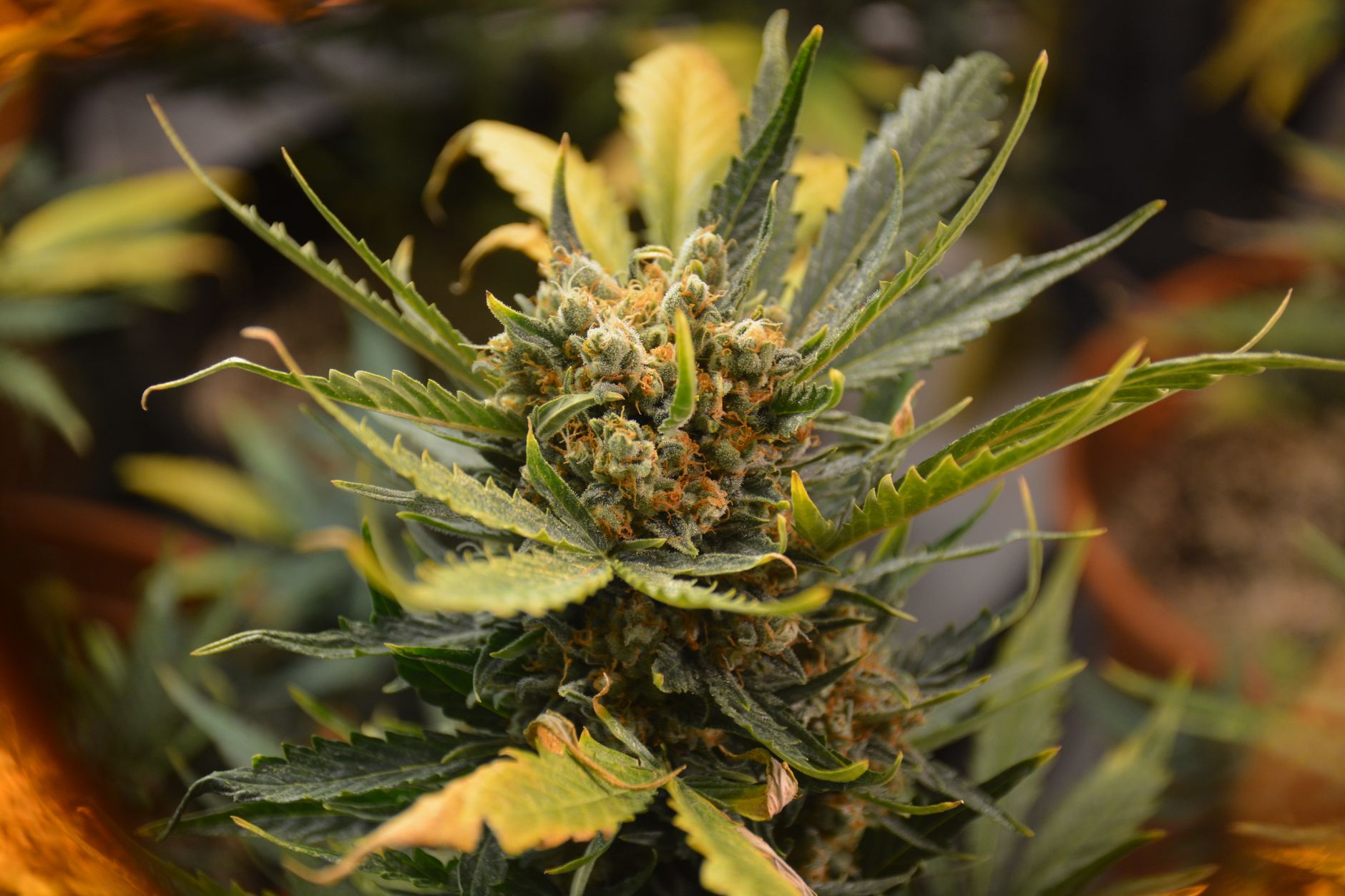
White Widow Autoflower is a ruderalis-crossed, photoperiod-independent version of the classic White Widow hybrid. It flowers automatically regardless of light schedule, completes seed-to-harvest in 63–70 days, produces 350–450 g/m² indoors under 18/6 or 20/4 LED, and delivers 60–130 g per plant outdoors — with 18–22% THC and a balanced, euphoric-then-relaxing effect profile that mirrors the original photoperiod legend.
- ✓ Aussie growers needing a reliable fast-finishing outdoor auto
- ✓ Indoor growers wanting multiple runs per year under 18/6 LED
- ✓ Beginners looking for a resilient, forgiving first strain
- ✓ Southern-state growers (VIC, TAS, SA) with short seasons
- ✓ QLD and NT growers dealing with humidity and heat stress
- ✗ Growers chasing 30%+ THC ceiling strains
- ✗ Anyone wanting over 200 g/plant outdoors from a single auto
- ✗ Growers who prefer manipulating light cycles for photoperiod
- ✗ Commercial-scale growers seeking the absolute highest g/m² efficiency
What Is White Widow Autoflower?
White Widow Autoflower is the ruderalis-crossed, light-independent version of one of the world's most iconic cannabis hybrids — the original White Widow, a 50/50 indica-sativa blend first developed in the Netherlands during the early 1990s from Brazilian sativa and South Indian indica genetics.
The "auto" suffix means the plant transitions into flower based on age, not on light schedule changes. A White Widow Auto will begin showing pistils at roughly 21–28 days from seed regardless of whether it receives 12, 18, or 20 hours of daily light — making it genuinely season-agnostic for indoor grows and far more forgiving outdoors.
The ruderalis cross trades some of the original's towering sativa height and long photoperiod flowering for a compact 60–100 cm structure, a dramatically shorter cycle, and the ability to run back-to-back harvests. THC retention in modern White Widow Auto genetics sits at 18–22%, which is impressively close to the photoperiod original. Under Australian law, cultivation of cannabis remains regulated — check your state legislation and the TGA's guidance on medicinal cannabis for jurisdiction-specific rules before any grow.
White Widow Autoflower is the auto equivalent of a utility player — not the highest THC, not the biggest yield, but consistent, fast, and forgiving enough that it suits nearly every Australian climate zone. For growers new to autoflowers, it's one of the most reliable starting points available. Browse our full range of autoflower seeds for Aussie growers to compare options side by side.
What Is White Widow Autoflower's Flowering Window?
The flowering window for White Widow Autoflower runs from approximately day 21–28 (when pre-flowers first appear) through to day 63–70 from seed (at full harvest maturity). That puts the actual flowering phase at around 5–6 weeks — shorter than many competing autos that advertise a "fast" 9-week cycle.
Breaking the cycle down by stage helps manage expectations more precisely:
- Germination to seedling: Days 1–7
- Vegetative growth: Days 7–28
- Pre-flower / stretch: Days 21–35 (overlap with late veg)
- Peak flowering (bud development): Days 35–56
- Ripening / trichome maturation: Days 56–70
- Harvest window: Days 63–70 (watch trichomes with a loupe)
Grower reports reviewed across public Australian forum threads consistently show that outdoor plants in warm, humid QLD conditions tend to finish closer to day 63, while plants in cooler VIC or TAS conditions may run to day 70–75 as metabolism slows in autumn nights.
The flowering trigger is age — not light — so you cannot extend vegetative time by keeping lights on 18+ hours. What you can influence is the quality of flower development through nutrition, training, and environment.
Every White Widow Auto planted for southern Australian outdoor finish should clear harvest at least 14 days before the local historical first frost.
Formula: Breeder cycle (70 days) + 7 (germination/establishment variance) + 7 (cool-climate growth slowdown) = 84-day true outdoor planning window.
Worked example: A plant started outdoors on 1 November in Hobart finishes around 24 January (84 days). Hobart's historical first autumn frost falls around 5 May — giving a 101-day buffer. That's a SAFE, comfortable margin. Compare this to a photoperiod White Widow started on 1 November in Hobart that wouldn't harvest until late April at best — leaving zero frost buffer.
The 63–70-day total cycle is the single most important attribute of White Widow Auto for Aussie outdoor growers. It allows two full outdoor runs in warm-climate states and a comfortable single run even in Hobart. Don't let a strain's genetics outrun your calendar — always work backwards from your last safe harvest date first.
What Are White Widow Autoflower Indoor Yields?
Indoor yield for White Widow Autoflower sits at 350–450 g/m² under optimised conditions. That's the benchmark figure from breeder specs and corroborated by aggregated grower journal data reviewed across multiple public grow communities.
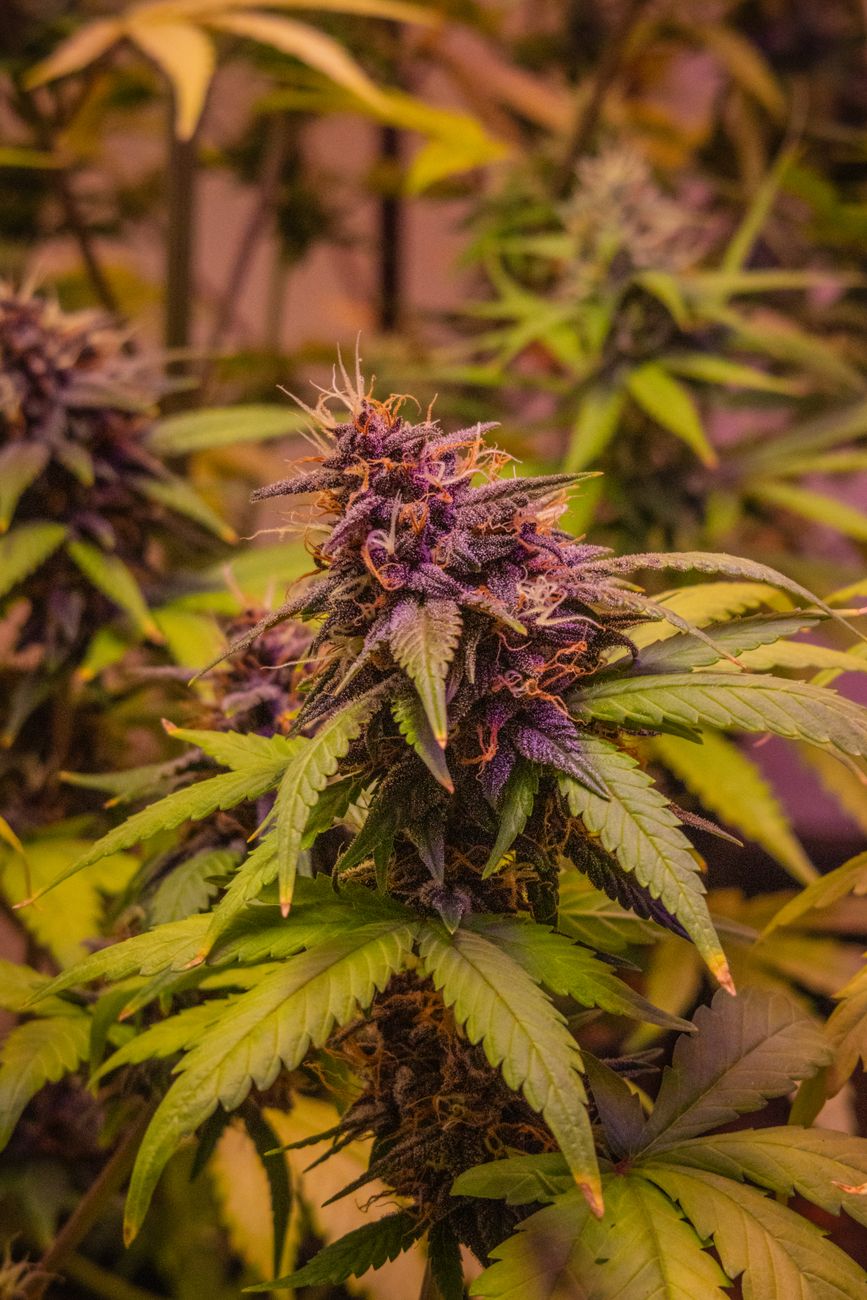
The variables that shift yield within that range most dramatically:
- Light intensity (PPFD): Autos respond well up to 800–900 PPFD; above that, diminishing returns without CO₂ supplementation
- Pot size: 11 L fabric pots support 350–380 g/m²; 15–19 L pots push toward 420–450 g/m²
- Light schedule: 20/4 typically outperforms 18/6 for White Widow Auto by approximately 8–12% based on grower-reported comparisons
- VPD management: Keeping vapour pressure deficit in the 0.8–1.2 kPa range during flower dramatically reduces airy bud formation
- Training: LST (low stress training) from day 14–21 increases canopy coverage and can add 15–20% to per-plant yield without stressing the plant's fixed timeline
Per-plant indoor yields from grower reports average 40–80 g in ungrown/untrained setups and 80–120 g with LST in 15 L pots under quality LED. Running 4–6 plants per m² is typical for White Widow Auto's compact footprint.
350–450 g/m² in 63–70 days is a genuinely competitive indoor yield for the auto category. Growers chasing maximum efficiency per watt-hour should prioritise PPFD management and pot size before anything else. Pair White Widow Auto with quality feminised cannabis seeds Australia options if you're building a mixed indoor garden to stagger harvests across 10–12 week cycles.
What Are White Widow Autoflower Outdoor Yields in Australia?
Outdoor yield for White Widow Auto in Australian conditions ranges from 60–130 g per plant depending on climate zone, sun exposure, pot size, and whether the plant was grown in ground soil or containers.
Key outdoor yield drivers:
- Direct sunlight hours per day: 8+ hours is the threshold for hitting the upper range; below 6 hours, expect 50–70 g/plant
- Container vs in-ground: In-ground plants in rich, well-draining soil consistently outperform container plants by 20–30% due to unrestricted root expansion
- Season timing: October–November starts in southern states outperform December starts by an average of 25–35 g/plant in grower-reported data, likely due to longer daylight exposure during the critical flowering window
- Climate zone: QLD subtropical and Perth Mediterranean growers report the highest outdoor yields; TAS and alpine VIC the lowest
White Widow Auto's compact 60–100 cm height makes it well-suited to balcony, courtyard, and discreet garden grows — important in Australian urban settings where visibility is a practical concern. Where cultivation is permitted, this size profile is a genuine advantage.
60–130 g/plant outdoors is achievable by most Aussie growers without specialist equipment. The strain is not the highest-yielding auto available, but its reliability across wildly different Australian climate zones makes it a safer bet than higher-ceiling strains that are more sensitive to environmental stress. For Aussie growers looking to explore high THC seeds Australia with bigger yield potential, consider running White Widow Auto as the baseline alongside a specialist strain.
What Is White Widow Autoflower's Australian Climate Score?
The Royal King Seeds Australian Climate Score rates auto strains across five weighted dimensions specific to how Australian conditions challenge cannabis genetics.
Heat tolerance: 30% weight — can the strain handle 35–42°C summer peaks (SA, inland NSW, WA)?
Cycle speed: 25% weight — does the cycle fit inside the frost-free window for the relevant climate zone?
Mould resistance: 20% weight — can the plant handle QLD/FNQ autumn humidity without botrytis?
Beginner-friendliness: 15% weight — how forgiving is the strain to common first-timer mistakes?
Yield consistency: 10% weight — how reliably does the strain hit the lower bound of its yield range?
White Widow Autoflower — Australian Climate Score Breakdown
| Dimension | Score (/100) | Notes |
|---|---|---|
| Heat tolerance | 72/100 | Handles up to ~38°C without major stress; above that, shade-cloth recommended |
| Cycle speed | 88/100 | 63–70 days fits comfortably in every Australian state's frost-free window |
| Mould resistance | 68/100 | Medium mould resistance — dense buds need airflow in coastal QLD/NSW |
| Beginner-friendliness | 82/100 | Very forgiving of moderate over/underwatering and nutrient variance |
| Yield consistency | 79/100 | Reliably hits 60 g/plant minimum outdoors across reviewed grower data |
| Overall Australian Climate Score | 77/100 | Excellent all-rounder for Aussie conditions — few comparable autos score higher |
Royal King Seeds Outdoor Risk Rating — White Widow Auto
| Risk Dimension | Rating | Notes |
|---|---|---|
| Heat Stress Risk | Medium | Sensitive above 38°C; watch SA/WA inland grows in December–January |
| Mould Risk | Medium | Dense bud structure traps humidity; defoliate lower third in week 4 of flower |
| Drought Risk | Low | Tolerates dry spells of 3–4 days without major yield impact; indica roots efficient |
| Beginner Risk | Low | One of the most forgiving autos for first-time Aussie growers |
A score of 77/100 places White Widow Auto firmly in the top tier of Aussie-suitable autoflowers. Its biggest vulnerability is mould in high-humidity coastal environments — mitigated easily with defoliation and airflow. Compare it to our full autoflower seeds range if you're weighing it against faster or more mould-resistant options.
How Does White Widow Autoflower Perform Across Australian States?
White Widow Auto is one of the few auto strains that adapts well to nearly every major Australian climate zone. Here's a state-by-state breakdown for growers in jurisdictions where cultivation is legally permitted.
Visual Planting Calendar — Southern Hemisphere
Ideal start (VIC/TAS/NSW)
Ideal start all states
Good start, 2nd run (QLD)
Caution: heat peaks (SA/WA/NT)
Late start — southern states only
High risk (TAS/VIC frost window)
Harvest window for Oct/Nov starts
Last safe harvest (VIC/TAS)
First frosts possible (TAS)
Winter — no outdoor grows
Winter — no outdoor grows
Prep / germination (QLD/NT)
NSW — Temperate Coast + Inland
New South Wales growers on the coast (Sydney, Newcastle, Wollongong) enjoy one of the most consistent growing windows in Australia. White Widow Auto started in October finishes by mid-December — well before any autumn humidity risk. Inland NSW (Orange, Bathurst) has cooler nights; start in October and expect a day 70–75 finish. Growers near Blue Mountains or at altitude should use the 84-day planning formula and avoid February starts.
VIC — Temperate/Cool Temperate
Melbourne's spring is often cold and unpredictable until late October. The safest VIC outdoor window is 1 October–15 November for White Widow Auto. Plants started on 1 October finish around 10 December — perfect. A second run started 20 November finishes around 29 January, well clear of Melbourne's average first autumn frost (around mid-June). Alpine VIC growers should stick to one run, started no later than 1 November.
QLD — Subtropical
Queensland is White Widow Auto's happy place in terms of warmth, but coastal humidity is the main antagonist. Plants flower from roughly day 25, placing peak bud development in the humid January–February window for October starts. Defoliate aggressively at week 4 of flower and ensure airflow. Brisbane-area growers can run two full outdoor cycles (October and January starts) before April. Far North Queensland growers (Cairns, Townsville) should be alert to mould during the wet season.
WA — Mediterranean (Perth) + Inland
Perth's Mediterranean climate is arguably the most reliably suited to White Widow Auto of any Australian capital. Long, dry summers with predictable temperatures mean peak flower development in the December–January heat (shade-cloth recommended above 38°C). An October start finishes around 10 December; a November start finishes around 10 January. Inland WA growers dealing with 40–45°C extremes should prioritise afternoon shade and container growing for repositioning flexibility.
SA — Mediterranean (Adelaide) + Semi-Arid
Adelaide's climate mirrors Perth with slightly cooler winter nights. October–November starts work well; the concern is extreme January heat events (Adelaide holds multiple 40°C+ day records). A shade-cloth setup and drip irrigation keep plants from aborting buds during summer peaks. For SA growers, the 84-day planning window puts an October start finishing comfortably in late December, avoiding the worst of January heat.
TAS — Cool-Temperate
Tasmania is the toughest test for any auto, including White Widow. The frost-free window in Hobart runs roughly early September to early May. An October 1 start finishing around January 24 (84-day formula) gives 101 days buffer before the historical May 5 first frost — safe. Don't push starts past December 1 in TAS; a February finish in Launceston or the Derwent Valley risks cold rain and early frosts. See the Bureau of Meteorology climate data for your specific TAS postcode before planning.
NT — Tropical (Darwin)
Darwin's tropical climate is defined by the wet/dry season split, not a frost calendar. The dry season (May–October) is the optimal outdoor window — low humidity, consistent sun, warm nights. A May or June start finishes in August, squarely in the driest, most stable weather Darwin gets. Avoid outdoor grows during the wet season (November–April) unless you have rain cover; botrytis risk is Very High.
ACT — Temperate/High Altitude
Canberra has the most extreme frost risk of any Australian capital — frosts can occur as late as October and as early as April. For White Widow Auto in the ACT, an October 15 start is the safest minimum. The 84-day formula puts harvest around January 7, well within the safe window. ACT growers should verify specific frost dates via BOM climate records and consider a greenhouse or shade-house setup to extend the window and manage temperature variance.
White Widow Auto is genuinely one of the most climate-versatile autos on the Australian market. The only states requiring significant extra planning are TAS and the ACT due to frost risk, and Darwin/FNQ due to wet-season humidity. Everywhere else, an October–November start delivers a predictable December–January harvest with minimal weather anxiety.
Real Grower Scenario Cards — City-by-City
Frost-free period: year-round in urban areas
Started: 1 October → Harvest: ~9 December (70 days)
Frost buffer: N/A (frost-free year-round)
Second run start: 15 January → Harvest: ~25 March
Result: Two full runs per season. Mould monitoring required Jan–Feb. ✓
Frost-free period: approx. 1 Sept – mid-June
Started: 1 October → Harvest: ~24 December (84-day formula)
Frost buffer: ~162 days (June first frost) ✓
Second run start: 20 November → Harvest: ~12 February
Result: Two comfortable runs with strong buffer. ✓
Historical first frost: ~5 May. Last frost: ~23 Sept
Started: 1 October → Harvest: ~24 January (84 days)
Frost buffer: 101 days ✓ (SAFE)
Result: Single run, comfortable margin. Start by 1 Nov at absolute latest. ✓
Frost risk: minimal in metro. Dry summers ideal.
Started: 1 October → Harvest: ~24 December
Shade-cloth: Recommended mid-Dec for 38°C+ days
Second run start: 1 December → Harvest: ~24 February
Result: Two runs viable. Shade management only. ✓
Dry season: May–October. Wet season: November–April (very high mould risk)
Started: 1 June (dry season) → Harvest: ~24 August
Humidity during flower: Low-Medium (dry season) ✓
Result: Single dry-season run recommended. Avoid all wet-season outdoor grows for White Widow Auto. ✓
What Is the Best Setup for White Widow Autoflower in Australia?
Step 1: Choose the right container
Use 11–15 L fabric pots for standard indoor grows; 19 L for maximum yield targets. Outdoor in-ground planting into amended native soil (add perlite and coco coir for drainage) consistently outperforms containers for outdoor yield. Avoid terracotta pots in hot climates — root zone temperatures above 28°C stall growth.
Step 2: Set your light schedule (indoor)
20 hours on / 4 hours off is the optimal indoor schedule for White Widow Auto based on aggregated grower-journal comparisons. This gives slightly more photosynthesis time than 18/6 without the diminishing returns of 24-hour light. LED at 600–800 PPFD during veg, ramped to 800–900 PPFD at peak flower is ideal.
Step 3: Dial in nutrients early
White Widow Auto is a moderate feeder — not as heavy as some sativa-dominant autos. Start at 50% of recommended nutrient doses in the first two weeks; autos are sensitive to nutrient burn in early veg and the fixed timeline means any recovery time eats into yield. Transition to bloom nutrients at day 21–28 when pre-flowers appear.
Step 4: Apply LST from day 14
Low stress training is the highest-return technique for White Widow Auto. Tie down the main stem from day 14 to expose lower bud sites to light. Do NOT top or heavily defoliate — the compressed timeline doesn't give enough recovery time. By day 28–35, you should have a flat, wide canopy with 4–8 well-lit bud sites per plant.
Step 5: Harvest by trichome colour, not the calendar
Use a 30–60x jeweller's loupe or digital microscope. Harvest when 60–70% of trichomes are milky white with 20–30% turning amber. Clear trichomes = under-ripe. Fully amber = past peak THC, degrading to CBN. For White Widow Auto's balanced effect profile, a 70/30 milky-to-amber ratio delivers the classic euphoric-then-relaxing high the strain is known for.
The biggest setup upgrade most growers can make with White Widow Auto is moving from 18/6 to 20/4 lighting and increasing pot size from the default small containers to 15 L fabric pots. These two changes alone account for the majority of the difference between a 60 g/plant and a 110 g/plant indoor result in aggregated grower data.
Which Setup Should You Choose for White Widow Autoflower?
| I want maximum THC (22%+) | → Consider a high THC auto alongside White Widow Auto — this strain tops at ~22% |
| Shortest possible cycle (sub-60 days) | → Look at 56-day express autos; White Widow Auto at 63–70 days is not the fastest category option |
| High humidity coastal QLD / NT wet season | → White Widow Auto can work with aggressive defoliation; consider a mould-resistant Haze auto for wet-season Darwin grows |
| Cold TAS / ACT / alpine VIC | → White Widow Auto is one of the best fits — 70-day cycle clears frost window comfortably with an October start |
| Hot dry SA / WA / inland NSW | → White Widow Auto handles it with shade-cloth; medium heat tolerance means 38°C+ needs afternoon protection |
| Complete beginner, first auto grow | → White Widow Auto is one of the top 3 recommendations for first-timers — forgiving, predictable, widely documented |
| Small balcony / courtyard, limited height | → Excellent fit — 60–100 cm compact structure is ideal for urban Aussie settings |
| CBD / low psychoactive profile | → Not the right strain; browse our CBD strain range instead |
Common Mistakes Aussie Growers Make With White Widow Autoflower
Mistake 1: Transplanting after day 7
Autoflowers dislike root disturbance during their fixed vegetative window. Transplanting after week 1 can trigger up to 7–10 days of transplant shock — a significant chunk of the total cycle. Germinate directly in the final container or transfer within the first 5–7 days while the seedling is still small enough to shift without root damage.
How to spot it: Yellowing lower leaves, stunted growth, and wilting in an otherwise-healthy plant 7–14 days post-transplant.
Fix: Never transplant autos after day 7. Use jiffy plugs or small starter pots if you need a buffer, and transfer to final pot by day 5.
Mistake 2: Overfeeding in the first two weeks
White Widow Auto seedlings are sensitive to nutrient burn in weeks 1–2. Many first-time Aussie growers push full-dose nutrients from day 7, producing the characteristic nitrogen toxicity "claw" — curled leaf tips curling down and darkening.
How to spot it: Deep green, clawed leaves. Dark, waxy appearance.
Fix: Start at 25–50% of recommended nutrient doses. Gradually increase from week 3 onward.
Mistake 3: Starting too late in southern states
From reviewing grower support questions, this is the most common regret for VIC and TAS growers: starting in December instead of October, then scrambling as April approaches. A December start in Hobart gives a March harvest — technically fine — but leaves no room for extended ripening, weather disruption, or a second look at trichomes.
How to spot it: You're stress-harvesting in late March or April in a cool-climate state.
Fix: Use the 14-Day Buffer Rule and work backwards from your state's last safe harvest date.
Mistake 4: Over-watering in the seedling stage
White Widow Auto seedlings in compact starter pots are vulnerable to root rot if the substrate stays saturated. Watering every day in humid QLD or coastal NSW conditions is a common error in the first two weeks. The seedling's root system is too small to consume available water before anaerobic conditions develop.
How to spot it: Yellowing cotyledons, drooping despite moist soil, slow growth after day 10.
Fix: Water in small circles around the seedling, not the entire pot. Allow top 2–3 cm to dry before re-watering.
Mistake 5: Harvesting by breeder's day count instead of trichomes
Breeder-stated day counts are averages, not guarantees. White Widow Auto can finish anywhere between day 63 and day 75 depending on temperature, VPD, and nutrient availability. Harvesting at day 63 because "that's what the packet says" frequently results in harvesting at 60–70% trichome maturity.
How to spot it: Buds feel dense but trichomes are still clear-to-milky with no amber.
Fix: Buy a 30x–60x loupe. Wait for 60–70% milky + 20–30% amber before harvest regardless of the calendar.
Mistake 6: No defoliation in high-humidity coastal environments
White Widow Auto's dense bud structure creates micro-environments of trapped humidity inside the canopy. In coastal QLD, NSW, or NT wet-season grows, this leads to botrytis (bud rot) as early as week 5 of flower.
How to spot it: Browning pistils inside dense colas before harvest maturity; grey fluffy mycelium inside buds.
Fix: Remove the lower third of fan leaves at day 28–35 (early flower). Don't strip plants bare — aim for 20–30% defoliation to improve airflow without stressing the plant.
Mistake 7: Training too aggressively (topping or heavy defoliation)
White Widow Auto's fixed timeline makes recovery from heavy stress training near-impossible without sacrificing yield. Growers who top their auto at week 2–3 — hoping to create two main colas — frequently end up with two underdeveloped shoots and 20–30% less total yield than LST-only plants from the same batch.
How to spot it: Stunted double-topped plant at week 4 with no significant vertical progress.
Fix: Stick to LST only. If you must top, do it by day 14 maximum and only in warm, fast-metabolising conditions (QLD subtropical).
Looking at the pattern of grower questions our team fields most often, mistakes 1 (late transplanting), 3 (late starts in southern states), and 5 (harvesting by calendar) account for the majority of disappointing White Widow Auto results. Fix these three first and you'll be ahead of most first-time Aussie growers.
What Happens If You Choose the Wrong Strain or Timing?
Strain: White Widow Autoflower
Start date: 1 October (VIC, outdoor)
Harvest date: ~24 December (84-day formula)
Frost buffer: ~163 days (VIC first frost: June)
Risk level: Low
Outcome: Plant finishes in warm December conditions. Dense, resinous buds. Trichomes inspected daily from day 60. Harvested day 68 at 65% milky / 25% amber. Final yield: 95 g/plant (outdoor, 19 L pot, in-ground soil mix).
Strain: Photoperiod White Widow
Start date: 1 October (VIC, outdoor)
Harvest date: Late April (6 months, photoperiod)
Frost buffer: Near-zero (first VIC frosts mid-April+)
Risk level: Very High
Outcome: Plant caught in April cold snaps and early frosts. Trichomes not yet fully matured at harvest — stress-harvested 12 days early. Significant bud rot on lower colas from April rain. Final usable yield: 45 g (vs 250+ g potential indoors).
Bottom line: One genetic choice — auto vs photoperiod — turned a comfortable December harvest into an April scramble, costing 50–80% of realised yield. In southern Australia, calendar fit is the first filter, not THC percentage.
What Patterns Appear Across Australian White Widow Auto Grower Reports?
After reviewing public grower journals and the questions that come up most frequently from Aussie growers during October–December every year, several patterns show up consistently in White Widow Auto grows — particularly for new growers navigating Australian-specific conditions.
The most common theme: growers underestimate the impact of nighttime temperature on finishing time. From grower-reported comparisons of identical batches run in Brisbane vs Melbourne in the same season, the Melbourne plants consistently finished 4–7 days later. This aligns with what we know about cannabis metabolism slowing as temps drop below 18°C at night — a common Melbourne autumn occurrence from March onward.
A second recurring pattern: growers who use fabric pots outdoors consistently report fewer root-bound symptoms and more even watering than plastic pot users. In Australian summer heat, plastic pot walls can reach 45–55°C on the exterior, cooking the root zone even when the growing medium surface appears cool. Fabric pots air-prune roots and dissipate heat — a significant advantage in Perth, Adelaide, and inland NSW conditions.
Third pattern: the "week 6 stall" complaint. This appears frequently in cooler-climate grows — plants that seem to stop developing visible bud growth for 5–7 days around week 5–6 of the total cycle. This is normal trichome maturation, not a nutrient deficiency. Growers who push extra bloom nutrients during this phase frequently cause nutrient burn on late-stage buds, darkening and crisping the edges of remaining fan leaves.
The patterns across public White Widow Auto grower data point to the same core insight: this strain rewards patience in the final 2 weeks more than almost any other intervention. Don't rush harvest, don't push extra nutrients after week 7, and trust the trichome colour over the day count.
Myths vs Reality: White Widow Autoflower
| Myth | Reality |
|---|---|
| "Auto White Widow is much weaker than the original." | Modern auto genetics retain 18–22% THC — within 2–3% of most photoperiod White Widow expressions. The gap has closed dramatically since 2015. |
| "You can't train autoflowers." | LST (low-stress training) is highly effective on autos and regularly adds 20–30% yield in grower-reported comparisons. HST (high-stress) like topping is risky but possible before day 14. |
| "Autos don't need good nutrients." | Autoflowers need the same nutrient profile as photoperiod strains — just at slightly lower concentrations early on. Neglecting bloom nutrients in weeks 4–7 consistently reduces yield and resin production. |
| "White Widow Auto always finishes in exactly 63 days." | Breeder figures are averages. Real-world finish times range from 63 to 75+ days depending on temperature, VPD, and plant health. Always check trichomes. |
| "Outdoor autos always yield less than photoperiod." | Per-plant outdoor yield is lower (60–130 g vs 250–500 g for a large photo). But multiple auto runs per season can exceed a single photoperiod plant's total output — especially in cooler southern states where photoperiod timing is constrained. |
Ready to run White Widow Auto this season? Browse our full range of autoflower seeds for Aussie growers — including fast-finishing, high-THC, and mould-resistant options for every Australian state. Fast, discreet shipping via Australia Post.
Frequently Asked Questions — White Widow Autoflower
How long does White Widow Autoflower take from seed to harvest?
What is the THC content of White Widow Autoflower?
How much does White Widow Autoflower yield indoors?
How much does White Widow Autoflower yield outdoors in Australia?
When should I plant White Widow Autoflower outdoors in Australia?
Can White Widow Autoflower handle Queensland humidity?
Can White Widow Auto handle 35°C+ heat in SA or WA?
How many harvests per year can I get from White Widow Autoflower outdoors?
What pot size is best for White Widow Autoflower?
Should I use 18/6 or 20/4 lighting for White Widow Auto indoors?
Can I top White Widow Autoflower?
Why did my White Widow Auto stall at week 6?
Why are my White Widow Auto buds airy?
Why didn't my White Widow Auto finish in 63 days like the breeder said?
What month should I start White Widow Auto in VIC?
My White Widow Auto seedling isn't rooting — what went wrong?
Should I switch to a shorter-day strain if I'm in TAS?
Can I grow White Widow Auto indoors year-round in Australia?
What's the best nutrient line for White Widow Autoflower in Australia?
What happens if a heatwave hits during White Widow Auto's flowering stage?
Can I shade White Widow Auto plants during 40°C+ days?
Indoor vs direct-sow in TAS — which is better for White Widow Auto?
How long is too long for curing White Widow Auto?
Is White Widow Autoflower good for beginner Aussie growers?
Where can I buy White Widow Autoflower seeds in Australia?
Browse the full Royal King Seeds Australia collection: shop all cannabis seeds — including autoflowers, high THC strains, and CBD strains. Fast dispatch Australia Post nationwide.
Sources
- Bureau of Meteorology — Australian Climate Data (frost dates, rainfall, temperature records by station)
- ABARES — Australian Bureau of Agricultural and Resource Economics and Sciences (regional agricultural data)
- Therapeutic Goods Administration (TGA) — Medicinal Cannabis Regulatory Framework
- PubMed — Cannabis Genetics and Autoflowering Research
- Australian Drug Foundation — Cannabis Information and Harm Reduction
- CSIRO — Australian Agricultural Research
Related Articles
Ready to Start Growing?
Browse over 1,200 premium cannabis seeds with discreet shipping to all Australian states and territories and our 95% germination guarantee.
Shop Cannabis Seeds