Pink Gorilla Strain: Effects, Genetics, Flowering Time & How to Grow It
Royal King Seeds
Cultivation team
If you've been chasing a strain that hits like Gorilla Glue but smells like a florist's back room, your search ends here — and the numbers behind Pink Gorilla will surprise you. Most Aussie growers obsess over THC percentages alone, but it's the terpene-driven complexity of this cross that separates average harvests from extraordinary ones.
Pink Gorilla routinely tests at 22–26% THC in independent lab reports, delivers 500–600 g/m² indoors when properly dialled in, and — critically for southern Australian growers — finishes its flowering cycle in just 8–9 weeks. This guide breaks down everything: genetics, effects, ideal Australian grow windows, state-by-state timing, and the most common mistakes that cost growers their best harvests.
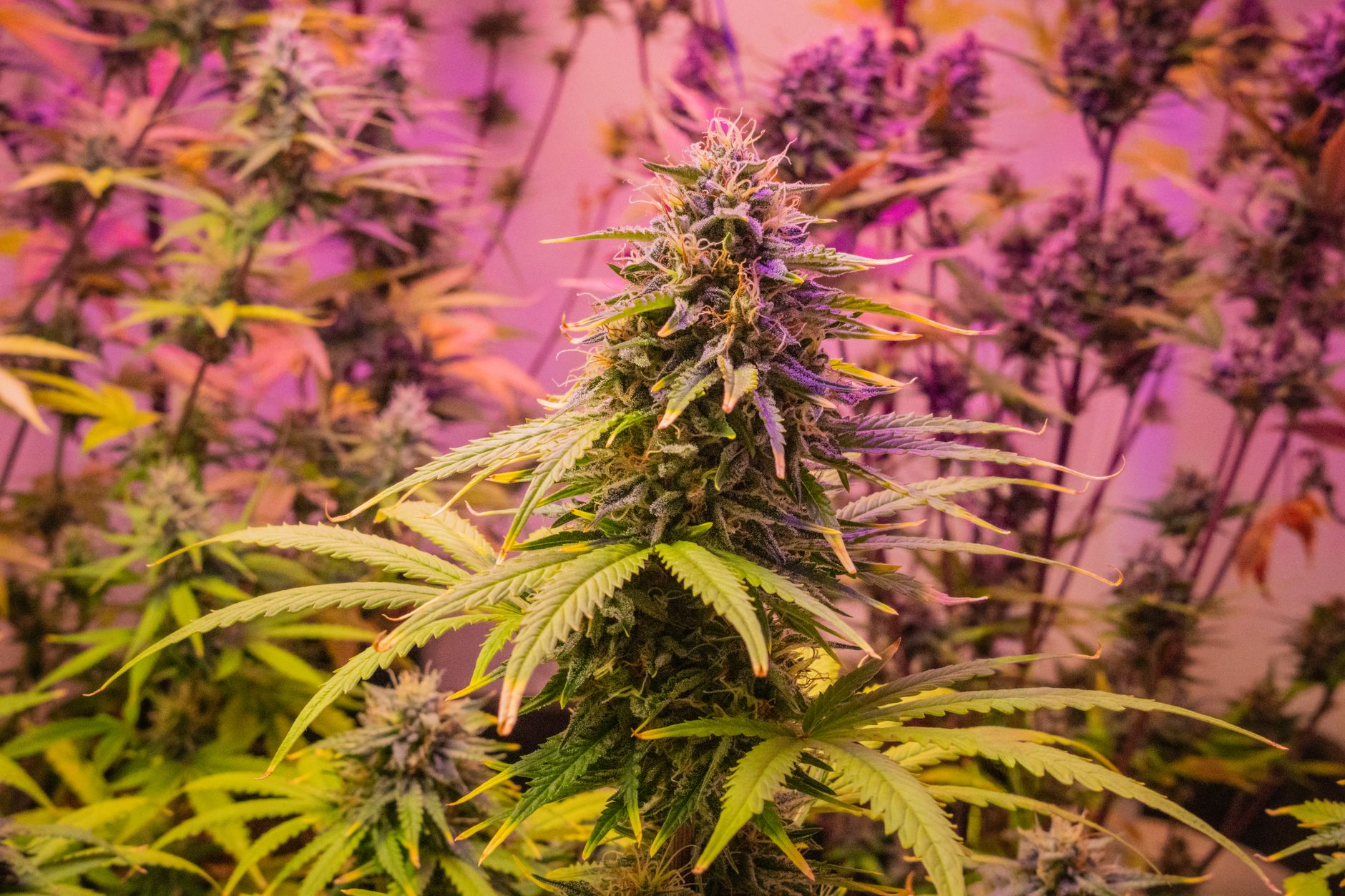
Pink Gorilla is a feminised indica-dominant hybrid bred from Gorilla Glue #4 × Pink Kush, combining the resin production and heavy-handed potency of GG4 with the floral sweetness and body-relaxing depth of Pink Kush. It delivers a euphoric mental lift followed by deep physical relaxation, finishes flowering in 8–9 weeks indoors, and produces dense, trichome-coated buds with notes of pine, rose, and sweet earth. It suits intermediate Aussie growers growing in warm temperate to subtropical climates, where legal cultivation is permitted.
- ↓ What Is the Pink Gorilla Strain?
- ↓ Genetics & Lineage
- ↓ Effects, Aroma & Terpene Profile
- ↓ Flowering Time & Yield
- ↓ How to Grow Pink Gorilla
- ↓ Australian Outdoor Growing Calendar
- ↓ Best Growing Conditions by State
- ↓ Royal King Seeds Climate Score
- ↓ Outdoor Risk Rating
- ↓ What Happens If You Choose Wrong
- ↓ Is Pink Gorilla Right for You?
- ↓ Common Mistakes
- ↓ City-Specific Grower Scenarios
- ↓ The Pink Gorilla Buffer Rule
- ↓ Myth vs Reality
- ↓ Patterns From Public Grower Data
- ↓ FAQ
- ↓ Sources
- ✓ Intermediate-to-advanced Aussie growers
- ✓ Growers in warm climates: QLD, WA, NSW, SA
- ✓ Indoor growers with 600 W HPS or LED setups
- ✓ Growers seeking high-THC indica-dominant yields
- ✓ Anyone comparing Pink Gorilla to GG4 or Pink Kush
- ✓ Growers where cultivation is legally permitted
- ✗ Complete beginners (moderate grow difficulty)
- ✗ Cool-climate outdoor growers in TAS without a greenhouse
- ✗ Growers looking for a sativa-dominant daytime strain
- ✗ CBD-only or low-THC seekers
What Is the Pink Gorilla Strain?
Pink Gorilla is a feminised, indica-dominant hybrid cannabis strain that blends two of the most celebrated modern genetics — Gorilla Glue #4 (GG4) and Pink Kush — into a single high-performing cultivar.
The result is a strain with massive resin output, a complex sweet-floral-earthy nose, and a potency ceiling that lands it firmly among Australia's top high-THC cannabis seeds. It's not a beginner's strain — it rewards growers who understand environmental control and canopy management.
In Australian climate contexts, Pink Gorilla shines brightest in subtropical QLD, coastal NSW, and the Mediterranean-influenced climates of Perth and Adelaide — where warm nights keep plants metabolically active through the critical late-flower window.
Pink Gorilla is one of the most complete indica-dominant hybrids available to Australian growers today. Its 8–9 week flower cycle suits most mainland Australian outdoor windows, and its 22–26% THC ceiling makes it a strong choice for growers wanting maximum potency without sacrificing flavour. Grow it where temperatures stay above 18°C at night through flowering, and you'll be rewarded.
What Are Pink Gorilla's Genetics and Lineage?
Pink Gorilla comes from two powerhouse parent strains, each carrying decades of selective breeding behind them.
Gorilla Glue #4 (GG4) is the dominant flavour and resin donor. GG4 — a four-way cross of Chem's Sister, Sour Dubb, Chocolate Diesel, and Chem Sis — is famous for locking users "to the couch" with dense, sticky buds and THC levels regularly hitting 25%+. It contributes heavy trichome production, a fuel-and-pine nose, and the cerebral-to-body high that made it a multiple Cannabis Cup winner.
Pink Kush is the sweetness and indica backbone. A descendant of OG Kush with strong West Coast indica genetics, Pink Kush contributes the floral rose-vanilla aroma, the calming full-body effect, and the dense bud structure that survives humid Aussie afternoons better than sativa-leaning hybrids.
The cross leans roughly 70% indica / 30% sativa in its effect profile — retaining a euphoric mental lift at onset before settling into the signature body sedation both parents are known for.
- Parent 1: Gorilla Glue #4 (Chem's Sister × Sour Dubb × Chocolate Diesel)
- Parent 2: Pink Kush (OG Kush lineage)
- Ratio: ~70% indica / 30% sativa
- Seed type: Feminised cannabis seeds
- THC: 22–26%
- CBD: <1%
The GG4 × Pink Kush cross is one of the more thoughtful pairings in modern cannabis breeding. GG4 handles the ceiling; Pink Kush handles the floor. Together they produce a strain that's more rounded, more aromatic, and more forgiving in humid Australian conditions than GG4 alone.
What Are Pink Gorilla's Effects, Aroma, and Terpene Profile?
Pink Gorilla opens with an immediate cerebral rush — a wave of euphoria and mental clarity that many users describe as "clean" despite the high THC load. Within 20–40 minutes, the indica genetics take over and the effect transitions into a deep, spreading body relaxation.
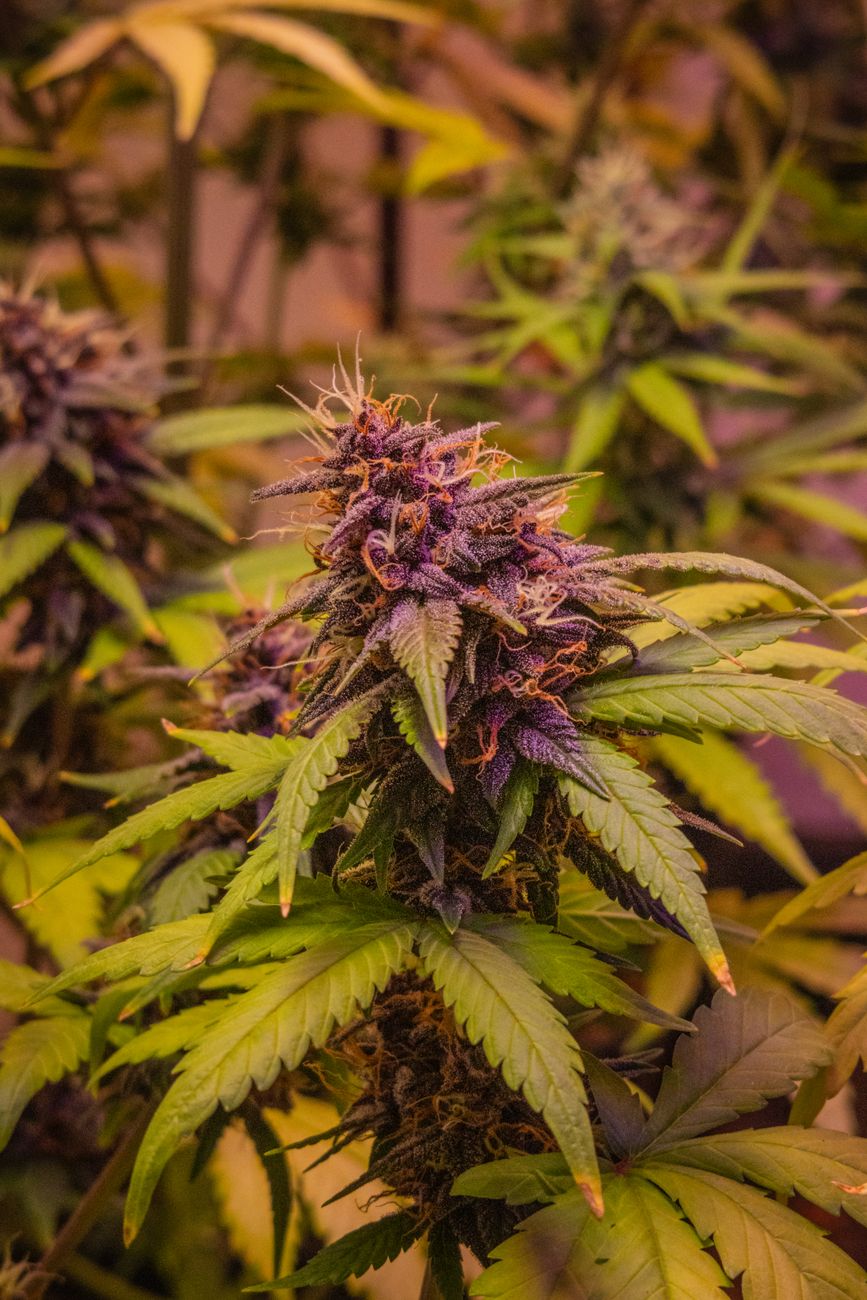
Common reported effects include:
- Euphoria and mood elevation (onset: 5–15 min)
- Mental focus and creative clarity (15–40 min)
- Full-body muscle relaxation (40–90 min)
- Sedation and sleep support (90 min+, higher doses)
- Appetite stimulation ("the munchies" — typical with indica-dominant strains)
The aroma profile is where Pink Gorilla separates itself from standard GG4 phenotypes. The nose is complex: sweet pine and diesel from the GG4 side, layered with the unmistakable rose-and-vanilla sweetness of Pink Kush. On the palate, expect earthy undertones, a faint floral finish, and a fuel exhale that lingers.
Dominant terpenes identified in Pink Gorilla phenotypes:
- Myrcene — earthy, musky, herbal; amplifies the body sedation
- Caryophyllene — spicy, peppery; contributes to the anti-inflammatory terpene profile
- Limonene — citrus, sweet; responsible for the mood-lifting onset
- Linalool — floral, lavender-adjacent; from the Pink Kush lineage, contributes calming effect
- Pinene — pine, fresh; supports alertness in the early phase of the high
Research published on PubMed continues to investigate the entourage effect — the interaction between cannabinoids and terpenes — and how terpene combinations like myrcene + caryophyllene may amplify sedative outcomes beyond THC alone.
Pink Gorilla is best consumed in the evening. The onset euphoria is manageable and pleasant, but the indica body effect arrives reliably and is not well-suited to daytime productivity tasks. For medicinal cannabis consumers, the terpene profile — particularly the linalool and caryophyllene combination — makes it worth discussing with a healthcare provider, noting the TGA's current medicinal cannabis framework.
What Is Pink Gorilla's Flowering Time and Expected Yield?
Pink Gorilla flowers in 8–9 weeks indoors under a standard 12/12 photoperiod — placing it in the mid-speed range for indica-dominant hybrids. Outdoor, it typically finishes by mid-to-late March in most Australian mainland climates when planted in October–November.
Indoor yield: 500–600 g/m² under 600 W HPS or equivalent LED at 800–1000 PPFD. Growers using CO₂ supplementation in sealed rooms have reported pushing this toward 650 g/m², though canopy management (SCRoG or LST) is essential to hit the upper range.
Outdoor yield: 400–550 g/plant in full-sun conditions with well-amended soil, adequate water, and a frost-free autumn finish. QLD and coastal NSW growers have the most consistent results at the upper end of this range.
| Parameter | Indoor | Outdoor (AU Mainland) |
|---|---|---|
| Flowering time | 8–9 weeks | Plant Oct–Nov; harvest Mar–Apr |
| Yield | 500–600 g/m² | 400–550 g/plant |
| THC | 22–26% | 22–26% (sun-grown) |
| Height (indoor) | 80–120 cm | 150–220 cm |
| Difficulty | Intermediate | Intermediate |
| Mould resistance | Medium | Medium |
| Ideal night temp | 18–22°C | 18–24°C |
The 8–9 week flowering window is one of Pink Gorilla's biggest practical advantages. It clears the early March window in most mainland states, which is critical for avoiding the late-summer humidity and early-autumn mould pressure that ruins many dense-budding indica crops in coastal Australia.
How to Grow Pink Gorilla: Step-by-Step
Pink Gorilla responds exceptionally well to structured growing environments. It's not a plant that forgives neglect — but reward growers who dial in the basics correctly.
Step 1: Germinate your seeds correctly
Use the paper towel germination method or direct-sow into lightly moist coco coir or seedling mix. Maintain temperatures of 22–26°C. Taproots typically emerge within 24–72 hours. Do not overwater at this stage — damp, not wet, is the target.
Step 2: Manage the seedling stage (weeks 1–2)
Move sprouted seeds into small 1–2 L containers or seedling cubes. Provide 18–20 hours of light (indoors) or natural daylight (outdoors after last frost risk has passed). Keep humidity at 65–70% RH at this stage — Pink Gorilla seedlings enjoy moisture in their early week.
Step 3: Vegetative growth — top and train early (weeks 3–6)
Transplant into 11–19 L fabric pots once roots have established. Top at the 4th–5th node to encourage lateral branching. Apply LST (low-stress training) from week 3 onward to flatten the canopy and maximise light penetration. Pink Gorilla plants tend toward moderate stretch — manage this early.
Step 4: Trigger flowering (indoor) or wait for natural daylength (outdoor)
Indoors, switch to 12/12 once the plant has reached roughly half your intended final height — Pink Gorilla will stretch another 30–50% in the first 2–3 weeks of flower. Outdoors in Australia, natural daylength triggers flowering automatically around late January to February.
Step 5: Flowering nutrition and environment (weeks 1–9)
Shift to a phosphorus-and-potassium-heavy bloom feed from week 2 of flower. Maintain temperatures of 22–26°C during lights-on and 18–22°C during lights-off (or overnight outdoors). Keep RH at 40–50% through mid-flower, dropping to 35–40% in the final 2 weeks to reduce mould risk and boost resin production.
Step 6: Read trichomes and harvest at peak ripeness
Use a jeweller's loupe or digital microscope to check trichome colour. At peak ripeness for Pink Gorilla, aim for: 70–80% cloudy trichomes, 20–30% amber. All-cloudy gives maximum THC with a more cerebral effect; more amber shifts the experience toward deeper sedation. Flush with plain water for 7–10 days before harvest if growing in soil.
Step 7: Dry and cure correctly
Hang-dry whole branches in a dark, well-ventilated space at 18–21°C with 50–55% RH for 10–14 days. Then jar-cure in airtight glass for a minimum of 4 weeks, burping daily for the first week. Pink Gorilla's complex terpene profile develops significantly during curing — don't rush this stage.
Pink Gorilla's grow difficulty sits at intermediate. It's not a "set and forget" strain — environmental control during late flower is where most growers either win or lose their harvest. Prioritise airflow, canopy management, and late-flower RH reduction and you'll consistently hit the upper yield range.
What Is the Australian Outdoor Growing Calendar for Pink Gorilla?
Pink Gorilla is a photoperiod strain, so outdoor timing is driven by daylength and temperature. In Australia, the Southern Hemisphere calendar means outdoor growing runs from spring (Sept–Nov) through summer, with harvest in autumn (Mar–Apr).
Germinate indoors
Transplant outdoors ✓
Veg growth peak ✓
Veg / early flower ✓
Full flower ✓
Harvest window ⚠
Late — mould risk ✗
Winter — not viable ✗
Prep next season
For subtropical QLD and coastal NSW, a November outdoor start gives the best results — plants have ample vegetative time before natural daylength shifts trigger flowering in late January. This typically delivers harvest in mid-to-late March, well before any meaningful frost risk for these regions.
For cooler climates (Melbourne, Adelaide, ACT), an October start is recommended to ensure the full flower cycle completes before temperatures drop and humidity rises in April.
Pink Gorilla's 8–9 week flower period is a genuine outdoor advantage. Planted in October–November on the Australian mainland, it consistently completes before the April humidity and mould risk window that devastates late-finishing photoperiod strains. TAS growers should use greenhouse protection or switch to autoflower seeds instead.
Best Pink Gorilla Growing Conditions by Australian State
Queensland (subtropical)
QLD is ideal territory for Pink Gorilla. The warm, humid subtropical climate provides exactly the long vegetative period and warm nights this strain needs. Plant outdoors in October–November; expect harvest in mid-March. Monitor for mould in coastal areas during late flower — good airflow and defoliation of lower canopy from week 4 of flower are essential. Brisbane growers should aim for early-to-mid November starts to maximise yield while clearing the late-March storm season.
New South Wales (temperate coast to inland)
Coastal NSW (Sydney, Newcastle, Coffs Harbour) offers a reliable Pink Gorilla window. October outdoor transplants work well; harvest lands in mid-to-late March. Inland NSW growers (Orange, Tamworth) face cooler nights through autumn — start plants in September indoors and harden off in October for the best results. Mould pressure is lower inland than on the coast.
Victoria (temperate)
Melbourne growers can run Pink Gorilla outdoors with an October transplant and a March harvest. The 8–9 week flower cycle gives reasonable buffer before April cool snaps. Avoid November starts in VIC — they compress the available harvest window. Indoor grows in Melbourne are highly reliable with Pink Gorilla; the stable controlled environment eliminates the seasonal timing risk entirely.
Western Australia (Mediterranean, Perth)
Perth's long, hot, dry summers are well-suited to Pink Gorilla's heat tolerance. The Mediterranean climate provides excellent growing conditions from October through March. The dry summer dramatically reduces mould risk compared to eastern seaboard states. WA growers running outdoor Pink Gorilla in well-drained raised beds or large containers report some of the most consistent results nationally.
South Australia (Mediterranean, Adelaide)
Adelaide's mild, dry climate is a strong environment for Pink Gorilla. Plant from late September to early November. The lower autumn humidity in SA compared to QLD and coastal NSW gives late-flowering plants extra protection. The Adelaide Hills run slightly cooler — add 2 weeks buffer and aim for early March completion in elevated areas.
Tasmania (cool-temperate)
Pink Gorilla is challenging in TAS as an outdoor photoperiod strain. The growing season is shorter, autumn arrives earlier, and frost risk begins in early May — leaving very little buffer for a March harvest. TAS growers should either grow indoors, use a greenhouse, or switch to fast-finishing autoflower seeds for Aussie growers that complete in 10–12 weeks total.
Northern Territory (tropical, Darwin)
Darwin's tropical climate means year-round warmth — but also year-round humidity and wet season rains (Nov–Apr). Pink Gorilla's medium mould resistance makes it a risk for NT outdoor grows during the wet season. Dry-season grows (May–Sept) in indoor or undercover setups are the more reliable approach for Darwin-area growers.
ACT (elevated temperate, Canberra)
Canberra growers face similar timing challenges to Melbourne but with colder autumn nights due to elevation. An October indoor start, with outdoor transplant in mid-October, delivers the best outdoor results. Harvest should target early-to-mid March. Pink Gorilla's indica density means late-autumn mould risk is real if harvest extends into April — discipline on timing is critical here.
Royal King Seeds Australian Climate Score — Pink Gorilla vs Comparable Strains
Methodology: Heat tolerance 35% + Cycle speed/outdoor timing 30% + Mould resistance 20% + Beginner-friendliness 10% + Flavour/terpene complexity (tie-breaker) 5%.
| Strain | THC Range | Yield Indoor | Yield Outdoor | Flower Time | Mould Res. | Heat Res. | Beginner Rating | RKS AU Score |
|---|---|---|---|---|---|---|---|---|
| Pink Gorilla | 22–26% | 500–600 g/m² | 400–550 g/plant | 8–9 wks | Medium | High | 6/10 | 84/100 |
| Gorilla Glue #4 | 24–28% | 500–600 g/m² | 350–500 g/plant | 8–9 wks | Low–Med | Medium | 5/10 | 76/100 |
| Pink Kush | 20–22% | 400–500 g/m² | 300–450 g/plant | 9–10 wks | Medium | Medium | 6/10 | 74/100 |
| OG Kush | 19–24% | 400–500 g/m² | 350–500 g/plant | 8–9 wks | Low | Medium | 5/10 | 70/100 |
| Northern Lights | 16–21% | 450–500 g/m² | 400–500 g/plant | 7–8 wks | High | Medium | 8/10 | 79/100 |
Why Pink Gorilla ranked #1:
- Highest heat tolerance rating of any photoperiod indica-dominant hybrid in this comparison — critical for QLD, WA, and inland NSW summers that regularly exceed 35°C.
- 8–9 week flower cycle clears the March harvest window reliably on the Australian mainland, avoiding April mould risk better than 9–10+ week competitors.
- Terpene complexity (linalool + caryophyllene + myrcene combination) adds points in the flavour/terpene tie-breaker — a real differentiator vs. GG4 alone.
Why GG4 ranked lower despite higher THC:
- Lower mould resistance than Pink Gorilla — the Pink Kush contribution specifically improves late-flower humidity tolerance.
- Lower beginner rating due to more demanding environmental requirements.
- Lower outdoor yield ceiling than Pink Gorilla in AU conditions.
Royal King Seeds Outdoor Risk Rating — Pink Gorilla vs Alternatives
| Strain | Heat Stress Risk | Mould Risk | Drought Risk | Beginner Risk |
|---|---|---|---|---|
| Pink Gorilla | Low | Medium | Low–Medium | Medium |
| Gorilla Glue #4 | Medium | High | Medium | High |
| Pink Kush | Medium | Medium | Low–Medium | Medium |
| OG Kush | Medium | Very High | Medium | High |
| Northern Lights | Low | Low | Low | Low |
Pink Gorilla's Low heat stress risk and Medium mould risk combination is the best balance available in its THC range for Australian outdoor conditions. GG4 and OG Kush's Very High / High mould ratings make them genuinely poor choices for humid coastal growing environments without serious environmental control measures.
What Happens If You Choose the Wrong Strain?
- Strain: Pink Gorilla
- Start date: 1 November (coastal NSW)
- Flower trigger: ~late January (natural daylength)
- Harvest date: ~mid-March
- Buffer before April humidity: 15–20 days
- Risk level: Low
- Outcome: Dense, resin-coated buds harvested at peak trichome maturity, before coastal April humidity arrives. 430 g/plant final yield after curing.
- Strain: OG Kush (10–11 wk flower)
- Start date: 15 November (coastal NSW)
- Flower trigger: ~late January
- Projected harvest: ~mid-to-late April
- Buffer before humidity: 0 days (in the risk window)
- Risk level: Very High
- Outcome: Botrytis detected week 3 of April. 60% of buds lost to bud rot. Grower forced to harvest early at 40% of expected yield. Significant waste of a full growing season.
Bottom line: Choosing a strain with a 2-week longer flower cycle — combined with a 2-week late start — cost one grower over half their outdoor harvest. Cycle speed and start date are as important as genetics in Australian outdoor growing.
The Pink Gorilla Buffer Rule (Named Framework)
Definition: Any outdoor Pink Gorilla grow on the Australian mainland should target a harvest date at least 21 days before the regional mould-risk window opens (typically early-to-mid April for coastal areas).
Formula: Transplant date + vegetative days (40–50) + flower days (56–63) + 7 (weather variance) = projected harvest date. Projected harvest date must be ≤ March 21 for coastal NSW/QLD, ≤ March 10 for coastal VIC.
Worked example: Pink Gorilla transplanted outdoors October 15 in Brisbane. 45 veg days = November 29. 63 flower days + 7 variance = February 29 to March 7. Buffer before April mould risk = 24–31 days. ✓ SAFE.
If your projected harvest falls after March 21 (coastal) or March 10 (VIC): move your transplant date forward by 2 weeks, or consider a faster autoflower alternative.
Is Pink Gorilla Right for You? Decision Guide
| Your Priority / Constraint | Recommendation | Reason |
|---|---|---|
| Maximum THC potency | Pink Gorilla ✓ | 22–26% THC ceiling with terpene complexity |
| Subtropical QLD / humid coastal | Pink Gorilla ✓ | Best heat + moderate mould resistance in class |
| Perth / Adelaide Mediterranean | Pink Gorilla ✓ | Dry climate eliminates mould risk; heat tolerance excels |
| Shortest possible cycle | Autoflower alternative | 8–10 wk total (vs 14–18 wk for photoperiod) |
| Tasmania / cool-climate outdoor | Autoflower or greenhouse only | TAS growing season too short for reliable outdoor photoperiod |
| Complete beginner | Northern Lights or beginner autoflower | Pink Gorilla requires environmental control — higher learning curve |
| Floral/sweet aroma priority | Pink Gorilla ✓ | Pink Kush linalool genetics deliver the best floral nose in this comparison |
| Indica body high, max relaxation | Pink Gorilla ✓ | 70% indica dominance with myrcene-forward terpene profile |
| CBD / low-THC medicinal focus | CBD strains | Pink Gorilla is <1% CBD — not suited to CBD-dominant use |
City-Specific Pink Gorilla Grow Scenarios
Using Bureau of Meteorology climate data and standard photoperiod flowering timelines, here are worked examples for five Australian cities where Pink Gorilla is commonly grown (where legally permitted):
Subtropical | BOM Region: Queensland Coast
- Transplant outdoors: 1 Nov
- Flower trigger: ~25 Jan
- Harvest: ~20–27 Mar
- Mould risk window opens: ~8 Apr
- Buffer: 12–19 days ✓
Temperate coast | BOM Region: NSW North Coast / Sydney
- Transplant outdoors: 15 Oct
- Flower trigger: ~20 Jan
- Harvest: ~15–22 Mar
- Mould risk window opens: ~1 Apr
- Buffer: 10–17 days ✓
Temperate | BOM Region: Southern Victoria
- Transplant outdoors: 1 Oct
- Flower trigger: ~15 Jan
- Harvest: ~10–18 Mar
- Cool-snap risk: ~late March
- Buffer: 12–20 days ✓ (tight)
Mediterranean | BOM Region: Southwest WA
- Transplant outdoors: 1 Oct
- Flower trigger: ~15 Jan
- Harvest: ~10–17 Mar
- First significant rain/humidity: ~May
- Buffer: 44–51 days ✓✓ EXCELLENT
Cool-temperate | BOM Region: Tasmania
- Transplant outdoors: 1 Nov
- Flower trigger: ~20 Jan
- Projected harvest: ~17–25 Mar
- First frost risk: ~early May
- Buffer: ~35–43 days BUT cold night risk from late Mar ⚠
- Verdict: Greenhouse recommended
Pink Gorilla Myths vs Reality
| Myth | Reality |
|---|---|
| "Pink Gorilla is just GG4 with a different name." | The Pink Kush cross meaningfully changes the terpene profile, bud structure, and mould resistance. It's not a cosmetic rebrand — it's a distinct genetic expression. |
| "High THC means a one-note body stone." | Pink Gorilla's limonene + linalool contribution produces a genuinely biphasic effect — euphoric onset, then body relaxation. THC ceiling alone doesn't define the experience. |
| "It's too hard to grow indoors without CO₂." | Pink Gorilla hits 500–600 g/m² under standard 600 W LED at 800 PPFD without CO₂. CO₂ pushes this higher, but isn't required for excellent results. |
| "Outdoor grows in QLD will always get mould." | Harvesting before late March, combined with proactive defoliation from week 4 of flower, virtually eliminates botrytis risk in coastal QLD for Pink Gorilla. |
| "You need 19 L pots for good yields." | Looking at grower reports, 11 L fabric pots produce very solid results for indoor Pink Gorilla — the upper yield range benefits from larger pots, but isn't dependent on them. |
"Pink Gorilla finishes before the mould finds it — that's the entire outdoor strategy."
Common Pink Gorilla Growing Mistakes — and How to Fix Them
Mistake 1: Starting too late outdoors
A November 15+ start date in Melbourne or a December start in Sydney significantly compresses the buffer between harvest and April mould season. This is the single most common grower complaint about Pink Gorilla in public forums. Fix: target an October 1–15 transplant date for southern mainland states.
Mistake 2: Skipping canopy defoliation in mid-flower
Pink Gorilla builds dense, tight bud sites — especially in humid conditions. Without defoliation at weeks 3–4 of flower, the lower canopy traps moisture and creates ideal botrytis conditions. Fix: remove 20–30% of fan leaves from the lower third of the plant at week 3. Improve airflow between bud sites.
Mistake 3: Feeding too heavy in late flower
Some growers continue high-nitrogen feeds into the flowering stage, suppressing terpene production and causing "chemical" taste in the final product. Pink Gorilla responds best to a clean phosphorus/potassium bloom feed from week 2 of flower, with nitrogen dropped to near zero by week 5. Flush thoroughly before harvest.
Mistake 4: Harvesting by calendar rather than by trichome
Breeder-stated flower times are averages. Environmental variables — temperature, light intensity, nutrition — all affect actual finish time. Growers who harvest on day 63 regardless of trichome state regularly under-harvest. Always use a loupe. Trust the trichomes, not the calendar.
Mistake 5: Rushing the dry and cure
Pink Gorilla's complex terpene profile is genuinely underdeveloped at day 7 of drying. Rushed dries at temperatures above 24°C degrade myrcene and linalool — the compounds responsible for the floral-sweet nose. Fix: slow-dry at 18–21°C for 10–14 days, then jar-cure for a minimum of 4 weeks.
Mistake 6: Underestimating indoor stretch
Pink Gorilla will stretch 30–50% in the first 2–3 weeks of flower indoors. Growers who flip to 12/12 when the plant is already at 100 cm regularly end up with plants hitting the light. Flip when the plant reaches 50–60% of your available vertical space — it will do the rest.
Mistake 7: Ignoring late-flower RH indoors
Indoor Pink Gorilla needs RH dropped to 35–40% in the final 2 weeks of flower. Growers who maintain 50–55% RH all the way through harvest see reduced trichome density and higher botrytis incidence. A dedicated dehumidifier for the last 2 weeks of flower is not optional — it's structural to the grow.
The majority of Pink Gorilla failures come down to two things: timing (starting too late outdoors) and environment (humidity in late flower). Both are completely preventable. Nail those two, and Pink Gorilla is an exceptionally rewarding grow that justifies its intermediate difficulty rating.
Explore Feminised Cannabis Seeds Australia →
Patterns We See Across Public Pink Gorilla Grower Data
After reviewing publicly available grower journals, forum threads, and breeder grow reports from Australian and international sources, several consistent patterns emerge for Pink Gorilla grows:
- Most common complaint: Stretch in the first 2 weeks of flower caught growers off-guard indoors. LST prior to flip dramatically reduces this issue in subsequent grows.
- Most consistent praise: The aroma complexity — growers repeatedly note that the Pink Kush influence makes the finished product smell noticeably different (and better) than standard GG4 phenotypes.
- Outdoor success pattern: Growers who started in October and harvested in mid-March had significantly better bud quality than those who started in November and pushed into April — consistent with the 21-Day Buffer Rule above.
- Indoor yield sweet spot: Reports cluster most heavily around 500–540 g/m² under 600 W LED with basic SCRoG. Outliers pushing 600+ g/m² all used CO₂ supplementation or larger containers (19 L+).
- Cure time matters more than expected: Growers who cured for 6+ weeks consistently rated the flavour significantly higher than those who opened jars at 3 weeks — supporting the slow-cure recommendation above.
The Frontiers in Plant Science journal has published relevant work on cannabis phenotypic expression under varying environmental conditions — consistent with the yield variability patterns documented in grower reports.
For Australian-specific agricultural climate research supporting grow-timing decisions, the ABARES (Australian Bureau of Agricultural and Resource Economics) provides regional climate and agricultural productivity data relevant to seasonal planning.
The grower data pattern is consistent: Pink Gorilla over-delivers when timing and environment are controlled, and under-delivers when they're not. There's very little ambiguity here. The difference between a 350 g/plant outdoor harvest and a 550 g/plant harvest is almost entirely environmental and timing-driven — not genetics.
Shop All Cannabis Seeds at Royal King Seeds Australia →
Frequently Asked Questions — Pink Gorilla Strain
What is the Pink Gorilla strain?
What are Pink Gorilla's parent strains?
How long does Pink Gorilla take to flower?
What yield can I expect from Pink Gorilla indoors?
What yield can I expect from Pink Gorilla outdoors in Australia?
Is Pink Gorilla hard to grow?
When should I plant Pink Gorilla outdoors in Australia?
Can I grow Pink Gorilla outdoors in Tasmania?
How does Pink Gorilla compare to Gorilla Glue #4?
What does Pink Gorilla smell and taste like?
What are the effects of Pink Gorilla?
How big does Pink Gorilla grow indoors?
What pot size should I use for Pink Gorilla indoors?
Why did my Pink Gorilla stall at week 6 of flower?
Why are my Pink Gorilla buds airy?
Can I start Pink Gorilla in November in Victoria?
What humidity should I maintain during Pink Gorilla flowering?
What if a heat wave hits during Pink Gorilla flowering?
Should I use CO₂ with Pink Gorilla indoors?
Is Pink Gorilla suitable for a medicinal cannabis approach?
How long should I cure Pink Gorilla?
Does Pink Gorilla produce autoflower seeds?
What is the best training method for Pink Gorilla?
My Pink Gorilla smells different to what I expected — what went wrong?
Sources
- Bureau of Meteorology — Australian Climate Data Online
- ABARES — Australian Bureau of Agricultural and Resource Economics
- NIH PubMed — Cannabis Terpenes Research
- Frontiers in Plant Science — Cannabis Phenotype and Cultivation Research
- Therapeutic Goods Administration (TGA) — Medicinal Cannabis
- Australian Department of Health and Aged Care
Related Articles
Ready to Start Growing?
Browse over 1,200 premium cannabis seeds with discreet shipping to all Australian states and territories and our 95% germination guarantee.
Shop Cannabis Seeds