Purple Weed Strain: Effects, Genetics, Flowering Time, and How to Grow It
Royal King Seeds
Cultivation team
Your biggest enemy when chasing purple colour isn't bad genetics — it's growing in a climate that never gets cold enough to trigger it. Most Aussie growers buy a purple strain, grow it through a warm QLD autumn, and wonder why their buds came out plain green. The culprit is anthocyanin chemistry: purple pigments only express when night temperatures drop below 15°C during late flower.
Get that temperature window right, and purple genetics will reward you with dense, violet-flushed buds, 18–26% THC, and a deeply relaxing body effect that makes these strains some of the most sought-after on the market. This guide covers everything — genetics, effects, flowering times, state-by-state grow strategy, and a proprietary Australian Climate Score for the top purple strains available right now.
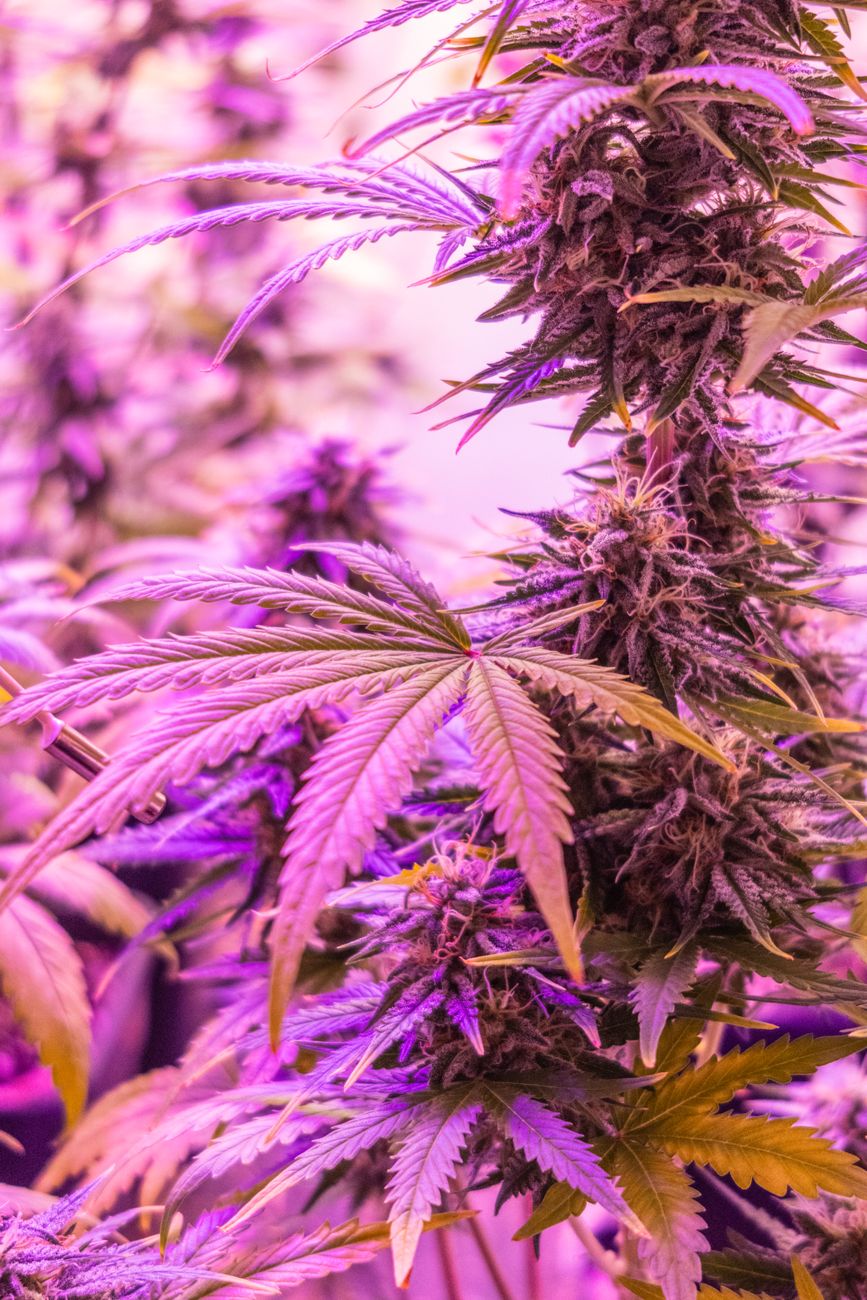
Purple weed strains are cannabis varieties carrying elevated anthocyanin genetics — the same pigment family responsible for blueberries and red cabbage. When night temperatures fall below 15°C during the final 2–4 weeks of flowering, chlorophyll breaks down and anthocyanins become visible, turning buds deep purple, violet, or indigo. These strains typically flower in 8–10 weeks, yield 400–600 g/m² indoors, and carry indica-dominant effects: heavy body relaxation, sedation, and earthy-sweet flavour profiles. In southern Australia (VIC, TAS, SA highlands), the autumn temperature drop naturally triggers colour. In warmer climates, indoor growers can replicate the effect by dialling night temps down to 13–15°C in the final three weeks.
- What Is a Purple Weed Strain?
- What Genetics Make Weed Turn Purple?
- What Are the Effects of Purple Weed Strains?
- What Is the Flowering Time for Purple Strains?
- Top Purple Weed Strains: Australian Climate Score
- How to Grow Purple Weed in Australia
- Best Purple Strains by Australian State
- Purple Grow Calendar: Southern Hemisphere
- Royal King Seeds Purple Strain Risk Rating
- Which Purple Strain Should You Choose?
- What Happens If You Choose Wrong
- Common Purple Grow Mistakes to Avoid
- Purple Weed Myths vs Reality
- Patterns From Public Purple Grow Reports
- FAQ
- Sources
- ✓ Aussie growers wanting vivid purple colour expression
- ✓ Indoor growers who can control night temperatures
- ✓ Southern AU outdoor growers (VIC, TAS, SA, ACT)
- ✓ Growers seeking indica-dominant body effects
- ✓ Anyone choosing between purple photoperiod vs auto genetics
- ✓ First-time strain reviewers wanting science-backed info
- ✗ Warm-climate outdoor growers expecting purple without temp control
- ✗ Growers prioritising pure sativa / energetic daytime effects
- ✗ Those in jurisdictions where cultivation is not legally permitted
- ✗ Growers unwilling to manage late-flower temperature drops
What Is a Purple Weed Strain?
A purple weed strain is any cannabis variety carrying genetics that produce elevated levels of anthocyanin pigments in their buds, leaves, or calyxes during the late flowering phase.
Anthocyanins are a class of flavonoid compounds — the same pigments that make blueberries blue and autumn leaves red. In cannabis, they're masked by green chlorophyll during most of the plant's life cycle. As flower ripens and nights cool, chlorophyll degrades and anthocyanins become visible.
Critically, not all "purple strains" will express colour in every grow. The genetics must carry the anthocyanin trait AND the environment must drop below 15°C at night to trigger it. In Australia, this matters enormously depending on your state and season. Where legally permitted, growers in southern states can leverage natural autumn cool-downs; indoor growers anywhere can dial night temps deliberately.
What Genetics Make Weed Turn Purple?
Purple cannabis genetics trace primarily to Afghan and Hindu Kush indica landrace lines, Mendocino Purps, and the original Granddaddy Purple (GDP) cut from California. These strains carry a heightened anthocyanin gene expression that has been selectively bred and stabilised over decades.
The most influential purple lineages used in modern breeding are:
- Granddaddy Purple (GDP): Big Bud × Purple Urkle. The benchmark for purple genetics. Dense, grape-scented, very high anthocyanin expression.
- Purple Urkle: Likely a Mendocino Purps phenotype. Strong sedative effect, deep violet calyxes, earthy-sweet terpene profile.
- Blueberry (DJ Short): Thai × Afghan × Purple Thai. One of the original stable purple breeders. Blueberry-forward terpenes, relaxed effect, reliable colour.
- Purple Kush: Hindu Kush × Purple Afghani. Pure indica. Heavy sedation, low stretch, very consistent purple expression.
- Mendocino Purps: Northern California heritage. Sativa-leaning structure with purple calyxes. Energetic-but-relaxed effect profile.
Modern breeders cross these lineages with autoflowering Ruderalis to create purple autos — autoflower seeds that retain anthocyanin genetics while finishing in 70–80 days regardless of light cycle.
According to peer-reviewed studies indexed on PubMed, anthocyanin accumulation in Cannabis sativa is directly linked to temperature-sensitive gene expression pathways — confirming that both genetics AND environment determine final colour.
What Are the Effects of Purple Weed Strains?
Purple strains are predominantly indica or indica-dominant hybrids, so their effects lean toward body relaxation, sedation, and stress relief rather than energetic cerebral stimulation.
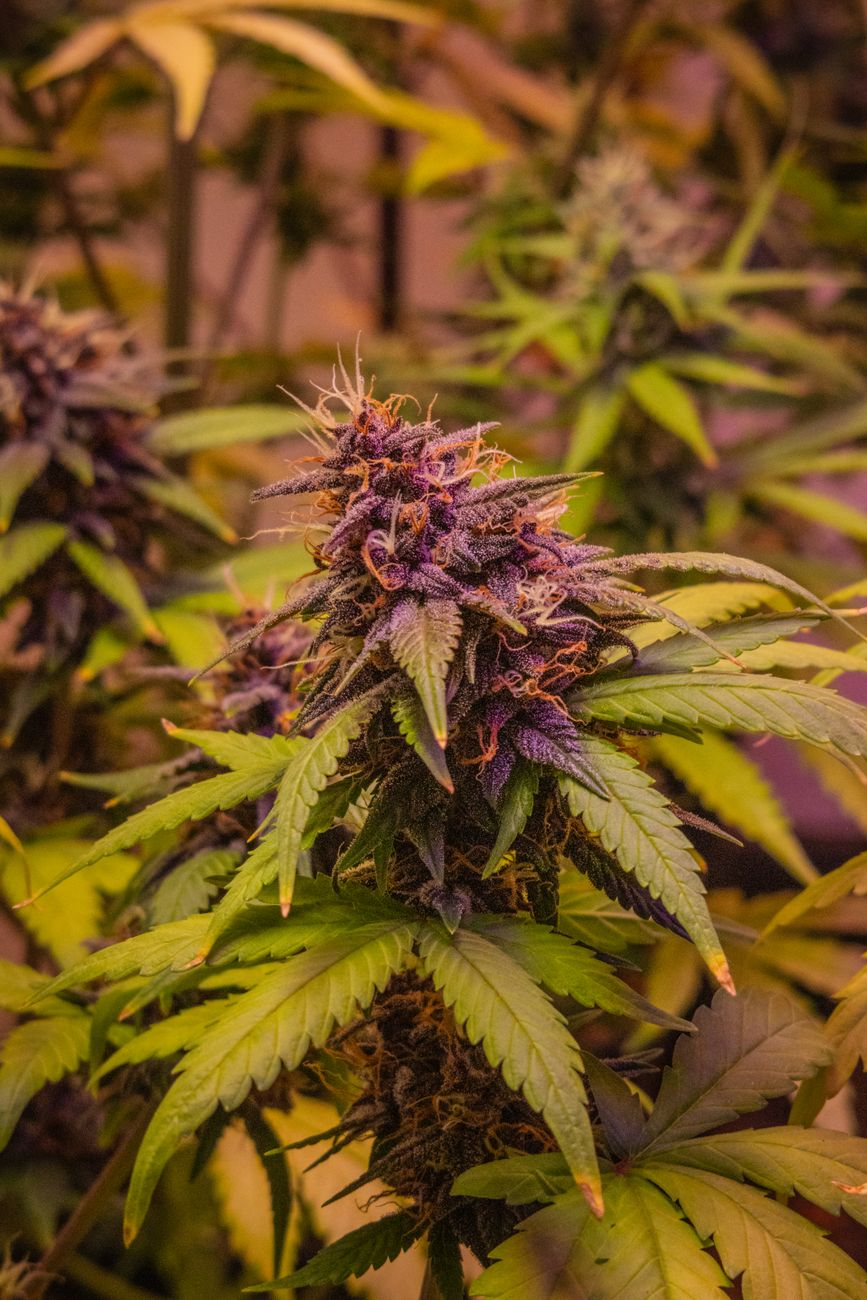
Common reported effects across popular purple varieties:
- Body relaxation: Deep muscle tension release — common across GDP, Purple Kush, and Blueberry lineages.
- Sedation / sleepiness: Stronger at higher doses, particularly in pure indica purple strains.
- Mood uplift: Many purple hybrids (especially Mendocino Purps crosses) deliver initial euphoria before body heaviness sets in.
- Appetite stimulation: Common side effect, particularly with GDP-lineage strains.
- Pain and anxiety relief: Frequently cited in user reports; the TGA notes ongoing research into cannabinoid therapy for chronic pain and anxiety in Australia.
THC ranges across the top purple varieties run 18–26%, with some high-expression phenotypes reaching 28%. CBD content is typically low (under 1%) in THC-dominant purple strains, though dedicated CBD strains with purple genetics are available for non-intoxicating therapeutic use.
Terpene profiles in purple strains tend to be myrcene-heavy (earthy, musky) with secondary linalool (floral, lavender), explaining the distinctive sweet-grape or berry-earthy scent that marks GDP and Blueberry descendants.
What Is the Flowering Time for Purple Weed Strains?
Most purple photoperiod strains flower in 8–10 weeks from light flip. Purple autoflowering strains finish their entire life cycle — seed to harvest — in 70–85 days.
Here's how the major purple lineages compare on flowering time:
| Strain / Lineage | Flowering Time | Total Cycle (Auto) | Colour Intensity |
|---|---|---|---|
| Granddaddy Purple | 8–9 weeks | N/A (photo) | ⬛⬛⬛⬛⬛ Very High |
| Purple Kush | 8 weeks | N/A (photo) | ⬛⬛⬛⬛⬛ Very High |
| Blueberry (DJ Short) | 8–9 weeks | N/A (photo) | ⬛⬛⬛⬛ High |
| Purple Haze | 9–10 weeks | N/A (photo) | ⬛⬛⬛ Medium |
| Purple Auto (GDP cross) | 5–6 weeks | 70–80 days | ⬛⬛⬛⬛ High |
| Mendocino Purps | 9–10 weeks | N/A (photo) | ⬛⬛⬛ Medium |
For southern Australian outdoor grows, the critical calculation is whether your strain finishes before May frosts arrive. In Hobart and Melbourne, persistent frosts typically begin late April to early May. An 8-week flowering strain started in late January (after the Dec–Jan daylight peak) flips in March and harvests in late April — cutting it close in TAS.
Top Purple Weed Strains: Royal King Seeds Australian Climate Score
The Royal King Seeds Australian Climate Score rates purple strains on four weighted criteria specific to Australian growing conditions.
Methodology: Colour Expression Reliability 30% + Heat/Mould Resistance 30% + Cycle Speed 25% + Beginner-Friendliness 15% = Score out of 100.
| Strain | THC % | Yield Indoor | Yield Outdoor | Flower Time | Mould Resist. | Beginner Rating | AU Climate Score |
|---|---|---|---|---|---|---|---|
| Purple Kush | 20–22% | 400–500 g/m² | 500–600 g/plant | 8 weeks | High | 8/10 | 88/100 |
| Granddaddy Purple | 23–26% | 450–550 g/m² | 600–700 g/plant | 8–9 weeks | Medium | 6/10 | 83/100 |
| Blueberry Auto | 18–20% | 350–450 g/m² | 80–150 g/plant | 8–9 wks (flower) | Medium | 9/10 | 80/100 |
| Purple Haze | 20–24% | 500–600 g/m² | 700–900 g/plant | 9–10 weeks | Low–Medium | 5/10 | 72/100 |
| Mendocino Purps | 19–22% | 450–500 g/m² | 600–800 g/plant | 9–10 weeks | Medium | 6/10 | 70/100 |
| Purple Urkle | 18–21% | 350–450 g/m² | 450–600 g/plant | 8–9 weeks | Medium | 6/10 | 74/100 |
- Fastest flowering (8 weeks) — safest outdoor finish date for southern AU
- Highest mould resistance of the pure-purple field — critical for humid coastal NSW and VIC
- Consistent anthocyanin expression — purple in nearly every phenotype, not just select cuts
- Beginner-friendly compact indica structure, low stretch, easy training
- Higher THC ceiling (26%) and heavier yields make it the top choice for experienced growers
- Medium mould resistance drops its score for humid coastal climates
- Needs careful humidity management in weeks 7–9 — not ideal for beginners in coastal QLD or NSW
- Longest cycle (9–10 weeks) risks frost in TAS and highland VIC outdoors
- Sativa structure means significant stretch — needs space and training
- Best suited to experienced indoor growers or warm-climate WA/QLD setups with full season room
How to Grow Purple Weed in Australia (Step-by-Step)
Growing purple cannabis is straightforward if you understand the temperature-colour relationship. The steps below apply to both indoor and outdoor grows, with Aussie-specific timing throughout. All cultivation advice is educational and intended only for jurisdictions where growing is legally permitted — growers should check their local laws before proceeding.
Step 1: Choose Stabilised Purple Genetics
Start with strains that name purple lineage explicitly — GDP, Purple Kush, Blueberry, or Purple Urkle crosses. Vague "purple phenotype" claims are unreliable. Indica seeds with proven purple heritage are your safest bet for consistent colour expression.
Step 2: Germinate at the Right Time for Your State
For outdoor grows, germinate in late September to mid-October in VIC, TAS, SA, and NSW. This allows a full vegetative season (Oct–Jan) before the plant is triggered into flower by shortening days in February. Growers in QLD can push germination to late October or early November. Refer to Bureau of Meteorology climate data to confirm your local frost-free window before planning your start date.
Step 3: Build a Strong Vegetative Structure
Purple indica strains are compact — most stay under 1 m outdoors. Veg for 6–10 weeks to build a wide, multi-topped structure using LST (low-stress training) or topping. Aim for 18–20°C days, 60–70% RH during veg.
Step 4: Trigger Purple Expression in Late Flower
This is the critical step. In the final 2–4 weeks of flowering, drop night temperatures to 12–15°C for at least 4 consecutive nights. Outdoors in southern AU, March–April nights naturally achieve this. Indoors, switch off heating at lights-out and allow temps to fall — most grow tents will cool to 13–16°C on their own if the ambient room is unheated overnight.
Step 5: Manage Humidity to Prevent Mould
Purple indica strains develop dense buds — ideal for mould in humid conditions. Keep RH below 45% in weeks 6–8 of flower. In coastal NSW and VIC, deploy a dehumidifier or increase airflow significantly. GDP and Purple Haze are more susceptible than Purple Kush; budget accordingly.
Step 6: Harvest at Peak Trichome Maturity
Purple pigmentation peaks at full ripeness, not before. Wait until trichomes are 70–80% cloudy with 10–20% amber before harvesting. Premature harvest loses both colour intensity and potency. Use a loupe or digital microscope — colour alone is not a harvest indicator.
Best Purple Strains by Australian State
Climate varies enormously across Australia's states and territories. Here's what works best for purple cannabis in each growing region, for those in jurisdictions where cultivation is legally permitted.
NSW — Temperate Coast and Tablelands
Sydney's temperate climate and the NSW Southern Highlands provide natural cool autumn nights (often 10–14°C by April). Granddaddy Purple and Purple Kush perform well here outdoors. Coastal growers should prioritise mould-resistant cultivars — GDP needs careful humidity management in the Hunter Valley and Northern Rivers.
VIC — Cool Temperate, Excellent Purple Country
Melbourne and regional VIC (Ballarat, Bendigo) are arguably Australia's best outdoor purple climate. Autumn nights drop to 8–12°C by late March — perfect anthocyanin trigger. Purple Kush (8-week flower) is ideal; start photoperiod seeds in late September, expect harvest early April. The Yarra Valley and Dandenong Ranges suit large outdoor Purple Kush plants particularly well.
QLD — Subtropical Heat Requires Indoor or Temp Control
Brisbane and coastal QLD rarely see night temps below 18°C during the April–May harvest window — purple expression will be limited without intervention. Indoor growers using climate-controlled tents can achieve full colour by manually cooling nights. Choose Purple Kush for its heat and mould tolerance. Autoflower seeds started in April can also catch the subtropical winter cool in June (nights 12–16°C in SE QLD).
WA — Mediterranean Climate, Manageable with Planning
Perth's Mediterranean climate gives warm, dry summers and mild winters. Outdoor autumn nights drop to 10–14°C by May — useable for purple expression but timing is late relative to eastern states. Granddaddy Purple suits WA's drier conditions (lower mould risk means GDP's medium mould resistance isn't as penalising). Geraldton and Kalgoorlie inland growers benefit from sharper day-night temperature differentials.
SA — Dry Mediterranean, Excellent Diurnal Range
Adelaide and the Adelaide Hills deliver some of the most dramatic day-night temperature swings in southern Australia — often 15–20°C differential in autumn. This is exceptional for purple expression and mould prevention simultaneously. Both Purple Kush and GDP thrive here. The Barossa and Clare valleys are particularly well-suited to outdoor autumn harvests.
TAS — Cool-Temperate, Autoflower Recommended
Hobart is Australia's coldest capital, with frosts beginning in late April or early May according to BOM historical data. Purple photoperiod strains need to be started early (September) and must be 8-week varieties to finish safely. Purple Kush autoflowers started in mid-October finish in early January — well ahead of any frost risk — and still express colour if nights dip below 15°C in late November/December at elevation. Apply The 14-Day Buffer Rule (below) before committing to photoperiod purple outdoors in TAS.
ACT — Cold Nights, Strong Purple Expression
Canberra experiences some of the coldest autumn nights of any Australian city — regularly sub-5°C by May. For purple cannabis, this is ideal colour-triggering territory. Start early (mid-September), run Purple Kush or Blueberry for 8–9 week flower, and expect vivid expression in late March. Indoor grows in ACT benefit from natural cool-downs without active cooling costs.
NT — Tropical Darwin, Indoor Only
Darwin's tropical climate — warm nights year-round, extreme wet season humidity — makes outdoor purple growing impractical for colour expression. Indoor climate-controlled setups are the only viable route. Choose Purple Kush for humidity tolerance, run sealed rooms with AC, and manually drop night temps in the final three weeks of flower.
What Is the Purple Grow Calendar for Southern Australia?
The following monthly grid maps the Southern Hemisphere grow calendar for outdoor purple cannabis in southern AU states (VIC, TAS, SA, ACT, NSW highlands). Green = ideal activity; yellow = caution; red = risk or unsuitable.
Germinate
Veg begins
Veg peak
Veg / pre-flower
Flower triggers
Full flower
Purple trigger window — nights cooling
Harvest — 8-week strains
Harvest — 9-week strains (VIC/NSW only)
Frost risk TAS/ACT — must be harvested
Frost — outdoor season over southern AU
Winter — no outdoor growing
The March Purple Window is the prime colour-triggering period for southern AU. Looking at public grower journals and community grow reports from VIC, SA, and ACT, the consistent pattern is: plants that enter their final 3 weeks of flower in mid-March — when nights reliably hit 10–14°C — deliver the deepest purple expression. Plants finishing earlier (January–February) rarely achieve full colour expression outdoors.
To guarantee purple colour expression outdoors, your strain's final 3 weeks of flower must occur while night temperatures are consistently at or below 15°C, with at least 14 consecutive cool nights before harvest.
Formula: Strain flower time + germination date = projected harvest date → confirm night temps are ≤15°C for the 21 days prior to that harvest date using BOM historical averages for your location.
Worked example (Melbourne, VIC): Purple Kush, 8-week flower. Germinate Sept 20 → veg through Oct–Jan → flower flips early Feb → harvest early April. Melbourne's March average low: 14.8°C. Night temp check: ✓ PASSED. Full purple expression expected. Compare: a GDP plant germinated November 1 finishing in late April catches Melbourne lows of 11–13°C — even better colour, but needs a mould watch as humidity climbs in mid-autumn.
Royal King Seeds Purple Strain Outdoor Risk Rating
Beyond yield and THC, Australian growers need to know where each purple strain is likely to fail. The table below rates the five most common outdoor risk dimensions.
| Strain | Heat Stress Risk | Mould Risk (Dense Buds) | Frost / Late-Season Risk | Beginner Risk | Stretch Risk |
|---|---|---|---|---|---|
| Purple Kush | Low | Low–Medium | Low (8 wks) | Low | Very Low |
| Granddaddy Purple | Medium | Medium–High | Low–Medium | Medium | Low |
| Blueberry Auto | Low–Medium | Medium | Very Low (auto) | Very Low | Very Low |
| Purple Haze | Low | Medium | High (9–10 wks, TAS/VIC) | High | Very High |
| Mendocino Purps | Low | Medium | Medium (9–10 wks) | Medium | High |
Which Purple Weed Strain Should You Choose?
Use this decision matrix to find the right purple strain for your specific situation.
- 🔥 Maximum potency (THC >23%) → Granddaddy Purple (23–26% THC, dense grape-scented nugs)
- ⏱ Shortest overall cycle → Purple Kush Autoflower (70–80 days seed-to-harvest)
- 🌧 High humidity outdoors (coastal NSW, coastal VIC) → Purple Kush (highest mould resistance of the purple field)
- ❄️ Short season / TAS / highland VIC → Purple Kush Autoflower (finishes Jan, no frost risk)
- ☀️ Hot dry summers (WA / SA inland / NT indoor) → Granddaddy Purple or Purple Kush (both handle dry heat better than Haze lines)
- 🌱 Beginner-friendly → Blueberry Autoflower or Purple Kush (compact, forgiving, low stretch)
- 📦 Smallest indoor space (<1.2 m tent) → Purple Kush or Blueberry Auto (both stay under 80 cm indoors)
- 🎨 Maximum colour expression → Granddaddy Purple or Purple Kush (deepest anthocyanin genetics)
- ⚡ Daytime / functional high → Mendocino Purps or Purple Haze (sativa-leaning hybrids with uplifting onset)
- 💰 Highest yield priority → Purple Haze (500–600 g/m² indoor, 700–900 g/plant outdoor)
What Happens If You Choose the Wrong Purple Strain?
The stakes are real: a wrong strain choice in southern AU outdoor growing can cost an entire season. Here's how two opposite choices play out.
- Strain: Purple Kush (8 weeks flower)
- Location: Melbourne, VIC
- Germinate: Sept 25
- Flower trigger: ~Feb 1
- Harvest date: ~Apr 1
- Buffer before frost: 34+ days ✓
- Night temps at harvest: 12–14°C → full purple ✓
- Risk level: Low
- Outcome: Dense, fully purple buds harvested well before Melbourne frosts. Strong mould resistance means late-season coastal humidity isn't a problem. Clean, profitable season.
- Strain: Purple Haze (10 weeks flower)
- Location: Hobart, TAS
- Germinate: Oct 1
- Flower trigger: ~Feb 1
- Projected harvest: ~Apr 10
- Buffer before frost: ~21 days ✗ (marginal)
- Risk: Late April frost event wipes unpicked buds; mould from humid Hobart nights in weeks 8–10
- Risk level: High
- Outcome: Grower races against clock. If a cold snap hits late April, buds are lost to frost or harvested prematurely — sub-par colour, reduced yield, wasted season.
Bottom line: Strain choice is the most leveraged decision of the entire season — one wrong pick turns a viable VIC or TAS outdoor window into a race you can't win.
Common Purple Weed Grow Mistakes to Avoid
Reviewing public grower forums, support questions, and community grow journals, the same failure modes appear again and again with purple cannabis. Here are the five most common — and exactly how to spot and fix them.
Mistake 1: Expecting Purple Without a Temperature Drop
The symptom: buying a purple strain, growing it at consistent 22–26°C day and night, and harvesting plain green buds. The anthocyanin pigment pathway requires cold-night activation. Fix: drop night temps to 13–15°C for the last 3 weeks of flower. If you can't drop night temps, choose a different genetic priority.
Mistake 2: Harvesting for Colour, Not Trichomes
Purple buds look done before they are. The colour intensifies as the plant ripens, leading growers to harvest at week 6 of an 8-week strain — cutting yield and potency by 20–30%. Always check trichomes with a loupe. Cloudy-to-amber is the signal, not colour depth.
Mistake 3: Running a 10-Week Strain Outdoors in TAS
Purple Haze and Mendocino Purps need 9–10 weeks of flower. Outdoors in Tasmania or ACT highlands, that projects harvest to late April or early May — directly into frost territory. The fix is simple: use 8-week strains (Purple Kush) or autoflowers in frost-prone locations.
Mistake 4: Ignoring Mould in Dense Purple Buds
Purple indica strains develop tightly packed buds that trap humidity. In coastal NSW, VIC, and QLD, Botrytis (grey mould) can destroy a crop in 4–6 days. Signs: grey-brown fuzzy patches inside buds, a dusty grey coating on calyxes. Prevention: maintain RH below 45% in weeks 6–8, defoliate the lower third at flip, and run oscillating fans 24/7.
Mistake 5: Overcrowding Compact Indica Purple Strains
Purple Kush and GDP are short and bushy — growers often crowd more plants into a space than airflow can support. The result is mould in the canopy interior. Keep 60 cm spacing between plants indoors, or 90 cm outdoors. One well-trained Purple Kush in a 19 L pot in a 1.2 m² tent will outperform three cramped plants every time.
Mistake 6: Light Pollution Disrupting Outdoor Flower Trigger
Street lights, security lights, and neighbour lights can delay or prevent outdoor flower triggering. Cannabis photoperiod strains need 12 hours of uninterrupted darkness to flower. If your garden gets artificial light at night during February–March, the plant may not flip, extending flower time past safe harvest windows. Site selection matters.
Purple Weed Myths vs Reality
| Myth | Reality |
|---|---|
| Purple weed is stronger than green weed | Colour has no direct link to THC percentage. GDP at 26% and green Haze at 26% deliver identical potency. Colour is pigment, not cannabinoid. |
| You can freeze any strain to turn it purple | Stressing plants with extreme cold damages roots and stalls flower development. Only strains with genuine anthocyanin genetics express purple — cold alone won't create it. |
| Purple buds taste like grapes because they're purple | Grape and berry flavour comes from terpenes (myrcene, linalool, caryophyllene), not anthocyanins. Some purple strains have grape terpene profiles; others taste earthy or piney with no fruit. |
| Purple weed is rarer and should cost more | Purple genetics are widely stabilised and commercially available. Premium pricing for purple is marketing, not scarcity. Quality is about genetics and cultivation, not colour. |
| Any cannabis strain can turn purple with the right conditions | Only strains with anthocyanin genetic expression will produce purple. Most strains lack this trait — no amount of cold will trigger colour in standard Green Crack or White Widow plants. |
Patterns From Public Purple Grow Reports: What We See Most Often
Looking at the questions our team fields most often around purple cannabis — and reviewing publicly shared grow journals across Australian grower communities — several consistent patterns emerge that no breeder's website will tell you.
Pattern 1: March is make-or-break for southern AU colour. Comparing grower-reported harvest dates with breeder-published timelines, the growers who start their purple photoperiod plants in late September consistently report the richest colour. Those who start in November — hoping for a faster summer veg — find their plants finishing in February when nights are still 18–20°C in most southern cities. Colour is mediocre; the window is missed.
Pattern 2: GDP mould losses spike in coastal NSW in years with wet autumns. From the questions that come up every March and April in coastal NSW grower communities, GDP is the most commonly cited mould casualty — specifically in weeks 7–9 when buds are packed but not yet fully ripe. Purple Kush appears far less frequently in mould complaint threads for the same region and season.
Pattern 3: Indoor growers underestimate how easy the temp-drop is. After reviewing indoor grower journals, the majority of successful purple expression comes from growers who simply switched off a space heater at lights-out rather than installing active cooling. Most Australian grow tents in unheated spare rooms naturally fall to 13–16°C overnight in autumn and winter without intervention — the colour trigger is already there, the grower just has to stop heating the room.
Pattern 4: Autoflower purple strains are being started too late in TAS and highland VIC. A recurring question from Tasmanian and alpine Victorian growers is "why did my purple auto barely express colour?" The answer is almost always a mid-November or December start date — the plant flowers through December–January when nights are still 14–17°C at elevation. Pushing the start to October in TAS puts late flower in November–early December, when highland nights reliably dip below 12°C. The fix is a calendar adjustment, not a strain change.
For scientific background on anthocyanin pigmentation in cultivated plants, the Frontiers in Plant Science journal and the CSIRO both publish relevant research on temperature-responsive pigmentation pathways applicable to cannabis-family plant species.
"If your nights aren't below 15°C in the last three weeks, your 'purple strain' will harvest green — no matter how good the genetics are."
— The Purple Temperature Rule, Royal King Seeds Australia
Frequently Asked Questions — Purple Weed Strains
What makes weed turn purple?
Is purple weed stronger than regular weed?
Can I make any strain turn purple?
How cold does it need to be for weed to turn purple?
What is the best purple strain for outdoor growing in Victoria?
Can I grow purple weed outdoors in Queensland?
What is the flowering time for Granddaddy Purple?
Does purple weed taste like grapes?
What is the yield of purple weed strains indoors?
Why did my purple strain grow green instead of purple?
Can I start a purple strain in November in Tasmania?
Is Granddaddy Purple or Purple Kush better for beginners?
What pot size should I use for indoor purple strains?
Why won't my purple seedlings establish properly?
What are the medical uses of purple cannabis strains?
What happens if a heat wave hits during my purple plant's flowering stage?
Can I shade my outdoor purple plants during 40°C+ days in SA or WA?
Why are my purple buds airy and light instead of dense?
Should I grow purple photoperiod or autoflower in southern Australia?
How long should I cure purple weed for best flavour?
Are purple weed strains legal in Australia?
Why didn't my purple strain finish in the time the breeder said?
What month should I start purple cannabis in Western Australia?
My purple auto stalled at week 6 — what went wrong?
How many purple plants can I fit in a 1.2 m × 1.2 m tent?
Sources
- Bureau of Meteorology — Australian Climate Data and Historical Temperature Records
- ABARES — Australian Bureau of Agricultural and Resource Economics and Sciences
- CSIRO — Commonwealth Scientific and Industrial Research Organisation (Plant Science Research)
- TGA — Therapeutic Goods Administration: Medicinal Cannabis in Australia
- PubMed — Cannabis Anthocyanin Research Index (NIH)
- Frontiers in Plant Science — Peer-Reviewed Plant Pigmentation Research
- Australian Department of Health and Aged Care — Cannabis Policy and Regulation
Related Articles
Ready to Start Growing?
Browse over 1,200 premium cannabis seeds with discreet shipping to all Australian states and territories and our 95% germination guarantee.
Shop Cannabis Seeds