Budding Stages of Weed: Cannabis Background, Effects & Grower Notes
Royal King Seeds
Cultivation team
If you've ever harvested too early and ended up with a weak, leafy product, or waited too long and watched perfectly formed buds degrade into a sedating mess, the budding stage is where you lost. Most failed Aussie harvests aren't a soil problem, a light problem, or a genetics problem — they're a timing problem. The cannabis flowering cycle has five distinct budding stages, each with measurable trichome, pistil, and calyx signals that tell you exactly where you are and what to do next.
Learn to read them accurately, and your harvest window goes from a guess to a precision call. This guide breaks down every stage — with grower notes, regional timing data, and the science behind what's actually happening inside the plant.
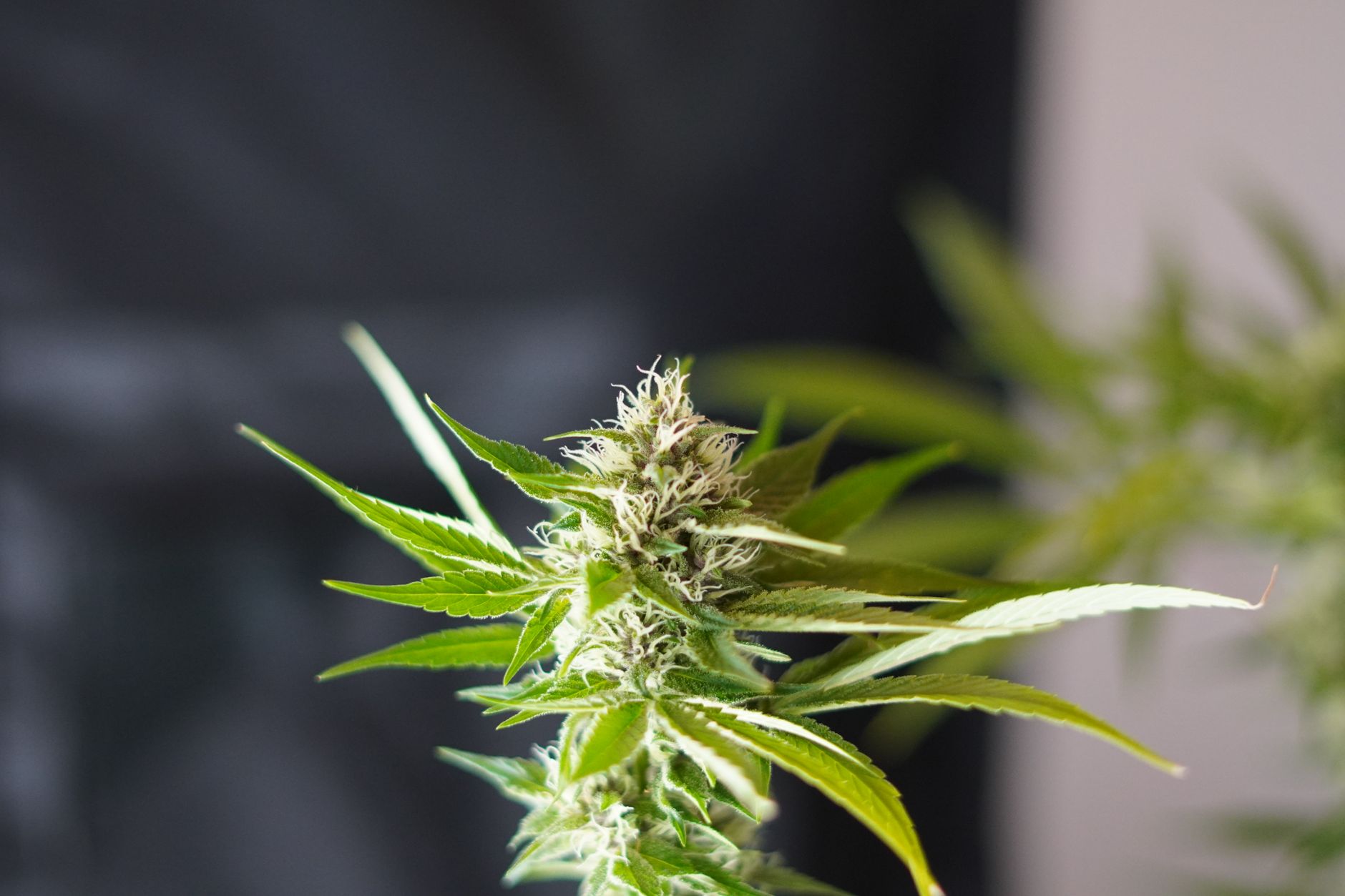
Cannabis moves through five budding stages during flowering: pre-flowering (weeks 1–2), early flower (weeks 3–4), mid flower (weeks 5–6), late flower (weeks 7–9), and the final ripening/harvest-ready window (weeks 10–11+). Each stage is defined by pistil colour change, calyx swelling, and trichome development — the combination of all three gives growers the most reliable harvest timing signal.
- ✓ First-time growers trying to understand the flowering timeline
- ✓ Outdoor growers planning an Oct–Dec start in Australia
- ✓ Indoor growers dialling in their 12/12 flip timing
- ✓ Anyone who's harvested too early or too late and wants to fix it
- ✓ Growers comparing autoflower vs photoperiod flowering windows
- ✗ Growers looking for strain reviews (check our full seed catalogue)
- ✗ Readers wanting extraction or post-harvest processing guides
- ✗ Anyone in jurisdictions where cultivation is not legally permitted
What Is the Budding Stage of Cannabis?
The budding stage is the flowering phase of the cannabis plant's life cycle — the period after vegetative growth ends when the plant switches energy from leaf and stem production to building the dense, resin-coated flower clusters (buds) used for consumption and seed production.
Buds are the plant's reproductive structures. Female plants produce them to catch pollen from males. Without pollination, they keep growing larger and more resinous, which is exactly what growers want. This is why virtually all quality cannabis is grown from feminised cannabis seeds — guaranteed female plants means no pollination risk and maximum bud development.
The budding phase is triggered differently depending on genetics. Photoperiod strains require a shift in light exposure (typically to 12 hours of darkness per 24-hour cycle). Autoflower seeds enter flowering automatically based on age, regardless of light schedule — a huge advantage for Aussie outdoor growers working with the variable southern hemisphere spring-to-autumn window.
Understanding that budding is a biological reproductive process — not just "the plant getting bigger" — changes how you respond to each stage. Every decision from feeding to watering to temperature management should be calibrated to which specific budding week you're in. Growers who map the stage correctly consistently outperform those who just count calendar days.
Why Do Cannabis Plants Bud? The Background Science
Cannabis is a dioecious, annual flowering plant from Central Asia. It evolved to complete its entire life cycle — germination, growth, flowering, seed set — within a single season, responding to shortening daylight hours as an evolutionary signal that winter is approaching and reproduction must happen now.
The mechanism is photoperiodism: the plant measures the length of uninterrupted darkness each night. When darkness exceeds approximately 12 hours, a light-sensitive protein called phytochrome shifts its active ratio, triggering hormonal cascades that redirect growth from vegetative to reproductive tissue.
Terpenes, cannabinoids (THC, CBD, CBN), and flavonoids all accumulate primarily during the budding stage — particularly in the final 2–3 weeks — inside glandular structures called trichomes. According to research published via PubMed's cannabis research index, trichome density and cannabinoid biosynthesis peak during late-stage flowering, which is why harvest timing so dramatically affects the final product's chemical profile.
In Australia, the Therapeutic Goods Administration (TGA) regulates medicinal cannabis at a federal level. Recreational cultivation remains subject to state and territory laws — always check your local jurisdiction before growing. All growing content here is provided for educational and horticultural purposes for regions where cultivation is legally permitted.
The photoperiod trigger is not a mystery — it's a measurable, controllable biological signal. Indoor growers who control the light cycle with precision can manipulate when budding begins. Outdoor growers in southern Australia benefit from natural photoperiod shifts occurring around February/March, which align perfectly with the final push of an October-started crop toward an April harvest.
What Are the 5 Budding Stages of Cannabis?
Cannabis flowering progresses through five distinct stages, each with observable physical markers. Here's what happens in each — and what to do as a grower.
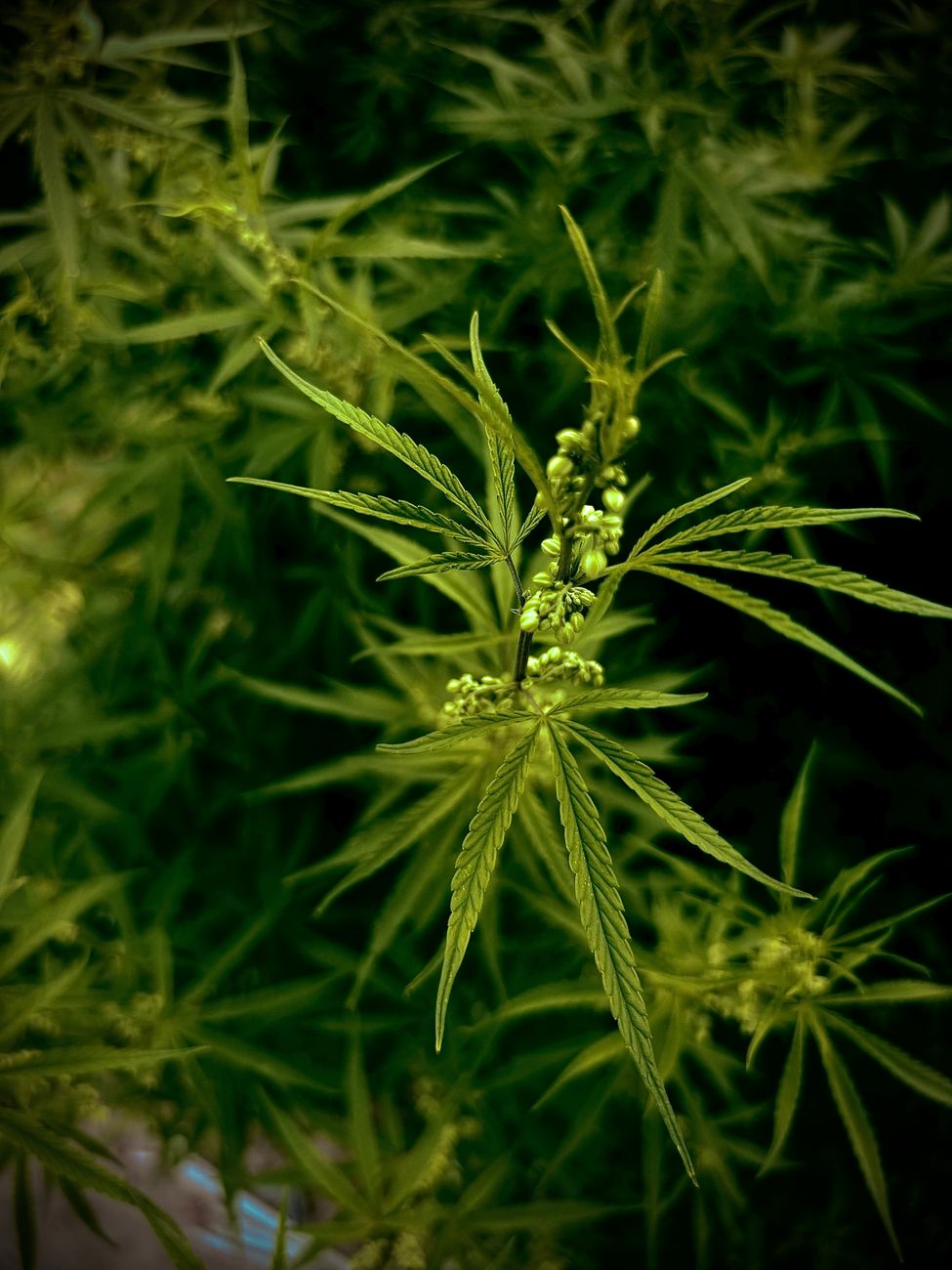
Stage 1: Pre-Flowering (Weeks 1–2 of Flower)
The plant receives the flowering signal and begins transitioning. Vertical growth (the "stretch") accelerates — plants can increase in height by 50–100% during this window. White pistil hairs emerge at bud sites. No resin production yet.
What to do: Prepare your canopy management now. Top, LST, or net training is still viable in week 1 but should stop by week 2. Switch nutrients from high-nitrogen vegetative formula to a bloom-oriented feed lower in nitrogen and higher in phosphorus and potassium.
Stage 2: Early Flower (Weeks 3–4)
Bud sites stack and form small, defined calyxes. Trichome production begins — you'll see a frosty shimmer under light but nothing sticky to the touch yet. Pistils are predominantly white. This is where most of the structural bud architecture is established.
What to do: Support tall or heavy branches with stakes or a trellis net. Increase phosphorus and potassium. Maintain consistent temperature (20–26°C daytime, 18–22°C night). Relative humidity should drop to around 45–55% to reduce early mould risk.
Stage 3: Mid Flower (Weeks 5–6)
This is peak bud development — the most visually dramatic phase. Calyxes swell rapidly, buds bulk up significantly, and trichome coverage becomes dense. The first pistils begin turning amber or orange. Resin becomes sticky and fragrant.
What to do: This is the most nutritionally demanding period. Maintain high phosphorus and potassium feeding but watch for nutrient burn on leaf tips. Do not defoliate heavily — you need those fan leaves for photosynthesis. Relative humidity should be 40–50%.
Stage 4: Late Flower (Weeks 7–9)
Calyx swelling slows. Pistils turn 50–70% orange or red. Trichomes shift from clear to milky-white (cloudy). The plant's lower fan leaves begin yellowing as it pulls nitrogen from stored tissue — this is normal, not a deficiency if it occurs after week 7.
What to do: Begin flushing or tapering nutrients (depending on your medium and philosophy). Monitor trichomes daily with a loupe or jeweller's magnifier. Reduce humidity further to 35–45% to prevent late-stage bud rot, especially in coastal Aussie climates where autumn humidity spikes.
Stage 5: Harvest-Ready / Ripening (Weeks 10–11+)
Trichomes reach 70–90% cloudy with 10–30% amber depending on desired effect. Pistils are 70–90% orange/red. Calyxes are fully swollen and may begin to recede slightly. The plant's water uptake drops noticeably as biological senescence begins.
What to do: Harvest in the final ripening window. Many growers run a 48-hour dark period before chop to push final resin expression. Looking at patterns from grower community reports and breeder timelines, harvesting 5–10 days early costs approximately 10–20% of potential final weight and reduces cannabinoid concentration measurably. Patience in this final window pays disproportionately.
Treat each of these five stages as its own mini-grow with distinct feeding, environmental, and management targets. The biggest gains come not from advanced techniques but from correctly identifying the stage and adjusting accordingly.
How Do You Read Trichome Signals to Time Harvest?
Trichomes are the definitive harvest timing indicator — more reliable than pistil colour alone, more reliable than breeder-stated week count, and more reliable than leaf yellowing.
You need magnification: a 30–60x jeweller's loupe or a digital microscope (available for AU$15–60 at most hardware stores). Look at the trichomes on the calyx of the bud — not the sugar leaves, which often mature faster.
| Trichome Appearance | What It Means | Harvest? | Expected Effect Profile |
|---|---|---|---|
| Clear / transparent | THC still forming; immature | ❌ Too early | Anxious, uncomfortable |
| Cloudy / milky white | THC at maximum concentration | ✅ Ideal for uplifting effect | Energetic, cerebral, clear-headed |
| 50/50 cloudy + amber | THC converting to CBN | ✅ Balanced harvest window | Balanced body and head |
| Mostly amber (70%+) | Significant THC degradation | ⚠️ Late harvest | Heavy, sedating, couch-lock |
| All amber / brown | Over-ripe; significant degradation | ❌ Past optimal | Narcotic, fatiguing |
When at least 80% of trichomes are cloudy and up to 20% have turned amber, you are in the peak balanced harvest window for most high THC strains.
Formula: Cloudy % + Amber % = 100%. Target: Cloudy ≥ 70–80%, Amber ≤ 20–30%.
Example: A strain entering week 9 shows 75% cloudy, 20% amber, 5% clear. Per the 80/20 Rule, harvest immediately — any further delay degrades THC into CBN and reduces the uplifting effect profile. In a Melbourne summer indoor grow, that call should be made without waiting for the calendar to match the breeder's stated week 10 finish.
Buy a 40x loupe before your first grow. It costs less than AU$20 and eliminates the single most common harvest mistake — relying on calendar weeks instead of the plant's actual biology. Breeder week counts are averages across ideal conditions; your environment will vary.
How Does the Budding Stage Affect the Final Effects?
The timing of your harvest within the budding cycle directly shapes the chemical composition — and therefore the effects — of the final product. This is one of the most underappreciated levers a grower has.
THC (delta-9-tetrahydrocannabinol) peaks during stage 5 when trichomes are predominantly cloudy. CBD (cannabidiol) and CBN (cannabinol) concentrations shift as trichomes amber. Early harvest = higher THCA relative to CBN. Late harvest = higher CBN relative to THC. The research literature on cannabinoid biosynthesis supports this, with key studies indexed on PubMed's cannabis maturity research database.
- Early harvest (70% cloudy, 0% amber): More uplifting, cerebral, slightly anxious for sensitive users
- Peak harvest (80% cloudy, 15–20% amber): Balanced, potent, full-spectrum effect
- Late harvest (50%+ amber): Heavier, more body-oriented, more sedating; preferred by some medical users
- Over-ripe (70%+ amber): Significantly degraded potency; fatigue-dominant profile
For CBD strains, the timing dynamics differ — CBD remains stable across a wider ripening window and degrades more slowly than THC, giving CBD-focused growers a more forgiving harvest window of up to 2–3 extra weeks versus high-THC varieties.
If you prefer energetic, daytime-appropriate effects, harvest at peak cloudy. If you need deeper relaxation or sleep assistance, let amber creep to 25–30%. The budding stage, not just the strain, is what determines your final experience.
How Do Autoflower and Photoperiod Flowering Windows Compare?
The flowering window is one of the most critical differences between autoflowering and photoperiod genetics — especially for Aussie outdoor growers working within the October–April growing season.
| Characteristic | Autoflower | Photoperiod |
|---|---|---|
| Flower trigger | Age-based (automatic) | 12+ hours darkness |
| Total cycle seed to harvest | 60–90 days | 110–160 days |
| Flowering duration | 5–7 weeks | 8–11 weeks |
| Suitable for TAS/VIC short seasons | ✅ Excellent | ⚠️ Select fast-finishers only |
| Suitable for QLD/WA long seasons | ✅ Multiple runs possible | ✅ Full cycle fits comfortably |
| Yield per plant | 40–150 g | 100–400 g+ |
| Light schedule control needed | No | Yes (for indoor) |
| Mould risk during Aust autumn | Lower (finishes sooner) | Higher (flowers through March–April) |
From reviewing grower community journals and the questions that come up most during autumn, a recurring pattern is clear: growers who plant autoflower seeds suited to Aussie conditions in November–December in southern states consistently bring in clean, mature harvests by late January or February — well ahead of the March–April mould season that catches late photoperiod runs. Autoflowers finish in 60–90 days total versus 110–160 days for photoperiod genetics — 4–8 weeks faster end-to-end.
For first-time outdoor growers in southern Australia (VIC, TAS, SA, southern NSW), autoflowers are the lower-risk choice because their budding timeline isn't tied to autumn photoperiod — you control the start date and can engineer the harvest to land before mould season peaks.
What Are the Best Budding Stage Timing Windows by Australian State?
Southern Hemisphere seasonality means Australian outdoor growers flip the northern-hemisphere calendar. Plants go in the ground from October, flower through summer, and harvest in March–April. Here's how that maps per state — using Bureau of Meteorology climate data for regional context.
Queensland (Subtropical / Tropical)
QLD's long, warm season suits photoperiod strains planted October–November, with natural flower trigger occurring around February and harvest in March–April. Humidity in coastal QLD (Brisbane, Sunshine Coast, Cairns) spikes during the March–April harvest window — growers should prioritise mould-resistant indica-leaning seeds and defoliate aggressively in late flower. In FNQ (Far North Queensland), the wet season creates extreme humidity challenges during budding — autoflowers started in April (dry season) perform better.
New South Wales (Temperate Coast / Inland)
Sydney and coastal NSW have a reliable Oct–Apr outdoor season. Photoperiod plants started in October begin flowering around late January/February and harvest in March–April. Inland NSW (Orange, Tamworth, Dubbo) has cooler autumn nights, which can accelerate trichome ripening in late flower — a genuine advantage for resin quality. Autoflowers started in November–December finish by late January, ahead of the coastal humidity spike.
Victoria (Temperate / Cool-Temperate)
Melbourne's unpredictable shoulder seasons make the budding window tighter than most states. Photoperiod strains planted in October start budding in February and need to finish before late April when temperatures drop sharply. Looking at grower reports from VIC-based community threads, late-maturing strains frequently get caught by early April rain events and bud rot. Fast-finishing photoperiod or autoflowering genetics are strongly recommended. Inland VIC (Bendigo, Ballarat) gets earlier frosts — target a complete harvest by end of March.
Tasmania (Cool-Temperate)
Tasmania has the shortest viable outdoor season in Australia. Frost-free periods in Hobart run approximately September to May, but reliable warm nights for outdoor budding are confined to December–March. Autoflowers are almost always the safer choice — a December start can deliver a late-February harvest with zero frost risk. Photoperiod plants in TAS should be fast-finishing varieties (under 9 weeks flower) to clear harvest before late March.
Western Australia (Mediterranean)
Perth's dry Mediterranean climate is one of Australia's most forgiving for outdoor cannabis budding. Low autumn humidity reduces mould risk dramatically during March–April. Photoperiod and autoflower genetics both perform well. Inland WA (Kalgoorlie region) has extreme summer heat — plants in active budding mid-summer should be shaded between 11am–3pm when temperatures exceed 35°C, as heat stress during early flowering can reduce bud set significantly.
South Australia (Mediterranean / Inland)
Adelaide's climate mirrors Perth — dry, reliable autumn, ideal for late-stage budding and harvest. The Barossa/Clare Valley regions have temperature-stable autumns that are exceptional for slow, even trichome maturation. SA inland (Roxby Downs, Coober Pedy regions) is too hot and arid for outdoor budding without shade structures and supplemental irrigation.
Visual Australian Outdoor Budding Calendar
🌱 Veg / Pre-plant
Ideal start
🌿 Veg growth
Safe window
🌸 Pre-flower
Stretch phase
🌺 Mid-flower
Peak bud build
🍂 Late flower
Watch humidity
⚠️ Harvest window
Mould risk rises
Map your strain's stated flowering time against your state's climate window before buying seeds — not after. A strain labelled "11 weeks flower" started in October in Hobart will be fighting frost in May. A 7-week strain started in November will harvest in late February with a clean margin. Matching genetics to geography is the single highest-leverage pre-grow decision you can make.
Common Budding Stage Mistakes and How to Fix Them
Mistake 1: Harvesting by Calendar Week, Not Trichome Colour
Breeder-stated flower times are averages under ideal conditions. Stress, temperature swings, and nutrient variations all affect actual finish time. Growers who harvest "because week 8 is up" without checking trichomes consistently report underwhelming potency. Fix: Buy a loupe. Check trichomes on calyx (not leaf) tissue from week 7 onward.
Mistake 2: High Nitrogen in Late Flower
Nitrogen drives vegetative growth. Running a high-N feed into weeks 6–7 of flower produces leafy, loose buds and "green" taste in the final product. Fix: Drop nitrogen significantly when pistils start turning orange (around weeks 5–6). Switch to a PK-dominant bloom booster.
Mistake 3: Ignoring Humidity in Late Flower
Dense budding-stage cannabis with tight calyxes and minimal airflow is a perfect environment for Botrytis (grey mould) at relative humidity above 55%. This is the dominant late-flower failure mode in coastal QLD and NSW in March. Fix: Drop RH to 40–45% from week 6 onward. Use an oscillating fan to break up canopy dead zones. Selective defoliation of interior fan leaves improves airflow without significantly reducing photosynthesis.
Mistake 4: Watering Too Frequently in Late Flower
In stages 4 and 5, the plant's water uptake slows as senescence begins. Overwatering in these weeks causes root zone saturation, which restricts oxygen to roots and can trigger pythium (root rot). Fix: Let your medium dry down more between waterings from week 6 onward. In fabric pots, wait until the pot feels noticeably lighter before rewatering.
Mistake 5: Heavy Defoliation Mid-Flower
Removing large fan leaves during peak bud development (weeks 5–6) cuts off the plant's primary energy source at exactly the wrong moment. From reviewing grower journals, aggressive defoliation in week 5 consistently reduces final yield by 15–25% compared to selective light defoliation. Fix: Major defoliation should happen before flip (photoperiod) or in weeks 1–2 of flower. Post week 4, only remove leaves that are blocking direct light to main bud sites or are already yellowing significantly.
Mistake 6: Temperature Spikes During Late Flower
Sustained temperatures above 28–30°C during weeks 6–9 cause terpene evaporation and heat-stress bleaching of trichomes — losing aroma and potency simultaneously. In hot Aussie summers (Perth, inland NSW, SA), this is a real risk for plants without shade or climate control. Fix: In outdoor grows, provide afternoon shade during heat spikes. Indoor growers should ensure lamp-to-canopy distance is adequate and consider running lights-on during cooler night hours in summer months.
Most budding stage failures stem from applying vegetative-stage rules to a flowering-stage plant. The needs change dramatically at the 12/12 flip — feeding, watering frequency, humidity targets, and light management all require adjustment. Growers who update their approach by stage consistently outperform those running a single fixed routine from seed to harvest.
What Happens If You Get the Budding Stage Timing Wrong?
- Strain: Fast-finish photoperiod (8-week flower)
- Planted: 1 October (VIC outdoor)
- Harvest date: 20 March
- Trichomes at harvest: 80% cloudy, 15% amber
- Risk level: Low
- Outcome: Dense, aromatic buds at peak potency. No mould. Full weight achieved.
- Strain: Slow-finishing photoperiod (11-week flower)
- Planted: 1 October (VIC outdoor)
- Harvest date: Forced early on April 10 due to rain/mould
- Trichomes at harvest: 40% cloudy, 5% amber (immature)
- Risk level: High
- Outcome: Underdeveloped buds, mould losses on outer calyxes, reduced potency. Salvageable but significantly below potential.
Bottom line: Choosing a strain whose flowering time doesn't fit your regional climate window is a decision made before planting that determines your entire harvest outcome — no amount of mid-grow intervention can recover a timeline mismatch in VIC or TAS.
Royal King Seeds Budding Stage Risk Rating (By Strain Type)
This risk rating covers the four main genetic categories Australian growers choose from, assessed across four key budding-stage risk dimensions.
| Strain Type | Mould Risk | Heat Stress Risk | Harvest Timing Risk | Beginner Risk |
|---|---|---|---|---|
| Autoflower | Low | Medium | Low | Low |
| Indica (photoperiod) | Low–Med | Low | Low | Low |
| Sativa (photoperiod) | Medium | Low | High | Medium |
| High THC feminised | Medium | Medium | Medium | Medium |
Methodology: Mould Risk rated on typical calyx density and canopy structure. Heat Stress Risk rated on flowering-phase temperature tolerance. Harvest Timing Risk rated on how forgiving the harvest window is (narrow sativa windows = high risk). Beginner Risk rated on sensitivity to management errors during flowering. Based on aggregated breeder data and public grower community reports.
Indica-dominant and autoflowering genetics carry the lowest combined risk profile across the budding stage for Australian conditions. Sativa-dominant strains offer exceptional results in the right hands and the right climate, but their long flowering time and narrow harvest window make them a higher-risk choice for southern Australian outdoor runs.
Ready to match your genetics to your state's budding window?
Browse our full range of feminised cannabis seeds and autoflower seeds Australia — all categorised by flowering time and climate suitability.
Shop All Cannabis Seeds →Your strain's total flowering time plus a 14-day mould/weather buffer must clear your state's reliable frost-free harvest window.
Formula: Flower weeks × 7 + 14 (buffer) = total days from 12/12 flip to safe harvest.
Example: A 9-week (63-day) photoperiod strain flipped to 12/12 on December 1 in Melbourne hits day 63 on February 2 + 14 days buffer = February 16 harvest. Melbourne's autumn mould season typically ramps up in late March — this gives a 5-week buffer. SAFE. An 11-week (77-day) strain flipped December 1 hits March 18 + buffer = April 1 — right in the mould window. RISKY.
Frequently Asked Questions About Cannabis Budding Stages
What are the 5 stages of cannabis budding?
How long does the budding stage last for cannabis?
When should I harvest cannabis by trichome colour?
What do buds look like in week 5 of flower?
How do I know if my cannabis plant is in the flowering stage?
What is the best outdoor start month in Victoria for the budding stage to finish safely?
Can I start autoflowers in February in southern Australia?
Why do my buds look airy and loose instead of dense?
Should I flush before harvest and does it affect the budding stage?
What temperature is best during the cannabis budding stage?
Why did my autoflower stall at week 6 of flower?
What humidity should I maintain during the budding stage?
Can I grow cannabis indoors in Australia and still follow seasonal timing?
How many harvests can I get per outdoor season in Queensland?
What is the difference between pistil colour and trichome colour for harvest timing?
My strain says 8 weeks flower but it's week 10 and still not ready — what's happening?
Should I use a 48-hour dark period before harvest?
How do I prevent bud rot during the final budding stages in coastal NSW?
What nutrients should I use during the cannabis budding stage?
Are feminised seeds better for the budding stage than regular seeds?
Find the Right Seeds for Every Budding Stage
Whether you're planning your first outdoor run in QLD or dialling in an indoor photoperiod cycle in Melbourne, the right genetics makes every budding stage more predictable. Where cultivation is legally permitted, explore our full range.
Sources
- Bureau of Meteorology — Australian Climate Data
- ABARES — Australian Bureau of Agricultural and Resource Economics
- Therapeutic Goods Administration (TGA) — Medicinal Cannabis Regulation
- PubMed — Cannabis Trichome and Cannabinoid Research Index
- Frontiers in Plant Science — Cannabis Botany Research
- Australian Drug Foundation — Cannabis Information
Related Articles
Ready to Start Growing?
Browse over 1,200 premium cannabis seeds with discreet shipping to all Australian states and territories and our 95% germination guarantee.
Shop Cannabis Seeds